
Realme's Ultra phone concept was the wildest device I experienced at MWC 2025.
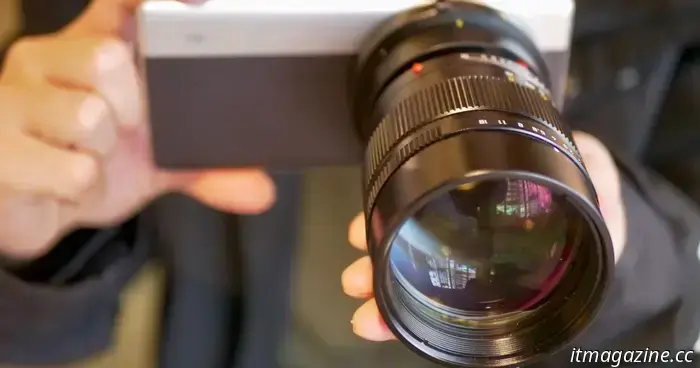
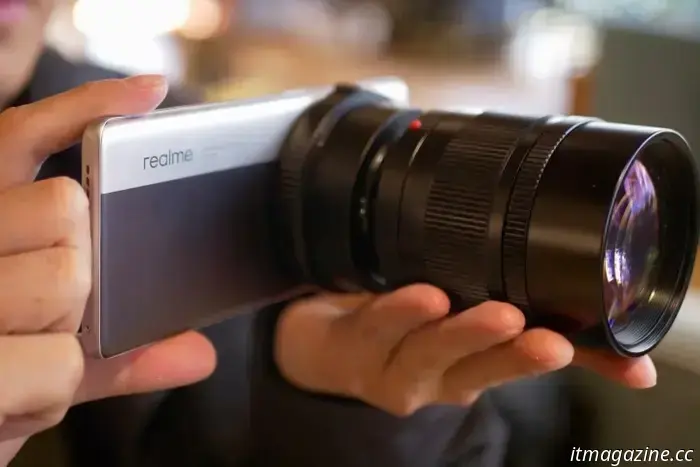
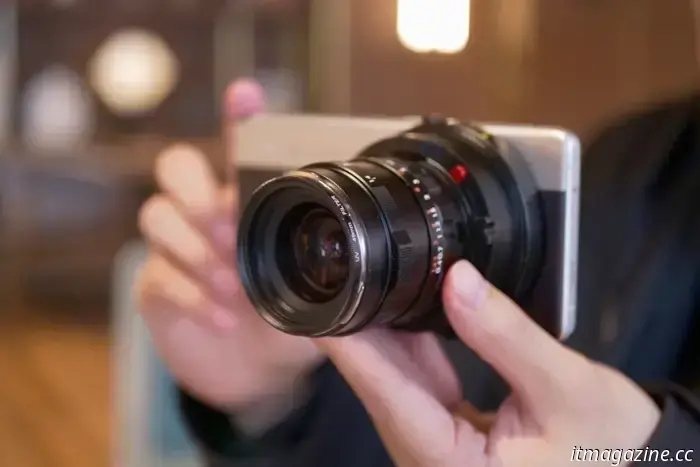
The Realme Ultra concept is one of those extraordinary, rare tech items that makes you think, “this is so incredible that I can hardly believe it’s real.” Yet, here I was, actually holding and using it. It resembles a camera lens with a phone attached rather than a traditional cameraphone, and it’s truly unlike anything we’ve encountered in a long time.
It's still a concept for now.
Andy Boxall / Digital Trends
When I unboxed the Realme Ultra concept phone, I couldn't help but laugh. Many have discussed similar ideas over the years, and some notable brands like Sony have attempted something akin to this before, but this was my first hands-on experience, and it felt surprisingly offbeat—in a delightful, how-is-this-possible sort of way.
I won’t claim the Ultra concept is the most refined or user-friendly camera on a phone I’ve ever used, but that’s not its purpose. It aims to showcase what might be possible, and with the right attention to detail, it could potentially evolve into a real product available for purchase.
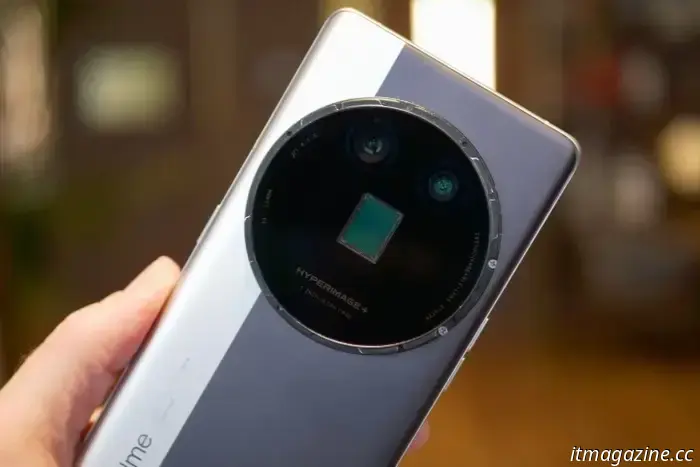
On the back of the Realme Ultra phone (which closely resembles the Xiaomi 15 Ultra) are two standard-looking cameras—a main and a wide-angle—but both employ 1-inch sensors, making them exceptionally impressive on their own. Centrally located within the camera module is a bare CMOS sensor. It resembles a camera without its lens since that’s actually what has been done with the Realme Ultra.
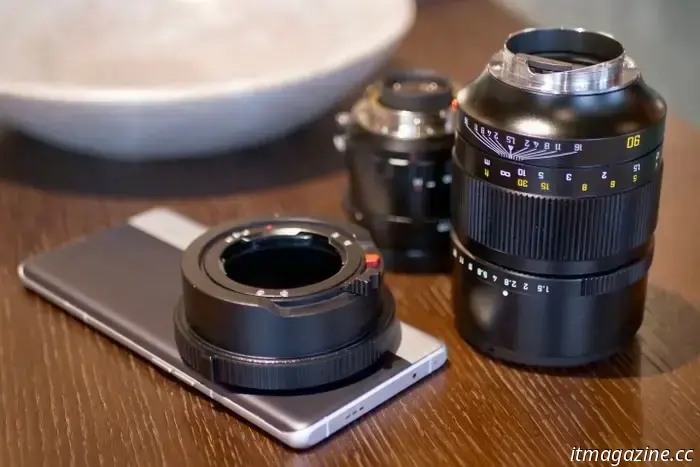
To attach the lens kit, you simply use a specific adaptor plate and secure it to the back of the phone. It’s easy to install, and it’s secured enough that it won’t come loose. Then, the magic begins. Along with the concept phone, Realme provided two full-size camera lenses, one for a 3x zoom and the other for a 10x zoom. Both feature a fixed focal length, adjustable aperture, and manual focus ring. Once you align and lock the red dots on the lens and adaptor, you're all set to start taking photos with the most unusual camera/phone combination you’ve ever encountered.
Taking photos with the Ultra
10x lens Andy Boxall / Digital Trends
There's a reason people usually don't attach large camera lenses to the back of phones: it makes the whole setup quite cumbersome. It's difficult to find the right place to hold the “camera” with the 10x zoom lens, as it becomes back-heavy when you try to hold just the phone, and holding both the lens and phone while tapping the shutter button is somewhat awkward. It’s even more challenging due to the absence of optical image stabilization (OIS), relying only on electronic stabilization (EIS)—if your hands aren’t perfectly steady, keeping your subject focused is tough.
However, it's not impossible. When you manage it, the results are unlike any photos you would typically capture with a smartphone. While at MWC 2025 in Barcelona, Spain, I took the phone and its impressive lens to the renowned Sagrada Familia, capturing various photos from a distance while also zooming in on intricate details high up. Manual focus can be tough, but the outcomes—for a concept phone—are remarkable.
I captured a range of other photos, achieving stunning depth of field that would be unattainable with an ordinary smartphone telephoto camera. The manual focus offers a challenge but proves rewarding, and the adjustable aperture should provide excellent performance in low-light conditions, as long as you have a tripod. I enjoy experimenting with cameras and knew I could spend the entire day exploring the Realme Ultra and its unique 10x zoom lens. I wasn’t the only one intrigued by the unconventional phone; it garnered quite a bit of attention in the bustling area.
Will it become a reality?
3x lens Andy Boxall / Digital Trends
Although the Realme Ultra is currently a concept phone, there appears to be a plan to turn it into an actual product in the future. Realme recognizes the need to make the entire experience much more user-friendly. The camera app has been modified to include new options for the 3x and 10x modes, alongside standard 1x and wide-angle settings, but additional stabilization and likely an autofocus mode are necessary. Currently, it's an enjoyable toy for camera enthusiasts, but it might frustrate others.
The adaptor ring is compatible with any M mount camera lens, but because the software is tailored to the 3x and 10x configurations, further development may be needed to accommodate other lenses. Additionally, there’s the issue of cost and convenience. Carrying a smartphone with a good camera is quite different from lugging around a smartphone along with several large lenses, and anyone investing in both a smartphone and lenses might question whether it’s better to simply purchase a traditional camera and lens instead. These considerations explain why it remains a concept phone rather than a market-ready product.
Interestingly, it isn’t the only device of its kind showcased at MWC




Other articles
 TCL's NXTPaper 11 Plus minimizes eye strain while maintaining excellent image quality.
TCL's inaugural AI-driven tablet includes features designed to enhance accessibility while also minimizing eye strain and fatigue during extended usage.
TCL's NXTPaper 11 Plus minimizes eye strain while maintaining excellent image quality.
TCL's inaugural AI-driven tablet includes features designed to enhance accessibility while also minimizing eye strain and fatigue during extended usage.
 Nvidia's GPU priced under $350 has become the most popular graphics card on Steam.
The RTX 4060 has emerged as the leading graphics card among PC gamers on Steam.
Nvidia's GPU priced under $350 has become the most popular graphics card on Steam.
The RTX 4060 has emerged as the leading graphics card among PC gamers on Steam.
 HMD's Fusion X1 is a child-friendly smartphone that allows parents to access it remotely.
The HMD Fusion X1 provides an extensive set of parental controls to limit access to apps, control internet browsing, enable emergency SOS calling, and includes a specific school mode.
HMD's Fusion X1 is a child-friendly smartphone that allows parents to access it remotely.
The HMD Fusion X1 provides an extensive set of parental controls to limit access to apps, control internet browsing, enable emergency SOS calling, and includes a specific school mode.
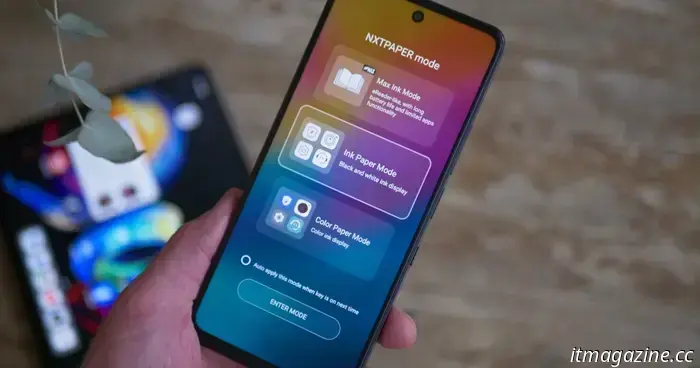 I utilized TCL's Nxtpaper display technology, and it's prepared to take the place of your e-reader.
I had the opportunity to try out TCL's latest Nxtpaper screen technology on both a phone and a tablet, and I was truly impressed by the improvements.
I utilized TCL's Nxtpaper display technology, and it's prepared to take the place of your e-reader.
I had the opportunity to try out TCL's latest Nxtpaper screen technology on both a phone and a tablet, and I was truly impressed by the improvements.
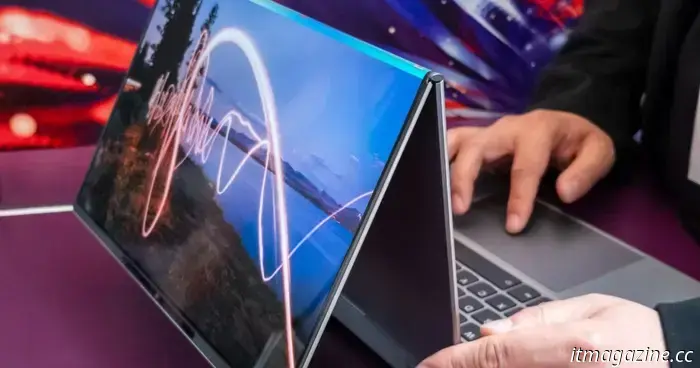 This computer features a folding screen that I really want to purchase.
A new PC concept has emerged in town, and it stands out in a significant way. Although it is still just a concept, it has the potential to become one of the finest PCs of our time. Here's the reason behind this.
This computer features a folding screen that I really want to purchase.
A new PC concept has emerged in town, and it stands out in a significant way. Although it is still just a concept, it has the potential to become one of the finest PCs of our time. Here's the reason behind this.
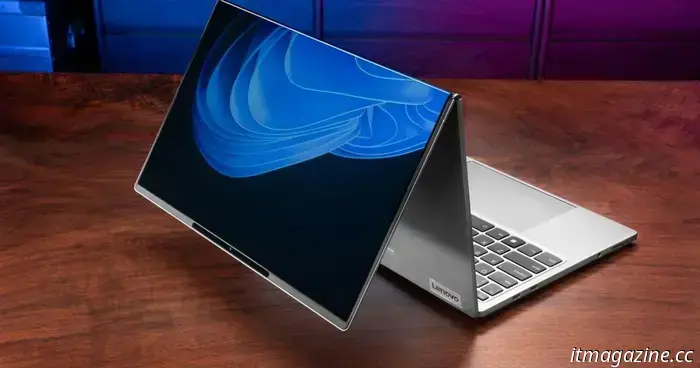 Lenovo's innovative approach to foldable screen laptops is quite literally elevated.
Lenovo's newest AI PC concept device is essentially a 5-in-1 laptop that features both foldable and rollable elements.
Lenovo's innovative approach to foldable screen laptops is quite literally elevated.
Lenovo's newest AI PC concept device is essentially a 5-in-1 laptop that features both foldable and rollable elements.
Realme's Ultra phone concept was the wildest device I experienced at MWC 2025.
Realme has figured out how to attach a full-size camera lens to the back of a smartphone, and I've used it to take photos.