
China's Horizon Robotics aims to provide completely hands-free driving within three years.
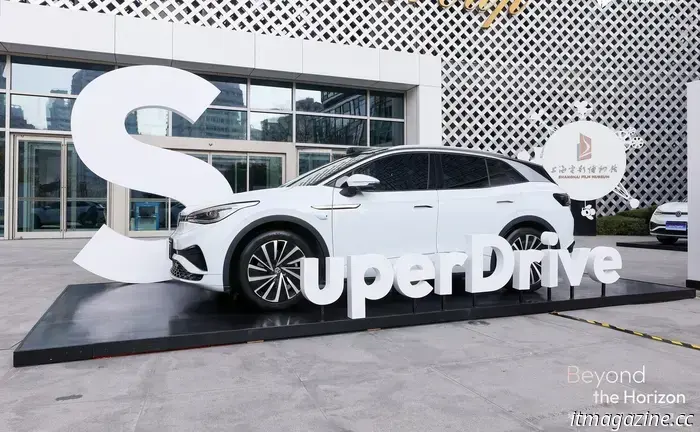
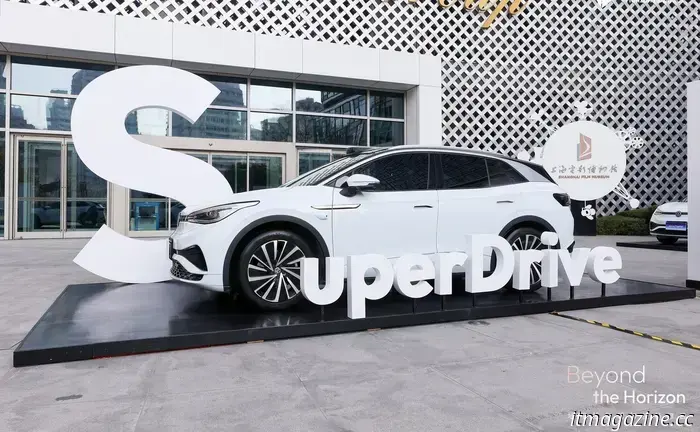
A Volkswagen ID.4 crossover equipped with the Horizon SuperDrive advanced driver assistance system was showcased in Shanghai on Monday, January 13, 2025. Credit: Horizon Robotics.
Horizon Robotics from China is optimistic about contributing to a future of self-driving vehicles, predicting that hands-off driving systems could become available within three years. This would be followed by the widespread implementation of eyes-off driving functions two years later, with full autonomy expected around 2035, according to founder and CEO Yu Kai, who spoke to journalists in Shanghai on Monday. Yu, a well-known deep learning expert in China, believes that these hands-off, eyes-off semi-autonomous systems, referred to as Level 3 (L3) in the industry, will provide drivers with temporary relief to take control of the steering wheel only in critical situations. He also expressed his belief that a fully autonomous, "minds-off" driving experience could be realized within the next decade.
These remarks coincide with Horizon's announcement on Monday regarding its full-stack automated driving solution, Horizon SuperDrive, which is set to begin mass delivery with a Chinese automaker in the third quarter of this year. More information about this partnership will be shared later in the year.
The system employs a single neural network for training sensor data and producing control actions, a method known as end-to-end learning, which aims to enable urban autonomous navigation in all major Chinese cities upon delivery, according to the company. The SuperDrive driver assistance system integrates various sensors, including cameras, radar, and lidar, and does not depend on high-precision mapping, facilitating a broader deployment for Horizon.
On Monday, TechNode had the chance to experience a ride in a Volkswagen electric crossover powered by Journey 6, Horizon's next-generation automotive computing solution, during a 30-minute journey through downtown Shanghai. On a bright afternoon, the system operated without intervention over an eight-kilometer (five-mile) route that included urban roads and single carriageways filled with various vehicles, as well as pedestrians and tourists.
During the test drive, the system demonstrated a proactive yet cautious approach, skillfully navigating narrow roads and busy traffic in the Jing’an district, an older part of the city. It maintained a safe distance from the vehicle in front to prevent sudden interruptions while patiently allowing pedestrians to cross, leading to a generally smooth driving experience. The system's ability to execute U-turns at unusual intersections was particularly noteworthy.
Founded a decade ago by Yu, who previously directed Baidu’s Institute of Deep Learning and NEC Labs America (part of Japan’s NEC Corporation), Horizon has garnered substantial support from notable backers like VW, BYD, HongShan Capital, and Hillhouse Investment. As reported by Reuters, the Beijing-based tech unicorn raised $696 million last October in Hong Kong's largest initial public offering (IPO) of the year. The company stated that over five million vehicles have utilized its technologies as of last year, with an additional 100 new models slated to incorporate its Journey 6 hardware in the coming years.
Jill Shen is a technology reporter based in Shanghai, covering topics related to Chinese mobility, autonomous vehicles, and electric cars. She can be contacted via email at [email protected] or on Twitter @jill_shen_sh.
Other articles
 "Bitrix24 introduced its own BitrixGPT AI model for CoPilot
Bitrix24 has introduced a new version of its BitrixGPT 4x AI model designed to automate routine business processes. The model is already available in the boxed version of the product, and it is planned to integrate it into cloud portals in 2025.
"Bitrix24 introduced its own BitrixGPT AI model for CoPilot
Bitrix24 has introduced a new version of its BitrixGPT 4x AI model designed to automate routine business processes. The model is already available in the boxed version of the product, and it is planned to integrate it into cloud portals in 2025.
 NIO is the newest Chinese car manufacturer to venture into the robotics industry.
The market for AI robots is on the rise, presenting significant growth opportunities, and has already drawn in prominent companies like BYD, Chery, and GAC.
NIO is the newest Chinese car manufacturer to venture into the robotics industry.
The market for AI robots is on the rise, presenting significant growth opportunities, and has already drawn in prominent companies like BYD, Chery, and GAC.
 CATL is expected to announce a record profit in 2024, even with a decrease in revenue due to the decline in lithium prices.
In the meantime, CATL cautioned that it could finish the year with a drop in revenue for the first time since it began disclosing its financial data in 2015.
CATL is expected to announce a record profit in 2024, even with a decrease in revenue due to the decline in lithium prices.
In the meantime, CATL cautioned that it could finish the year with a drop in revenue for the first time since it began disclosing its financial data in 2015.
 CES 2025: Chinese technology innovators stand out with rollable laptops, AI-powered televisions, and intelligent media hubs.
Chinese exhibitors constituted the largest group of foreign participants at the annual Consumer Electronics Show (CES), a significant technology trade fair, which took place in Las Vegas from January 7 to 10.
CES 2025: Chinese technology innovators stand out with rollable laptops, AI-powered televisions, and intelligent media hubs.
Chinese exhibitors constituted the largest group of foreign participants at the annual Consumer Electronics Show (CES), a significant technology trade fair, which took place in Las Vegas from January 7 to 10.
 DJI introduces the DJI Flip, a foldable drone equipped with hand launch capabilities and AI features.
On Tuesday, Chinese drone manufacturer DJI introduced the DJI Flip, a foldable drone that includes a 1/1.3-inch image sensor for capturing 4K/60fps HDR videos. Weighing less than 249 grams, this foldable model comes with a protective cover, offers a flight duration of 31 minutes, features AI smart tracking, and can be launched by hand without the need for a remote control.
DJI introduces the DJI Flip, a foldable drone equipped with hand launch capabilities and AI features.
On Tuesday, Chinese drone manufacturer DJI introduced the DJI Flip, a foldable drone that includes a 1/1.3-inch image sensor for capturing 4K/60fps HDR videos. Weighing less than 249 grams, this foldable model comes with a protective cover, offers a flight duration of 31 minutes, features AI smart tracking, and can be launched by hand without the need for a remote control.
 Personalized AI for everyone: Nvidia unveils revolutionary Project Digits
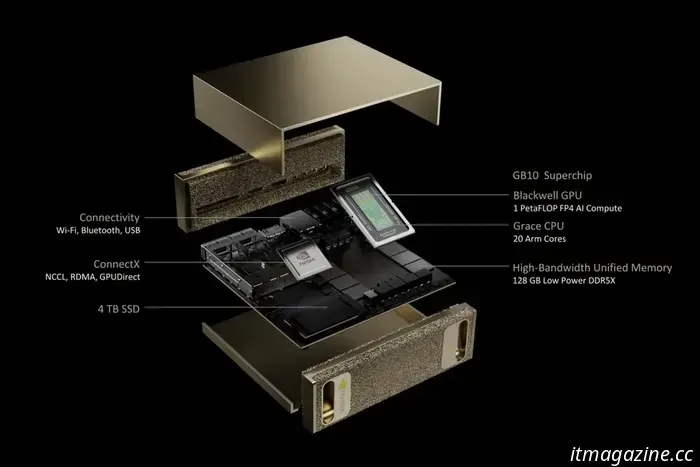
At CES 2025, which kicked off in Las Vegas today, Nvidia unveiled a new personal supercomputer solution for artificial intelligence, a system called Project Digits. This compact supercomputer, which looks a lot like a Mac Mini and runs from a standard wall outlet, is designed to make powerful AI computing available to a wide range of developers.
Personalized AI for everyone: Nvidia unveils revolutionary Project Digits
At CES 2025, which kicked off in Las Vegas today, Nvidia unveiled a new personal supercomputer solution for artificial intelligence, a system called Project Digits. This compact supercomputer, which looks a lot like a Mac Mini and runs from a standard wall outlet, is designed to make powerful AI computing available to a wide range of developers.
China's Horizon Robotics aims to provide completely hands-free driving within three years.
The remarks follow Horizon's announcement on Monday that its ADAS will commence mass delivery in the third quarter, as it is a key partner of Volkswagen and BYD in China.