

From uncontrolled expansion to technology-driven development in China's AI short drama sector.
In September, China's inaugural regulatory framework for micro-dramas, titled the Administrative Measures for the Development of Micro-Dramas, came into effect, marking the first time AI-generated micro-dramas are subject to a structured regulatory system. This initiative signifies not just a new phase of compliance but also indicates that the AI short drama sector in China is transitioning from its initial phase of indiscriminately pursuing views based on high production volumes to a new cycle focused on technological advancement and quality content.
The regulation, which took effect on September 1, categorizes all micro-dramas with episodes shorter than 20 minutes under a consolidated national regulatory scheme. It mandates that AI-generated micro-dramas display clear AI disclosure labels in every episode. Streaming platforms are barred from employing recommendation algorithms that encourage excessive consumption or user addiction. By delineating responsibilities throughout the production, review, and distribution stages, these regulations aim to steer the industry away from unchecked expansion and toward a healthier ecosystem centered on quality and accountable innovation.
Reflecting on the rapid growth of the past two years, the first wave of AI short dramas mainly leveraged technological benefits such as reduced costs and improved efficiency. The swift evolution of generative AI has drastically reduced the production expenses of short dramas from potentially hundreds of thousands of yuan using conventional methods to merely a few thousand yuan. Projects that previously required a sizable crew and extended production times can now be executed by a single creator utilizing AI tools within weeks.
In the first half of 2026, the sector produced 367,000 micro-dramas, with over 74% originating from AI-generated sources. On average, more than 1,500 new AI dramas were released daily, transforming the theoretical idea of a "one-person production team" into a tangible reality for numerous small and independent creators.
However, the downsides of this swift, volume-driven growth soon became evident. Platforms became inundated with similar AI-generated faces and recycled plots, while the industry-wide recovery rate for production costs remained low. This surplus of subpar content threatened to plunge the entire sector into a cycle where lower-quality productions overshadowed superior work.
A turning point occurred with the comprehensive technological advancements made by leading platforms. Instead of merely providing unrestricted access to AI production tools, major players like ByteDance's Hongguo Short Drama began developing complete AI production systems tailored for short dramas. These platforms have refined large language models specifically for the genre and utilized vast amounts of user behavior data to create tools that enhance script pacing while minimizing low-quality and recycled content.
Additionally, platforms have sought to resolve longstanding technical challenges faced by AI short dramas. Technologies ensuring character consistency help address discrepancies in character appearances across episodes, while multimodal video models are being optimized for the brief shots and rapid storytelling characteristic of micro-dramas. Furthermore, AI content pre-screening systems have been implemented to identify issues such as repeated AI-generated faces, potentially infringing materials, and visual flaws before entering the formal review stage.
These initiatives indicate a broader transformation within the industry. AI is no longer employed solely to boost production volume; platforms are increasingly utilizing technology to enhance consistency, quality, and compliance throughout the production process. This evolution reflects a gradual shift from low-cost mass production to a more quality-centric model of AI short drama production.
Simultaneously, a second growth momentum for AI short dramas is emerging internationally. From January to July 2026, TikTok short dramas generated over $110 million in total revenue-sharing payouts, with monthly distributions exceeding $29 million in July alone. The AI production technologies and captivating storytelling methods developed in China are quickly being adapted to global markets, positioning AI short dramas as a new standard for China's digital content exports.
Looking back from this new vantage point, AI short dramas were never intended to replace traditional film and television; rather, their purpose is to empower creators by using technology to redefine the economics and dynamics of content creation. As regulations and technological advancements eliminate low-quality, mass-produced, and recycled content, the lasting competitive edge will not stem solely from the AI tools themselves, but from creators' ability to authentically engage audience emotions and manage narrative pacing effectively.
Increased value throughout the AI short drama supply chain is expected to converge around leading entities equipped with robust intellectual property libraries, foundational AI capabilities, and expansive global distribution networks. China's exploration into the industrialization of AI-powered content production is just beginning, entering an arena rich with imaginative potential.





Other articles
 Uber and Wayve introduce London’s inaugural robotaxi service, featuring a safety driver in each vehicle.
Uber and Wayve started transporting passengers in London on Thursday using fewer than 20 Ford Mustang Mach-Es. TfL has approved the vehicles as private hire cars, which means a licensed driver must be present and accountable for every journey.
Uber and Wayve introduce London’s inaugural robotaxi service, featuring a safety driver in each vehicle.
Uber and Wayve started transporting passengers in London on Thursday using fewer than 20 Ford Mustang Mach-Es. TfL has approved the vehicles as private hire cars, which means a licensed driver must be present and accountable for every journey.
 ByteDance secures $29.6 billion, marking Asia's second-largest loan of the year, while obtaining it at a lower cost.
ByteDance has obtained a loan of $29.6 billion after banks submitted over $30 billion in orders, increasing the facility that originally started at $20 billion.
ByteDance secures $29.6 billion, marking Asia's second-largest loan of the year, while obtaining it at a lower cost.
ByteDance has obtained a loan of $29.6 billion after banks submitted over $30 billion in orders, increasing the facility that originally started at $20 billion.
 Apple is facing a £2 billion lawsuit in the UK regarding App Tracking Transparency, initiated by a former official from the CMA.
UK app developers have submitted a £2bn lawsuit to the Competition Appeal Tribunal, claiming that Apple imposes more stringent tracking-consent regulations on third parties compared to its own advertising operations.
Apple is facing a £2 billion lawsuit in the UK regarding App Tracking Transparency, initiated by a former official from the CMA.
UK app developers have submitted a £2bn lawsuit to the Competition Appeal Tribunal, claiming that Apple imposes more stringent tracking-consent regulations on third parties compared to its own advertising operations.
 Apple might have discovered a way to incorporate MagSafe into its incredibly slim foldable iPhone.
Mark Gurman indicates that MagSafe will be included in Apple's foldable iPhone, and this feature might be what justifies its cost.
Apple might have discovered a way to incorporate MagSafe into its incredibly slim foldable iPhone.
Mark Gurman indicates that MagSafe will be included in Apple's foldable iPhone, and this feature might be what justifies its cost.
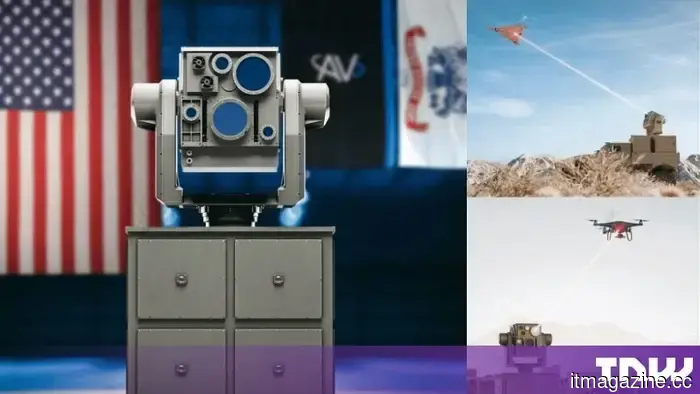 The US Army deployed a laser weapon on domestic territory before purchasing it.
AeroVironment secured a $464.8 million contract with the US Army for laser weapons. A few days prior, lasers from the same program successfully brought down three drones near the Mexican border.
The US Army deployed a laser weapon on domestic territory before purchasing it.
AeroVironment secured a $464.8 million contract with the US Army for laser weapons. A few days prior, lasers from the same program successfully brought down three drones near the Mexican border.
 Snowflake exceeded expectations in nearly all areas, except for one figure that went in the opposite direction.
Snowflake surpassed expectations for revenue, profit, and guidance, leading to a more than 20% increase in its stock price. However, its remaining performance obligations were $370 million lower than anticipated.
Snowflake exceeded expectations in nearly all areas, except for one figure that went in the opposite direction.
Snowflake surpassed expectations for revenue, profit, and guidance, leading to a more than 20% increase in its stock price. However, its remaining performance obligations were $370 million lower than anticipated.
From uncontrolled expansion to technology-driven development in China's AI short drama sector.
In September, China introduced its initial specific regulatory framework for micro-dramas, known as the Administrative Measures for the Development of Micro-Dramas.