

Microsoft has finally assigned a monetary value to Azure and clarified the specifications of what Azure encompasses.
For the first time, Microsoft will report Azure revenue in dollars on a quarterly basis, having increased it by 42% to $29.42 billion in the June quarter under a new two-segment structure. In June, the European Commission reached a preliminary conclusion that Azure should be designated as a gatekeeper, with a final decision anticipated by the year’s end.
This revenue reporting change coincides with a broader overhaul, as reported by CNBC. The figure is significant, as Azure's growth of 42% to $29.42 billion during the June quarter now represents nearly 33% of Microsoft's total revenue.
The company's operating segments will be reduced from three to two, moving away from a structure that has been in place since 2015. The new segments will be labeled as Agents and Infra and Devices and Consumer, as indicated in the company's presentation.
At the same time, the definition of Azure is becoming more focused. Services like GitHub cloud services, developer cloud services, the Security Copilot assistant, and healthcare and life sciences products are being excluded from this classification.
"Azure becomes more purely our consumption-based platform and infrastructure business," stated Satya Nadella. This aligns closely with the standards Brussels has been establishing under its stringent tech regulations.
In November 2025, the Commission initiated market investigations into Amazon Web Services and Azure. The focus was whether cloud services should have gatekeeper obligations under the Digital Markets Act.
The strategy taken is important, as cloud infrastructure does not meet the monthly active end user thresholds that the DMA assumes, necessitating the Commission to substantiate the position without simply counting users.
Doing so without revenue figures posed a challenge. While Amazon has disclosed AWS figures since 2015, Microsoft has only published its growth rates.
In June, the Commission reached a preliminary conclusion that both platforms should receive this designation, in collaboration with the Dutch competition authority, concluding that they hold very strong market positions.
Being designated as gatekeepers introduces interoperability requirements, restrictions on self-preferencing, and limitations on customer lock-in. Fines can reach up to 10% of global revenue, increasing to 20% for repeat violations.
A final decision is expected later this year, and the first published figure for Azure will coincide with this decision. Microsoft hasn't linked the two developments, and there’s no indication that they should be connected. Changes of this magnitude typically require extensive preparation time.
In July, analysts at Stifel estimated that approximately half of Azure's growth for the 2026 financial year could be attributed to OpenAI. Europe is about to receive a quarterly figure for infrastructure that its own analysts are already deeming a political risk.
Other articles
 A U.S. court has ruled that Google can maintain its ad exchange. The Commission stated that only a sale would be effective.
Google will not be required to sell its ad exchange in the US. According to Brussels, only a divestment of certain services would address the same behavior.
A U.S. court has ruled that Google can maintain its ad exchange. The Commission stated that only a sale would be effective.
Google will not be required to sell its ad exchange in the US. According to Brussels, only a divestment of certain services would address the same behavior.
 The gap in AI skills is widening as schools anticipate flawless solutions.
According to Gallup, teachers who utilize AI on a weekly basis save an average of 5.9 hours each week. The World Economic Forum states that by 2030, 39% of skills could become obsolete. Kirk Drake contends that instead of prohibiting AI, schools should focus on educating teachers to use it responsibly.
The gap in AI skills is widening as schools anticipate flawless solutions.
According to Gallup, teachers who utilize AI on a weekly basis save an average of 5.9 hours each week. The World Economic Forum states that by 2030, 39% of skills could become obsolete. Kirk Drake contends that instead of prohibiting AI, schools should focus on educating teachers to use it responsibly.
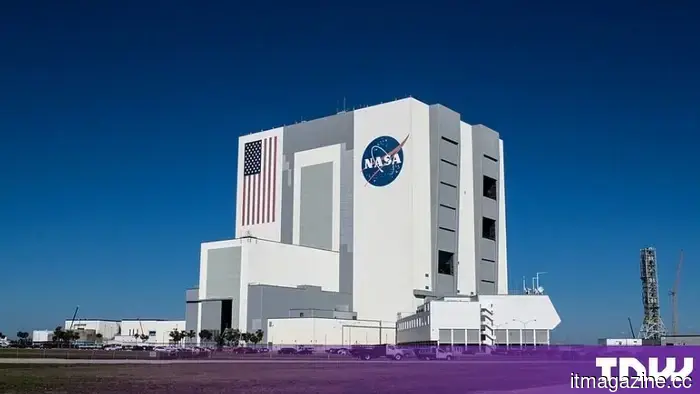 NASA is opting for a simplified Sortie Suit for the initial Artemis landings.
NASA is reducing the requirements for spacesuits to achieve a landing by 2028. The cancellation of the Gateway project, which helped to clear the timeline, also eliminated three astronaut seats from ESA.
NASA is opting for a simplified Sortie Suit for the initial Artemis landings.
NASA is reducing the requirements for spacesuits to achieve a landing by 2028. The cancellation of the Gateway project, which helped to clear the timeline, also eliminated three astronaut seats from ESA.
 Huawei Watch D3 hands-on: This could be Huawei's most peculiar smartwatch yet, but it may also be its most intelligent.
The Huawei Watch D3 prioritizes blood pressure monitoring as a central feature of the smartwatch. After using it for several days, here are the key highlights.
Huawei Watch D3 hands-on: This could be Huawei's most peculiar smartwatch yet, but it may also be its most intelligent.
The Huawei Watch D3 prioritizes blood pressure monitoring as a central feature of the smartwatch. After using it for several days, here are the key highlights.
 Google has launched Gemini 3.8 Flash alongside a cybersecurity version restricted to governmental use.
Google has launched Gemini 3.8 Flash and Flash Cyber. Each general-purpose model available in the EU market is subject to Article 53 obligations, while the cyber model is restricted.
Google has launched Gemini 3.8 Flash alongside a cybersecurity version restricted to governmental use.
Google has launched Gemini 3.8 Flash and Flash Cyber. Each general-purpose model available in the EU market is subject to Article 53 obligations, while the cyber model is restricted.
 The electric Range Rover debuts with 543 horsepower, a range of 600 kilometers, and an exorbitant starting price.
JLR's inaugural electric Range Rover is priced over $200,000, with a claimed range of 600 km, 543 hp, 350 kW charging capability, and impressive off-road performance.
The electric Range Rover debuts with 543 horsepower, a range of 600 kilometers, and an exorbitant starting price.
JLR's inaugural electric Range Rover is priced over $200,000, with a claimed range of 600 km, 543 hp, 350 kW charging capability, and impressive off-road performance.
Microsoft has finally assigned a monetary value to Azure and clarified the specifications of what Azure encompasses.
Microsoft is revealing Azure's quarterly revenue for the first time and is clarifying what falls under the Azure umbrella, as the EU deliberates on whether to grant it a specific designation.