

The gap in AI skills is widening as schools anticipate flawless solutions.
TL;DR Schools are mainly viewing AI as a risk for cheating while the skills gap continues to expand. Gallup found that teachers using AI weekly save 5.9 hours a week. The WEF predicts that 39% of current skills may become obsolete by 2030. Kirk Drake suggests that instead of banning AI, schools should provide teachers with approved tools, paid training, and clear privacy guidelines. Additionally, assessments should focus on critically evaluating AI outputs rather than merely producing answers.
Artificial intelligence has transitioned from a future challenge to an active influence on writing, analysis, design, and construction. Despite this, many educational institutions primarily view it as a potential shortcut for student misconduct. While this perspective is understandable, it leaves educators without support and students ill-prepared for an evolving world. This issue grows increasingly significant every school year since delaying practical engagement does not maintain the status quo; it merely shifts the responsibility for learning elsewhere.
The main priority should not be to provide every student with access to a chatbot but rather to equip educators with the time, training, and authority to use AI responsibly. Teachers dedicate considerable time to lesson planning, creating resources, grading, and engaging with families. These tasks are important, yet much of the repetitive preparation could be streamlined without sacrificing professional judgment.
The advantages of AI are already evident. A survey by Gallup and the Walton Family Foundation in 2025 found that teachers using AI weekly reported saving 5.9 hours each week, which they redirected towards personalized lessons, detailed feedback, and communication with families. However, a follow-up in 2026 discovered that only 18% of public K-12 teachers had received formal guidance from administrators regarding AI use in their workplaces. Schools are permitting this technology's adoption without establishing the foundational support that would enhance its safety and usefulness.
This situation must be rectified. School districts should provide teachers with sanctioned tools, compensated training, and clear policies regarding student privacy, human oversight, and appropriate applications. AI can assist in drafting worksheets or providing feedback suggestions, but the responsibility for accuracy, context, and final decisions should remain with educators. The aim is not to automate teaching but to free up more of teachers’ time for actual teaching.
With a solid foundation in place, AI can help address a longstanding issue in education: students with diverse strengths and weaknesses often receive the same instruction at the same pace. It is unrealistic for a teacher to manually analyze years of assignments for each student and continuously create multiple learning plans. With proper consent and data protection, AI can recognize patterns, suggest focused practice, and modify materials; ultimately, the teacher determines what suits the student.
This situation also presents a chance to rethink what educational assessments should evaluate. While memorizing information is beneficial, students must also develop the capacity for independent writing, calculation, and reasoning. However, simply producing an answer cannot remain the primary objective now that machines can generate responses almost instantly. Students need to learn how to frame problems, assess claims, identify poor outputs, link ideas, and justify why a conclusion should be trusted.
The urgency of this issue is being reinforced by the labor market. The World Economic Forum's 2025 employer survey projected that 39% of current worker skills may evolve or become obsolete by 2030. It also highlighted the rising importance of skills like AI and big data proficiency, technological literacy, creative thinking, curiosity, and the commitment to lifelong learning. Schools do students a disservice if they isolate them from a tool that they will be expected to assess and navigate in the future.
I witnessed this firsthand during an AI boot camp with my three teenagers. They spent the summer creating practical projects, including tools for my work and their own ideas. The key takeaway was not that AI provided code; rather, they learned to decide what to create, break complex problems down, analyze failed outcomes, and continuously improve. This iterative process made learning immediate and meaningful.
Real risks are involved. AI can be inaccurate, biased, or mishandle sensitive data. Students might use it to evade critical thinking. These risks warrant guided practice, not an outright ban. A school prohibiting this technology may inhibit its classroom application without fostering judgment skills. Conversely, a school that thoughtfully integrates AI can ensure that verification, disclosure, and accountability become integral to every assignment.
Parents should not presume that schools will adapt at their children’s pace. They can inquire with faculty and school boards about the AI training teachers are receiving, how students are being equipped to assess AI outputs, and how responsible experimentation is incorporated into the curriculum. At home, parents should establish clear expectations: children must complete their own work while learning when and how to utilize AI effectively. While not all parents can homeschool or lead policy initiatives, every parent can pose these questions. Schools may require time to change, but our children cannot afford to wait.
Other articles
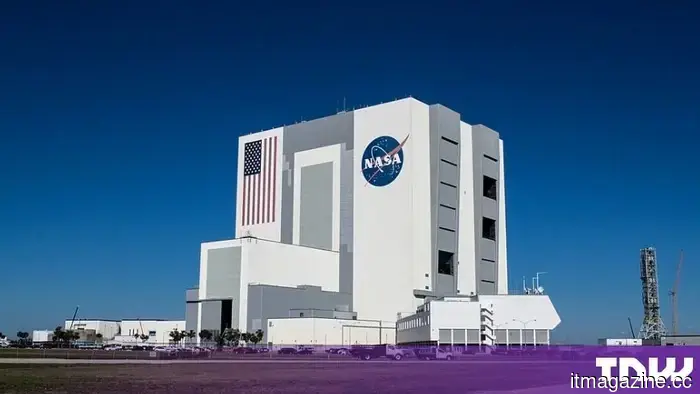 NASA opts for a simplified Sortie Suit for the initial Artemis landings.
NASA is reducing the requirements for spacesuits to facilitate a landing by 2028. The cancellation of the Gateway, which helped to clear the timeline, also eliminated ESA's three astronaut seats.
NASA opts for a simplified Sortie Suit for the initial Artemis landings.
NASA is reducing the requirements for spacesuits to facilitate a landing by 2028. The cancellation of the Gateway, which helped to clear the timeline, also eliminated ESA's three astronaut seats.
 New York prohibits AI in primary schools, three months following Norway's lead.
New York City is prohibiting generative AI for students up to eighth grade. Europe has already implemented two similar bans, along with an AI Act that does not address the students who are utilizing it.
New York prohibits AI in primary schools, three months following Norway's lead.
New York City is prohibiting generative AI for students up to eighth grade. Europe has already implemented two similar bans, along with an AI Act that does not address the students who are utilizing it.
 Acer's latest Vero 16 demonstrates that laptops designed for repairability can still offer a quality experience.
Acer's revamped Vero 16 features a repairable chassis made of recycled aluminum and is equipped with top-tier Intel processors, demonstrating that environmentally friendly laptops can still deliver high performance.
Acer's latest Vero 16 demonstrates that laptops designed for repairability can still offer a quality experience.
Acer's revamped Vero 16 features a repairable chassis made of recycled aluminum and is equipped with top-tier Intel processors, demonstrating that environmentally friendly laptops can still deliver high performance.
 What occurs to trust when focus takes precedence over honesty?
Booker Loud, the founder of Pin-Social, asserts that the attention economy of social media is undermining public trust. With only 37% of people worldwide trusting news and 73% of Americans unable to tell real information from fake online, he advocates for digital environments that prioritize connection instead of outrage.
What occurs to trust when focus takes precedence over honesty?
Booker Loud, the founder of Pin-Social, asserts that the attention economy of social media is undermining public trust. With only 37% of people worldwide trusting news and 73% of Americans unable to tell real information from fake online, he advocates for digital environments that prioritize connection instead of outrage.
 How Might Generative AI Improve Your Business Strategy?
Gartner predicts that by 2030, AI will impact all areas of IT work, transforming the way organizations organize roles, skills, and technological operations. By processing vast amounts of data and producing practical insights, it could enable businesses to adapt more swiftly to evolving market conditions and uncover new opportunities for growth. This is where Generative AI Services come into play.
How Might Generative AI Improve Your Business Strategy?
Gartner predicts that by 2030, AI will impact all areas of IT work, transforming the way organizations organize roles, skills, and technological operations. By processing vast amounts of data and producing practical insights, it could enable businesses to adapt more swiftly to evolving market conditions and uncover new opportunities for growth. This is where Generative AI Services come into play.
 Huawei Watch GT 7 Pro Initial Thoughts: Large watch, larger battery, surprisingly minimal hassle.
Our initial thoughts on the Huawei Watch GT 7 Pro highlight its athletic design, capabilities for outdoor tracking, cycling performance, and remarkably good battery life.
Huawei Watch GT 7 Pro Initial Thoughts: Large watch, larger battery, surprisingly minimal hassle.
Our initial thoughts on the Huawei Watch GT 7 Pro highlight its athletic design, capabilities for outdoor tracking, cycling performance, and remarkably good battery life.
The gap in AI skills is widening as schools anticipate flawless solutions.
According to Gallup, teachers who utilize AI on a weekly basis save an average of 5.9 hours each week. The World Economic Forum states that by 2030, 39% of skills could become obsolete. Kirk Drake contends that instead of prohibiting AI, schools should focus on educating teachers to use it responsibly.