
Google has launched Gemini 3.8 Flash alongside a cybersecurity version restricted to governmental use.
Google has introduced Gemini 3.8 Flash and Gemini 3.8 Flash Cyber, marking the company's third Flash release in six weeks, with the cyber model available only to trusted testers and government entities. According to the EU AI Act, every general-purpose model launched in the market must meet documentation, copyright, and training data requirements, and any systemic risk model must be reported to the Commission within a two-week timeframe.
Gemini 3.8 Flash is Google's latest offering, as reported by Ars Technica, and it consists of two versions: a general model referred to as a workhorse, and Flash Cyber, which is designed to identify and address software vulnerabilities. Flash Cyber replaces version 3.5.
The Pro line has not been updated since early 2026, with TNW noting that the less expensive model is now two versions ahead of the flagship offering. The pricing for Gemini 3.8 Flash is introductory until the end of the year, set at $0.75 per million input tokens and $3.75 for output, compared to the future prices of $1.50 and $7.50, respectively. Competitors have been lowering token prices to attract cautious businesses.
In Europe, each release is subject to compliance requirements. Article 53 mandates that technical documentation, a copyright policy, and a public summary of training data be provided for each general-purpose model that enters the market. Google has agreed to these terms voluntarily, joining the General Purpose AI Code of Practice on July 30, 2025, shortly after Meta declined to do so.
The systemic risk classification has a time constraint; any model that is trained using more than 10 to the 25th floating-point operations must be reported to the Commission within two weeks, as stipulated by Article 52. This timeframe is shorter than the interval between the releases, with Gemini 3.7 Flash launching three weeks prior to this version.
It is not publicly stated if any of these models exceed the threshold, as Google has not disclosed this information, and the assumption relies on training resources rather than benchmark performance. Flash models are intentionally designed to be smaller than the Pro series.
The situation with the cyber variant presents a different issue. Flash Cyber is limited to trusted testers and governmental bodies, though Google has not specified which governments are included.
Additionally, there are concerns regarding performance. Google's own data indicate that Flash is trailing behind Claude Opus in terms of agentic computer usage, even a year after TNW reported on the computer use tool introduced with version 3.5.
The security assertions come only from internal measures, claiming a 2.6x increase in patch accuracy for the Chrome team and a critical vulnerability identified within two hours, both assessed by Google.
This reveals the complexity of the issue; each release comes with its own European compliance responsibilities, even though the product line was not initially available in Europe at the time of its launch.
Other articles
 New York prohibits AI in primary schools, three months following Norway's lead.
New York City is prohibiting generative AI for students up to eighth grade. Europe has already implemented two similar bans, along with an AI Act that does not address the students who are utilizing it.
New York prohibits AI in primary schools, three months following Norway's lead.
New York City is prohibiting generative AI for students up to eighth grade. Europe has already implemented two similar bans, along with an AI Act that does not address the students who are utilizing it.
 The Justice Department supports OpenAI in the dispute over copyright with publishers.
The DOJ informed a New York court that training AI constitutes fair use and is related to national security. Recital 106 of the AI Act was specifically created to prevent this.
The Justice Department supports OpenAI in the dispute over copyright with publishers.
The DOJ informed a New York court that training AI constitutes fair use and is related to national security. Recital 106 of the AI Act was specifically created to prevent this.
 Coder introduces Agent Relay in collaboration with SpaceXAI, operating Cursor’s cloud agents on client infrastructure.
Coder's Agent Relay operates Cursor's cloud agents on a customer's proprietary infrastructure. However, Cursor continues to execute the inference, which means DORA's responsibilities remain in effect.
Coder introduces Agent Relay in collaboration with SpaceXAI, operating Cursor’s cloud agents on client infrastructure.
Coder's Agent Relay operates Cursor's cloud agents on a customer's proprietary infrastructure. However, Cursor continues to execute the inference, which means DORA's responsibilities remain in effect.
 A US court has ruled that Google can maintain its ad exchange. The Commission stated that a sale is the only viable solution.
Google will not be required to sell its ad exchange in the US. Officials in Brussels state that only a partial divestment of its services would address the same behavior.
A US court has ruled that Google can maintain its ad exchange. The Commission stated that a sale is the only viable solution.
Google will not be required to sell its ad exchange in the US. Officials in Brussels state that only a partial divestment of its services would address the same behavior.
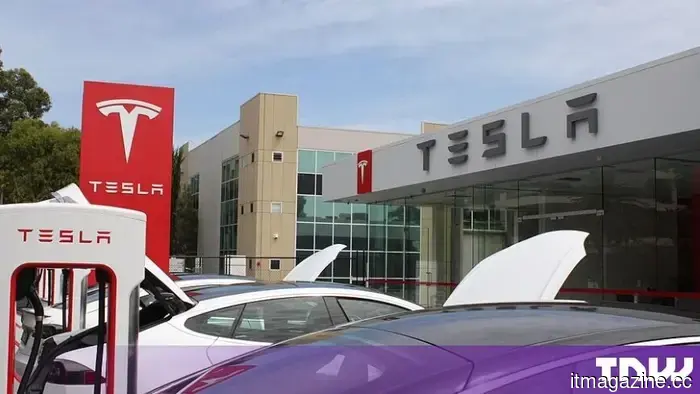 Tesla's driver assistance system is under increased scrutiny following two fatal accidents in which the vehicles came to a complete stop.
Two deadly crashes in the US involved Teslas that were stationary in active lanes while the driver assistance feature was turned on. Tesla has withheld the reasons, and the Dutch report is also confidential.
Tesla's driver assistance system is under increased scrutiny following two fatal accidents in which the vehicles came to a complete stop.
Two deadly crashes in the US involved Teslas that were stationary in active lanes while the driver assistance feature was turned on. Tesla has withheld the reasons, and the Dutch report is also confidential.
 ProveKit is now open-sourced by World to enable private identity verification on regular smartphones.
World has released ProveKit as open-source, a zero-knowledge proving toolkit that enables developers to create identity verifications that operate directly on users' devices. Individuals can validate their age, nationality, or possession of identification without disclosing the personal data associated with it.
ProveKit is now open-sourced by World to enable private identity verification on regular smartphones.
World has released ProveKit as open-source, a zero-knowledge proving toolkit that enables developers to create identity verifications that operate directly on users' devices. Individuals can validate their age, nationality, or possession of identification without disclosing the personal data associated with it.
Google has launched Gemini 3.8 Flash alongside a cybersecurity version restricted to governmental use.
Google has launched Gemini 3.8 Flash and Flash Cyber. Each general-purpose model available in the EU market is subject to Article 53 obligations, while the cyber model is restricted.