
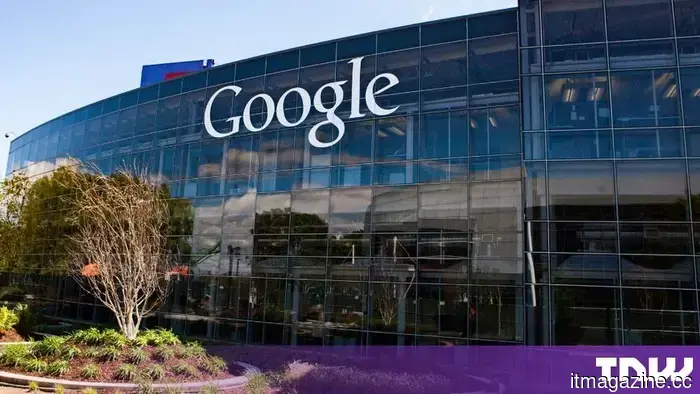
A U.S. court has ruled that Google can maintain its ad exchange. The Commission stated that only a sale would be effective.
A federal judge in the US has determined that Google will not be required to sell its advertising exchange, meaning the remedies from three antitrust cases in America will primarily be behavioral. Last September, the European Commission imposed a €2.95 billion fine on Google, stating that only divesting part of its services would adequately address the same behavior.
The U.S. Department of Justice secured a victory in the case in 2025, but has now lost the remedy it sought, according to Ars Technica. The court found that Google unlawfully locked publishers into its exchange, but did not deem the tools utilized by advertisers to be illegal. Judge Leonie Brinkema has placed a 14-day seal on the remedies order.
The European authorities shared the same perspective on the conduct but had a different stance on the solution. The Commission had fined Google €2.95 billion in September for self-preferencing practices within the adtech ecosystem, asserting that merely imposing a fine was not sufficient. Only the divestment of part of Google’s services would resolve the issue, according to the Commission.
In October, Teresa Ribera reiterated this position, stating that Google must suggest measures to eliminate its significant conflicts of interest in the adtech sector and indicated that a structural remedy appears necessary. Google was given 60 days to respond, yet its proposal was behavioral in nature.
The proposal allows publishers to set varying minimum prices for different bidders within Google Ad Manager, as well as improve interoperability among tools, but does not include any divestment. The Commission is currently reviewing this offer, and no decision has been made.
Consequently, the same conduct is now positioned differently across two jurisdictions. One has concluded its remedy phase without requiring a sale, while the other has indicated in writing that a sale could be necessary to transform digital advertising.
The outcome of the Play Store case mirrored this situation. Google lost to Epic, retained control over app vetting, and the remedies do not extend beyond U.S. borders. Europe did not require that case; the obligations for alternative app stores and payment systems derive from the Digital Markets Act, and Google has already faced an €890 million penalty under it.
Three American rulings have now been issued, with Google's market power remaining largely unchanged. The regulatory framework that governs Google in Europe has been in effect since March 2024, independent of these cases.
The next confrontation is already mapped out. The Commission has moved to enable access for rival AI assistants and search data on Android, which is an area that the American cases have just allowed Google to expand upon.
Другие статьи
 The Justice Department supports OpenAI in the dispute over copyright with publishers.
The DOJ informed a New York court that training AI constitutes fair use and is related to national security. Recital 106 of the AI Act was specifically created to prevent this.
The Justice Department supports OpenAI in the dispute over copyright with publishers.
The DOJ informed a New York court that training AI constitutes fair use and is related to national security. Recital 106 of the AI Act was specifically created to prevent this.
 According to Meta's AI Chief, the company's latest AI model is getting closer to those developed by OpenAI and Anthropic.
Meta has launched Muse Spark 1.3 but has not disclosed whether it will release the weights. The open-source exemption in the AI Act ends precisely where frontier models begin.
According to Meta's AI Chief, the company's latest AI model is getting closer to those developed by OpenAI and Anthropic.
Meta has launched Muse Spark 1.3 but has not disclosed whether it will release the weights. The open-source exemption in the AI Act ends precisely where frontier models begin.
 The Justice Department supports OpenAI in the copyright dispute with publishers.
The DOJ informed a court in New York that AI training constitutes fair use and pertains to national security. Recital 106 of the AI Act was specifically created to prevent such situations.
The Justice Department supports OpenAI in the copyright dispute with publishers.
The DOJ informed a court in New York that AI training constitutes fair use and pertains to national security. Recital 106 of the AI Act was specifically created to prevent such situations.
 Tesla's driver assistance system is under increased scrutiny following two fatal accidents in which the vehicles came to a complete stop.
Two deadly crashes in the US involved Teslas that were stationary in active lanes while the driver assistance feature was turned on. Tesla has withheld the reasons, and the Dutch report is also confidential.
Tesla's driver assistance system is under increased scrutiny following two fatal accidents in which the vehicles came to a complete stop.
Two deadly crashes in the US involved Teslas that were stationary in active lanes while the driver assistance feature was turned on. Tesla has withheld the reasons, and the Dutch report is also confidential.
 What occurs to trust when attention is prioritized over the truth?
Booker Loud, the founder of Pin-Social, contends that the attention economy of social media is undermining public trust. With only 37% of people worldwide trusting the news and 73% of Americans struggling to tell real from fake content online, he advocates for digital environments that prioritize connection rather than outrage.
What occurs to trust when attention is prioritized over the truth?
Booker Loud, the founder of Pin-Social, contends that the attention economy of social media is undermining public trust. With only 37% of people worldwide trusting the news and 73% of Americans struggling to tell real from fake content online, he advocates for digital environments that prioritize connection rather than outrage.
 New York prohibits AI in primary schools, three months following Norway's lead.
New York City is prohibiting generative AI for students up to eighth grade. Europe has already implemented two similar bans, along with an AI Act that does not address the students who are utilizing it.
New York prohibits AI in primary schools, three months following Norway's lead.
New York City is prohibiting generative AI for students up to eighth grade. Europe has already implemented two similar bans, along with an AI Act that does not address the students who are utilizing it.
A U.S. court has ruled that Google can maintain its ad exchange. The Commission stated that only a sale would be effective.
Google will not be required to sell its ad exchange in the US. According to Brussels, only a divestment of certain services would address the same behavior.