
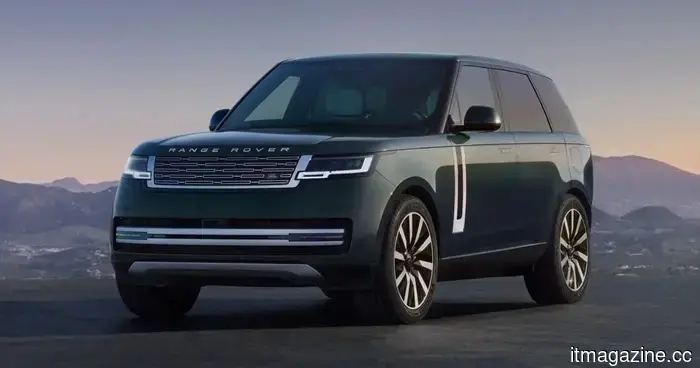
The electric Range Rover debuts with 543 horsepower, a range of 600 kilometers, and an exorbitant starting price.
The Range Rover has consistently embraced luxury, size, and price, and its first fully electric version continues this legacy as it transitions into the EV era. Jaguar Land Rover's (JLR) inaugural battery-electric Range Rover is now available for order, beginning at £154,070, or approximately $208,420. This positions it as one of the priciest electric SUVs currently for sale.
The electric variant comes at nearly £50,000 more than the standard combustion-engine Range Rover. Its pricing is comparable to the electric Mercedes-Benz G 580 and is not far off from high-end gasoline SUVs like the Bentley Bentayga.
This makes the Range Rover Electric's positioning in the U.S. quite intriguing. It will not primarily compete with mainstream electric SUVs. Instead, it faces competition from high-end luxury EVs, such as the Mercedes G 580, Porsche Cayenne Electric, and premium models of the Lucid Gravity. The 2026 G 580 is priced at $164,550, the Porsche Cayenne Electric starts at $111,350, and the Lucid Gravity ranges from $81,550 to $141,550.
With a substantial battery, rapid charging, and 543 horsepower
The Range Rover Electric features a reported 118.5kWh battery and an 800-volt electrical system. JLR claims it can achieve up to 600km, or around 373 miles, of WLTP range, while the company estimates a more realistic driving range of about 535km.
Charging capabilities are a standout aspect for the Range Rover. The SUV supports DC fast charging of up to 350kW, with the ability to go from 10% to 80% charge in about 22 minutes under optimal conditions.
Range Rover EV
Equipped with a dual-motor all-wheel-drive system, it delivers approximately 543hp and 850Nm, with a 0-60mph time of around 4.3 seconds. However, speed is not the primary focus. JLR has adopted a "Range Rover first, electric second" approach, maintaining the SUV's all-terrain capabilities, which include a reported water-wading depth of up to 900mm.
The essential question is whether luxury consumers will opt for an electric Range Rover
The exterior design intentionally mirrors the traditional Range Rover, featuring familiar lighting, flush door handles, and a recognizable shape. Aerodynamic modifications, including the grille and wheels, aim to enhance efficiency.
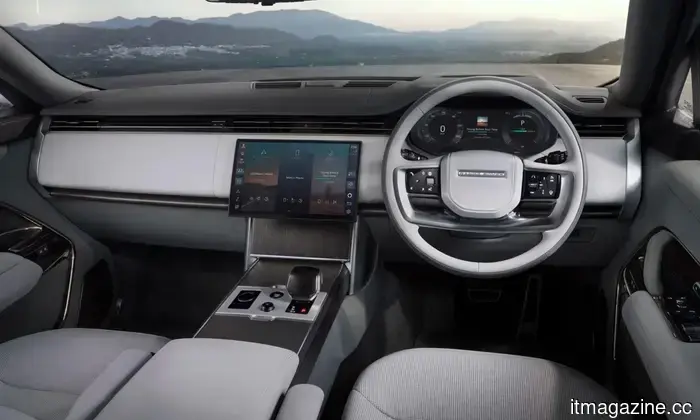
Inside, the cabin remains focused on luxury, boasting a reported 13.7-inch digital driver display and a 13.1-inch central touchscreen. An AI-driven range predictor and digital twin are integrated to offer better insights into range and battery health.
Range Rover EV
The Range Rover Electric is manufactured at JLR’s Solihull facility in the UK, alongside combustion and hybrid models. Bloomberg reports that around 9,000 factory workers have been trained for this electric shift, with battery packs and electric-drive units also produced in the UK.
For U.S. buyers, this positioning could be crucial. The U.S. market already has numerous electric SUVs that offer impressive range at much lower prices. The Range Rover, however, poses the query: will buyers invest over $200,000 for a luxury EV that offers an experience distinctly reminiscent of a Range Rover—something that models like the Lucid Gravity, Porsche Cayenne Electric, or Mercedes G 580 fail to fully replicate?
As demand for luxury EVs remains inconsistent, the Range Rover will serve as a barometer for the high-end EV SUV market.
Other articles
 The gap in AI skills is widening as schools anticipate flawless solutions.
According to Gallup, teachers who utilize AI on a weekly basis save an average of 5.9 hours each week. The World Economic Forum states that by 2030, 39% of skills could become obsolete. Kirk Drake contends that instead of prohibiting AI, schools should focus on educating teachers to use it responsibly.
The gap in AI skills is widening as schools anticipate flawless solutions.
According to Gallup, teachers who utilize AI on a weekly basis save an average of 5.9 hours each week. The World Economic Forum states that by 2030, 39% of skills could become obsolete. Kirk Drake contends that instead of prohibiting AI, schools should focus on educating teachers to use it responsibly.
 Acer has just unveiled a gaming monitor with a 1,000Hz refresh rate that maintains a 1080p resolution.
Acer has unveiled a 1,000Hz Full HD Predator monitor in addition to new 4K OLED, 5K Mini LED, and high-refresh Nitro displays.
Acer has just unveiled a gaming monitor with a 1,000Hz refresh rate that maintains a 1080p resolution.
Acer has unveiled a 1,000Hz Full HD Predator monitor in addition to new 4K OLED, 5K Mini LED, and high-refresh Nitro displays.
 Acer's latest Vero 16 demonstrates that laptops designed for easy repair can still offer a satisfying experience.
Acer's revamped Vero 16 features a chassis made from recycled aluminum that is easy to repair, paired with top-tier Intel processors, demonstrating that eco-friendly laptops can deliver high performance.
Acer's latest Vero 16 demonstrates that laptops designed for easy repair can still offer a satisfying experience.
Acer's revamped Vero 16 features a chassis made from recycled aluminum that is easy to repair, paired with top-tier Intel processors, demonstrating that eco-friendly laptops can deliver high performance.
 The Justice Department supports OpenAI in the dispute over copyright with publishers.
The DOJ informed a New York court that training AI constitutes fair use and is related to national security. Recital 106 of the AI Act was specifically created to prevent this.
The Justice Department supports OpenAI in the dispute over copyright with publishers.
The DOJ informed a New York court that training AI constitutes fair use and is related to national security. Recital 106 of the AI Act was specifically created to prevent this.
 Coder introduces Agent Relay alongside SpaceXAI, operating Cursor’s cloud agents on client infrastructure.
Coder's Agent Relay operates Cursor's cloud agents on the customer's infrastructure. However, Cursor continues to handle the inference, meaning that DORA's responsibilities still remain in effect.
Coder introduces Agent Relay alongside SpaceXAI, operating Cursor’s cloud agents on client infrastructure.
Coder's Agent Relay operates Cursor's cloud agents on the customer's infrastructure. However, Cursor continues to handle the inference, meaning that DORA's responsibilities still remain in effect.
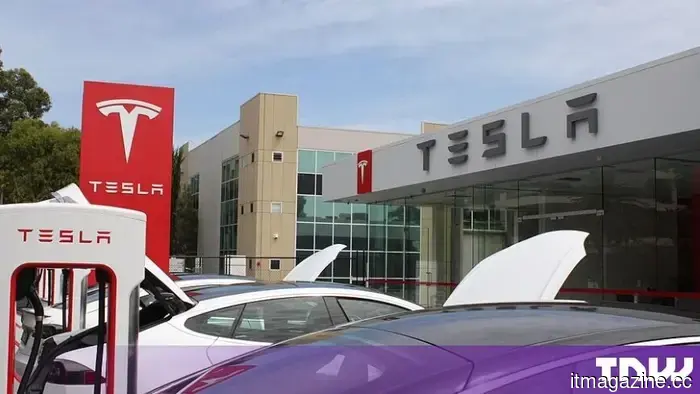 Tesla's driver assistance system is under increased scrutiny following two fatal accidents in which the vehicles came to a complete stop.
Two deadly crashes in the US involved Teslas that were stationary in active lanes while the driver assistance feature was turned on. Tesla has withheld the reasons, and the Dutch report is also confidential.
Tesla's driver assistance system is under increased scrutiny following two fatal accidents in which the vehicles came to a complete stop.
Two deadly crashes in the US involved Teslas that were stationary in active lanes while the driver assistance feature was turned on. Tesla has withheld the reasons, and the Dutch report is also confidential.
The electric Range Rover debuts with 543 horsepower, a range of 600 kilometers, and an exorbitant starting price.
JLR's inaugural electric Range Rover is priced over $200,000, with a claimed range of 600 km, 543 hp, 350 kW charging capability, and impressive off-road performance.