
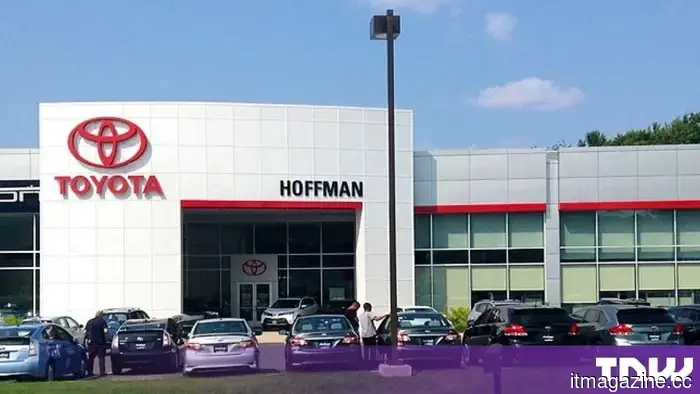
Toyota's system resembling FSD will be introduced in 2028, but the driver remains responsible.
Toyota plans to introduce a competitor to Tesla’s Full Self-Driving system in its 2028 models, branded as "Level 2++". This marketing label indicates that the driver remains in control, with an added guardrail layer to the neural network. Europe has endorsed this type of system under UN Regulation 171, but starting from December 9, the Product Liability Directive considers standalone software a product, regardless of its branding.
According to InsideEVs, Toyota's system is positioned as a challenge to Tesla's Full Self-Driving. The "Level 2++" designation is not an SAE classification; rather, it serves as a marketing term representing a level between Level 2 and Level 3, where the driver is always in charge.
The engineering approach differs from Tesla’s. Unlike Tesla's end-to-end network, Toyota will implement a guardrail layer designed to prevent unexpected behaviors, adhering to parameters set by humans in advance, as reported by Nikkei. Liability will be established prior to the vehicle's release. Akihiro Sarada, who leads Toyota’s software development center, stated, “We’ll develop Level 4 technology from a technical standpoint, but offer it commercially as Level 2++.”
Europe has already established a framework for such systems. The UN Regulation No. 171, which focuses on driver control assistance systems, will go into effect on September 30, 2024. This regulation clearly states that the driver bears responsibility and must continuously monitor the road, and manufacturers are required to communicate this in their marketing and at dealerships.
The Netherlands was the first to navigate this process, having approved Tesla’s FSD Supervised in April after an extensive 18-month testing period and analyzing 1.6 million kilometers of European road data. Their statement was definitive, indicating that the software is “not self-driving,” with the RDW emphasizing that the driver remains accountable and must maintain control.
This regulation pertains to traffic accountability rather than product invoices. Starting December 9, the Product Liability Directive will categorize standalone software as a product throughout the European Union. This also simplifies the burden of proof. In cases where technical complexity hinders the demonstration of a defect, a court may infer one, and defendants can be required to present evidence.
The interpretation doesn’t rely on the SAE designation on the packaging. TNW has differentiated between driver assistance and autonomy, and the directive shows no bias toward branding. This may render Toyota’s guardrail more valuable than its label. Sarada emphasized that the focus is on safety and explainability, aligning with what a disclosure regime demands.
In contrast, another European manufacturer, Mercedes, has opted for a different route. They are marketing an eyes-free system approved as Level 3, where the vehicle is responsible for driving while engaged.
Other articles
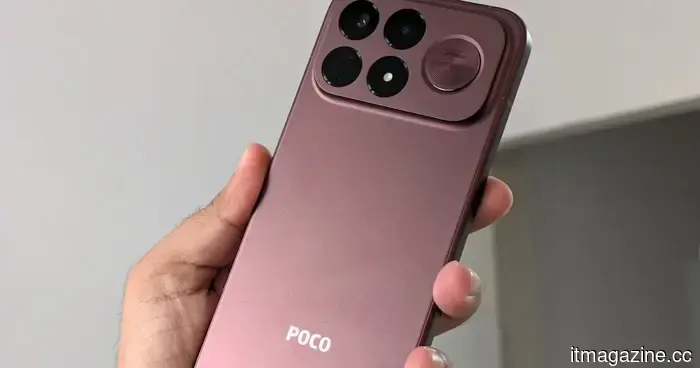 The Poco F9 series features a Bose-tuned subwoofer, 5x zoom capabilities, and large battery capacities.
The Poco F9 Ultra and F9 Pro elevate the brand into the flagship category with advanced Qualcomm processors, 185Hz screens, and high-quality camera components.
The Poco F9 series features a Bose-tuned subwoofer, 5x zoom capabilities, and large battery capacities.
The Poco F9 Ultra and F9 Pro elevate the brand into the flagship category with advanced Qualcomm processors, 185Hz screens, and high-quality camera components.
 Waymo launches autonomous ride services in Denver, San Diego, and Tampa.
Waymo launched driverless rides in Denver, marking its first operation in a snowy city. In the EU, weather conditions are included within a certified operational design domain, rather than being outlined in a blog post.
Waymo launches autonomous ride services in Denver, San Diego, and Tampa.
Waymo launched driverless rides in Denver, marking its first operation in a snowy city. In the EU, weather conditions are included within a certified operational design domain, rather than being outlined in a blog post.
 The Sonos Beam Ultra demonstrates that a large soundbar isn't necessary for experiencing Dolby Atmos.
The Sonos Beam Ultra delivers authentic 7.1.2 Dolby Atmos sound in a sleek soundbar, featuring enhanced dialogue clarity and better bass performance.
The Sonos Beam Ultra demonstrates that a large soundbar isn't necessary for experiencing Dolby Atmos.
The Sonos Beam Ultra delivers authentic 7.1.2 Dolby Atmos sound in a sleek soundbar, featuring enhanced dialogue clarity and better bass performance.
 Anthropic has launched Claude Fable 5.1 and Mythos 5.1, reducing cache read costs by 75%.
Anthropic has launched Claude Fable 5.1 and Mythos 5.1. The watermark is a result of the EU AI Act, and its detection API is available only to qualifying groups.
Anthropic has launched Claude Fable 5.1 and Mythos 5.1, reducing cache read costs by 75%.
Anthropic has launched Claude Fable 5.1 and Mythos 5.1. The watermark is a result of the EU AI Act, and its detection API is available only to qualifying groups.
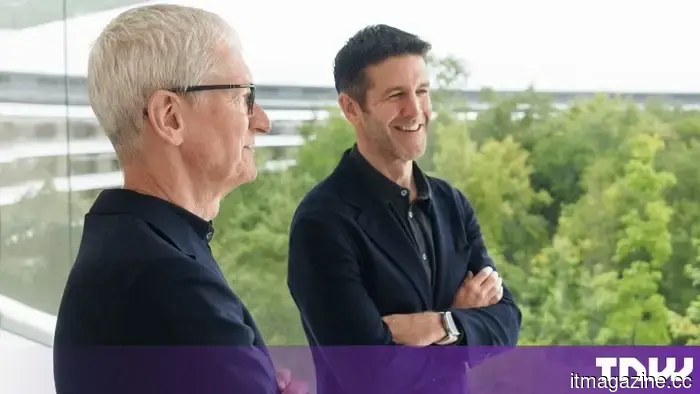 Apple has appointed a new CEO, and Tim Cook endorsed this decision by referencing Steve Jobs.
John Ternus has taken over as Apple's CEO following Tim Cook's 15-year tenure. In Cook's farewell memo, he referenced Steve Jobs, and he will continue to serve as executive chair.
Apple has appointed a new CEO, and Tim Cook endorsed this decision by referencing Steve Jobs.
John Ternus has taken over as Apple's CEO following Tim Cook's 15-year tenure. In Cook's farewell memo, he referenced Steve Jobs, and he will continue to serve as executive chair.
 Mozilla has incorporated a built-in ad blocker into Firefox for iOS, utilizing Apple’s WebKit API.
Mozilla released a native ad blocker for Firefox on iOS utilizing Apple's WebKit API. Two and a half years following the DMA, no competing engine has been launched.
Mozilla has incorporated a built-in ad blocker into Firefox for iOS, utilizing Apple’s WebKit API.
Mozilla released a native ad blocker for Firefox on iOS utilizing Apple's WebKit API. Two and a half years following the DMA, no competing engine has been launched.
Toyota's system resembling FSD will be introduced in 2028, but the driver remains responsible.
Toyota's competitor to FSD is set to launch in 2028, labeled as Level 2++, while maintaining driver responsibility. Starting December 9, the EU will classify the software itself as a product.