
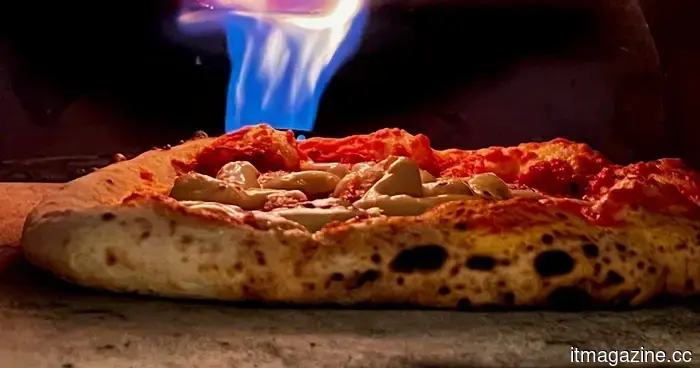
The robotic pizza chefs are not faring well.
The anticipated future of fast food was envisioned as follows: entering a restaurant, placing an order, and observing a robot meticulously assemble your pizza. However, several companies that promised to automate pizza creation have found it challenging to transform this vision into a viable business model.
A recent case involves Picnic, whose robotic pizza-making system was implemented at a Moto Pizza restaurant in Seattle. In May, the supplier unexpectedly shut down, leaving the restaurant with costly equipment and no technical assistance. Lee Kindell, who invested approximately $160,000 in this cabinet-like machinery, began to question the wisdom of investing in robotic pizza-making.
These issues highlight a larger problem: while making pizza may seem simple for a robot, the actual complexities of food preparation are proving to be much harder to automate than anticipated.
Pizza appears straightforward until a robot attempts to create it.
Companies like Zume and Pazzi have already made efforts to automate pizza production, while Basil Street has developed pizza vending machines. Nevertheless, the BBC reports that the anticipated success stories have not emerged on the scale that was expected. Sara Senatore, a restaurant analyst at Bank of America, mentioned that food preparation robots can be awkward, often placing ingredients incorrectly, while humans excel at pizza-making.
Despite these challenges, there remains a strong incentive for restaurants to pursue automation. It can enhance production speed and consistency, potentially enabling businesses to serve more customers with fewer staff members.
Kindell experienced this firsthand when he utilized Picnic’s machines at T-Mobile Park, home of the Seattle Mariners. A setup that would typically require about 10 employees could run with just two. However, the other eight workers were not entirely removed; they could be reassigned to customer-facing and promotional positions.
This distinction could become increasingly significant as restaurants trial automation while still aiming to maintain the human interaction that customers value.
The robots aren’t failing – they’re simply not ready yet.
There are indications that the technology is progressing rather than vanishing. Appetronix, which installed a 24/7 robotic pizza unit for Donatos at John Glenn Columbus International Airport in Ohio, is developing faster machines capable of producing a pizza approximately every minute. The company is investigating ways to speed up sauce application and is even looking into lasers and ultrasound for cutting.
Additionally, Miso Robotics has acquired over 300 patents previously owned by Zume, indicating that some technologies created by unsuccessful pizza automation firms might find new applications. Industry statistics show that the robot pizza revolution is still more experimental than a widespread reality. The National Restaurant Association discovered that only 9% of US restaurant operators intended to invest in restaurant robots by 2025. Meanwhile, research into practical applications reveals significant upfront costs, integration challenges, and maintenance downtime as ongoing hurdles. In essence, while restaurants may appreciate the concept of robots, implementing them in kitchens presents a different challenge.
The greater issue may be determining where robots are most beneficial. Some restaurants view food as part of a social experience and feel that removing people could diminish that appeal. Others prioritize consistency, efficiency, and nonstop production.
Kindell remains optimistic that fully autonomous pizza-making will eventually succeed. “I have no doubt in my mind that a fully autonomous pizza robot will emerge,” he told the BBC. The real question, he notes, is which company will be the first to achieve this.
Other articles
 Feeling the impact of OpenAI removing GPT models from Cursor? Anthropic provides a timely alternative with increased limits for Claude.
Anthropic is offering increased computing power for Claude within Cursor as OpenAI plans to end its model-access agreement with the coding platform.
Feeling the impact of OpenAI removing GPT models from Cursor? Anthropic provides a timely alternative with increased limits for Claude.
Anthropic is offering increased computing power for Claude within Cursor as OpenAI plans to end its model-access agreement with the coding platform.
 The robot pizza chefs are not performing well.
The anticipated future of fast food was meant to resemble this scenario: enter a restaurant, make an order, and observe a robot expertly creating your pizza with mechanical accuracy. However, several companies that vowed to automate pizza preparation have found it challenging to transform that idea into a viable business. The most recent instance is Picnic, whose […]
The robot pizza chefs are not performing well.
The anticipated future of fast food was meant to resemble this scenario: enter a restaurant, make an order, and observe a robot expertly creating your pizza with mechanical accuracy. However, several companies that vowed to automate pizza preparation have found it challenging to transform that idea into a viable business. The most recent instance is Picnic, whose […]
 AI scribes are inaccurately recording medication names and diagnoses in NHS records.
Healthwatch England discovered that AI scribes are misrecording medications and diagnoses. There are currently twenty-seven in operation, and none are regulated as medical devices.
AI scribes are inaccurately recording medication names and diagnoses in NHS records.
Healthwatch England discovered that AI scribes are misrecording medications and diagnoses. There are currently twenty-seven in operation, and none are regulated as medical devices.
 Feeling the impact of OpenAI removing GPT models from Cursor? Anthropic provides a timely solution with increased limits for Claude.
Anthropic is pledging increased computing power for Claude in Cursor as OpenAI plans to end its model-access agreement with the coding platform.
Feeling the impact of OpenAI removing GPT models from Cursor? Anthropic provides a timely solution with increased limits for Claude.
Anthropic is pledging increased computing power for Claude in Cursor as OpenAI plans to end its model-access agreement with the coding platform.
 SB Energy provided OpenAI with $5.5 billion in warrants to secure a 20-year lease.
The developer, owned by SoftBank, issued the warrants to secure OpenAI as the primary tenant of a ten-gigawatt campus in Ohio. Since January, their value has increased by $1.9 billion.
SB Energy provided OpenAI with $5.5 billion in warrants to secure a 20-year lease.
The developer, owned by SoftBank, issued the warrants to secure OpenAI as the primary tenant of a ten-gigawatt campus in Ohio. Since January, their value has increased by $1.9 billion.
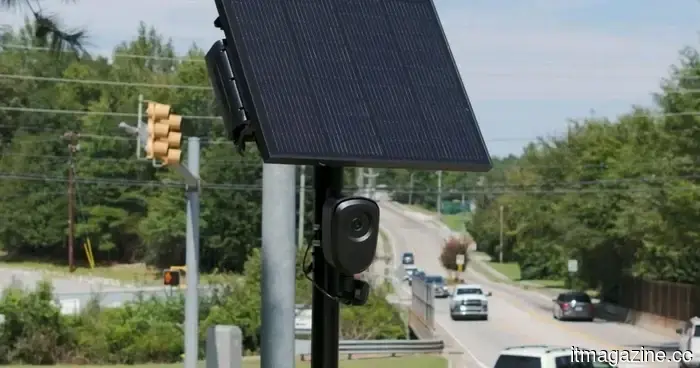 Just $1 was enough for Texas to fill the state with Flock surveillance cameras funded by motorists.
Approximately 3,200 Flock cameras in Texas were financed by funds generated from a $1 auto insurance fee that was initially authorized to address vehicle crime.
Just $1 was enough for Texas to fill the state with Flock surveillance cameras funded by motorists.
Approximately 3,200 Flock cameras in Texas were financed by funds generated from a $1 auto insurance fee that was initially authorized to address vehicle crime.
The robotic pizza chefs are not faring well.
The envisioned future of fast food was meant to feature an experience where you enter a restaurant, make your order, and observe a robot precisely putting together your pizza. However, various companies that aimed to automate pizza production have found it challenging to translate that idea into a viable business. The most recent case is Picnic, whose [...]