

Anthropic had intended to acquire the chip startup MatX for $7 billion but ultimately decided to abandon the deal.
Anthropic had progressed significantly enough in its efforts to acquire the AI chip startup MatX to assign a valuation of approximately $7 billion to the deal before it stalled. On Thursday, Reuters reported that discussions had shifted from an acquisition to a potential partnership, citing unnamed sources familiar with the situation.
The reasons behind the abandonment of the purchase remain unclear. Reuters stated it couldn't determine the reasons that halted the negotiations, and the article relied on anonymous sources instead of any official filings or announcements.
Anthropic opted not to provide comments to Reuters regarding the discussions, and MatX did not respond to their inquiries. TNW has not verified the report independently.
Founded in 2023 by Reiner Pope, who previously led AI software development for Google’s tensor processing units, and Mike Gunter, a lead designer for TPU hardware, MatX is a small company with a very specific focus, creating processors specifically for large language model training, differing from general-purpose computing.
Earlier this year, the startup raised $500 million in a Series B funding round led by Jane Street and Leopold Aschenbrenner’s Situational Awareness fund, with contributions from Marvell, Spark Capital, and the Collison brothers. The company claims that its specialized chip could outperform Nvidia’s GPUs considerably for its intended workload, with volume production anticipated to commence in 2027.
The valuation figures merit attention. Reuters indicated that MatX is currently raising funding at a valuation of about $4 billion, which makes the initially discussed purchase price approximately 75% higher than the valuation at which private investors are currently seeking to buy stakes.
This disparity represents the kind of premium a buyer might pay for control and expedited progress. Anthropic has been rapidly building its silicon capabilities, and acquiring a team that has successfully completed designs is often much faster than assembling one from scratch.
Earlier this year, the company announced an in-house chip team and has been recruiting engineers with experience in shipping silicon. In addition, it is in discussions with Samsung regarding the manufacturing of a custom component.
The scale of financing for these activities has reached a level where a $7 billion acquisition seems almost modest. Broadcom has been looking for over $60 billion in debt to support chips intended for Anthropic, while AMD has invested $5 billion into the company with a commitment for a two-gigawatt deployment.
The broader market has also rapidly evolved in a similar vein. Etched, a company with comparable objectives, raised $500 million at a $5 billion valuation, and a collection of accelerator startups secured about $1.6 billion across five funding rounds this year.
Acquirers at Anthropic's level can significantly affect valuations for such companies, which explains the notable attention given to the reported $7 billion figure, despite the absence of a finalized deal. It creates an informal benchmark for future negotiations within the sector.
Given this context, opting for a partnership rather than a purchase doesn't necessarily indicate a withdrawal. An acquisition would have provided Anthropic with a design team, but with it came the challenge of integration, especially as the company seeks to implement chips into data centers. A supply agreement, on the other hand, offers the necessary silicon without complicating its organizational structure.
This arrangement also allows MatX the flexibility to sell to other customers, which is crucial for a startup whose Series B investors likely do not expect it to operate solely as an internal division for one buyer. Raising a $4 billion round is more feasible as an independent supplier than as a company primarily linked to a single potential acquirer who has opted out.
What this situation illustrates is the overall trend: leading labs are increasingly unwilling to merely be customers of Nvidia, with the quickest path to an alternative lying with a limited number of teams experienced in designing accelerators.
Since the report, neither company has made any public statements, and there is no sign that a partnership has been formally established. Currently, the only confirmed detail is the one Reuters reported: a $7 billion deal was proposed but ultimately did not materialize.
Other articles
 Audio-Technica's latest $99 headset prioritizes the two essential features that gamers truly require.
Audio-Technica’s latest gaming headset, the ATH-M20xSTS, priced at $99, offers a straightforward design featuring M20x headphones, a condenser boom microphone, and a wired connection.
Audio-Technica's latest $99 headset prioritizes the two essential features that gamers truly require.
Audio-Technica’s latest gaming headset, the ATH-M20xSTS, priced at $99, offers a straightforward design featuring M20x headphones, a condenser boom microphone, and a wired connection.
 Kevin Durant's $250,000 investment in Hugging Face is said to be valued at $60 million.
Kevin Durant invested $250,000 in Hugging Face and could potentially earn $60 million if Nvidia acquires the company. The European employees own half of what their American counterparts would.
Kevin Durant's $250,000 investment in Hugging Face is said to be valued at $60 million.
Kevin Durant invested $250,000 in Hugging Face and could potentially earn $60 million if Nvidia acquires the company. The European employees own half of what their American counterparts would.
 Starting Sunday, Google will no longer downgrade EU publishers under its spam policy.
Starting from 30 August, Google will cease to apply manual spam demotions for users in the EU, Iceland, Norway, and Liechtenstein as it seeks to resolve a DMA case.
Starting Sunday, Google will no longer downgrade EU publishers under its spam policy.
Starting from 30 August, Google will cease to apply manual spam demotions for users in the EU, Iceland, Norway, and Liechtenstein as it seeks to resolve a DMA case.
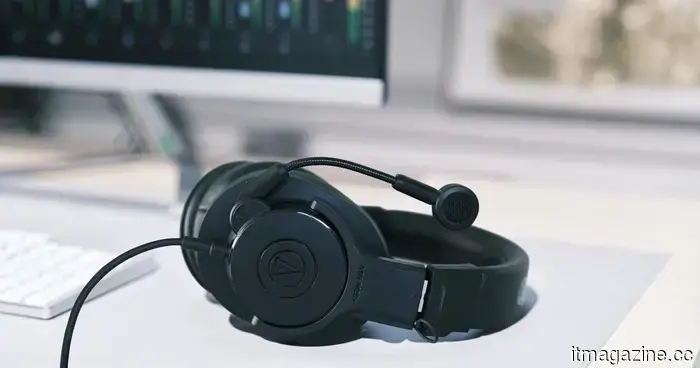 Audio-Technica’s latest $99 headset concentrates on the two essentials that gamers truly require.
Audio-Technica’s latest gaming headset, the ATH-M20xSTS, priced at $99, offers a straightforward design featuring headphones based on the M20x, a condenser boom microphone, and wired connectivity.
Audio-Technica’s latest $99 headset concentrates on the two essentials that gamers truly require.
Audio-Technica’s latest gaming headset, the ATH-M20xSTS, priced at $99, offers a straightforward design featuring headphones based on the M20x, a condenser boom microphone, and wired connectivity.
 Starting Sunday, Google will no longer penalize EU publishers under its spam policy.
Starting from 30 August, Google will cease applying manual spam demotions for users in the EU, Iceland, Norway, and Liechtenstein while it works to resolve a DMA case.
Starting Sunday, Google will no longer penalize EU publishers under its spam policy.
Starting from 30 August, Google will cease applying manual spam demotions for users in the EU, Iceland, Norway, and Liechtenstein while it works to resolve a DMA case.
 Google is taking action against Android applications that consume excessive memory due to a RAM shortage driven by AI developments.
In response to a worldwide RAM shortage driven by AI needs, Google will implement new memory limits for Android applications beginning in February 2027, along with penalties for those that do not adhere to these standards.
Google is taking action against Android applications that consume excessive memory due to a RAM shortage driven by AI developments.
In response to a worldwide RAM shortage driven by AI needs, Google will implement new memory limits for Android applications beginning in February 2027, along with penalties for those that do not adhere to these standards.
Anthropic had intended to acquire the chip startup MatX for $7 billion but ultimately decided to abandon the deal.
According to Reuters, Anthropic was ready to acquire the AI chip startup MatX for approximately $7 billion, before the discussions shifted towards a partnership instead.