

How close are robots to being utilized on production lines? The journey of Galbot towards industrial AI.
For many years, industrial robots have mainly been utilized for repetitive tasks. In highly regulated production environments like automotive assembly and electronics manufacturing, robotic arms have become essential for factory automation due to their accuracy and dependability.
However, as manufacturing evolves towards greater flexibility and intelligence, companies are seeking more from robots: not only must they execute fixed movements, but they also need to adapt to intricate environments and manage less uniform tasks. This transition is a major factor driving the investigation of embodied AI robots in industrial applications.
Galbot, a Chinese company specializing in embodied AI robotics, is pursuing this direction within the industrial sector. The company's goal is to facilitate the transition of robots from laboratory settings into practical production environments by combining robotic hardware, intelligent models, and data systems.
Established in May 2023, Galbot has garnered significant interest from investors as the embodied AI industry gains traction. The company has successfully completed several financing rounds, amassing over RMB 2.4 billion ($360 million) in total funding by 2025, including a financing round of RMB 1.1 billion ($160 million) announced in June 2025.
In 2026, Galbot revealed another financing round of RMB 2.5 billion ($370 million), with investors including the National Artificial Intelligence Industry Investment Fund, Sinopec, and CITIC Investment Holdings. The company's valuation is reported to have surpassed RMB 22 billion ($3.27 billion).
One of Galbot's flagship products is the Galbot G1, which merges a mobile platform with a dual-arm manipulation system, addressing the limitations of traditional industrial robotic arms that are confined to fixed workstations. With enhanced mobility, the G1 is engineered to execute tasks like picking, transporting, and organizing objects across various settings.
Mobile manipulation robots, in contrast to stationary robotic arms, deliver increased flexibility. Standard industrial robots are typically situated at designated locations to complete predefined workflows, whereas mobile robots can adapt their locations and actions based on varying tasks, making them better suited for future adaptable manufacturing scenarios.
For manufacturers, this kind of robot has significant application potential. Numerous production processes still heavily depend on human labor for tasks like material handling, sorting, and loading or unloading components. These roles often involve repetitive tasks but necessitate adaptation to various objects and changing circumstances. Traditional automation solutions often fall short in adequately addressing these situations, creating an opening for embodied AI robots.
In addition to the G1, Galbot has also launched the Galbot S1, a robot tailored explicitly for industrial settings. Unlike robots aimed at general service contexts, the S1 focuses primarily on manufacturing tasks such as transportation, palletizing, and machine loading, seeking to assist companies in tackling repetitive, labor-intensive operations and increasing labor costs.
Industrial applications are widely recognized as a major avenue for the commercialization of embodied AI robots. On one hand, there is a clear demand for automation upgrades to enhance efficiency within manufacturing. On the other hand, unlike open environments such as homes, factories are more structured, making them more suitable for ongoing robot operations and data collection.
However, integrating robots into factories is not merely about replacing human labor. It signifies a potential transformation in production practices. In the future, robots could increasingly assume high-intensity, repetitive, and hazardous tasks, collaborating with human workers to enhance productivity and safety.
A critical element in the industrial adoption of robots will be advancements in AI capabilities. Traditional robots largely rely on engineers to manually program each movement. In contrast, embodied AI robots need to possess enhanced capabilities in understanding, planning, and learning. Galbot’s AstraBrain embodied intelligence system aims to merge visual perception, task planning, and motion control, allowing for better interpretation of instructions by robots and adaptation to environmental changes.
This marks a transition from robots merely executing predefined commands to robots gradually acquiring the ability to manage more complex tasks. Nevertheless, the industrialization of embodied AI robots is still in its infancy. Challenges such as cost, reliability, stability, and large-scale deployment continue to hinder wider acceptance. For robotics companies, the actual challenge lies not in demonstrating a robot's ability to perform a single task, but in proving that these robots can function continuously in authentic production environments and yield measurable economic benefits.
As AI continues to integrate with robotics, industrial scenarios are emerging as a vital entry point for the commercialization of embodied AI. For Galbot, gaining mobility is just the initial phase. The true evaluation will be whether robots can genuinely operate and generate value in the industry.
In the future, robots that can navigate manufacturing environments and address real-world production challenges may play an increasingly pivotal role in the next wave of industrial intelligence advancements.


Other articles
 Waystar unleashes agentic AI on claims, denials, and documentation.
Waystar's new agents independently resubmit insurance claims that were previously denied. In Germany, there are restrictions on the number of hospital bills that can be contested, and each bill is assigned a price.
Waystar unleashes agentic AI on claims, denials, and documentation.
Waystar's new agents independently resubmit insurance claims that were previously denied. In Germany, there are restrictions on the number of hospital bills that can be contested, and each bill is assigned a price.
 Barret Zoph is returning to Google after six years and two startup ventures.
Barret Zoph, co-founder of Thinking Machines Lab, is set to join Google DeepMind as Vice President of Research, just weeks after Demis Hassabis stepped down from his role as CEO.
Barret Zoph is returning to Google after six years and two startup ventures.
Barret Zoph, co-founder of Thinking Machines Lab, is set to join Google DeepMind as Vice President of Research, just weeks after Demis Hassabis stepped down from his role as CEO.
 Gemini Live acquires control over agentic tasks, voice inbox functionality, and personal intelligence.
Gemini Live is now capable of giving spoken commands to background agents. In Europe, Google is required to enable competing assistants to achieve similar capabilities by 2027.
Gemini Live acquires control over agentic tasks, voice inbox functionality, and personal intelligence.
Gemini Live is now capable of giving spoken commands to background agents. In Europe, Google is required to enable competing assistants to achieve similar capabilities by 2027.
 A few days in, the battery life of the Pixel 11 Pro XL hasn't been great for me so far.
After 72 hours of using the Pixel 11 Pro XL, I'm achieving less than 6 hours of screen-on time, which is significantly lower than the Galaxy S26 Ultra and iPhone 17 Pro Max.
A few days in, the battery life of the Pixel 11 Pro XL hasn't been great for me so far.
After 72 hours of using the Pixel 11 Pro XL, I'm achieving less than 6 hours of screen-on time, which is significantly lower than the Galaxy S26 Ultra and iPhone 17 Pro Max.
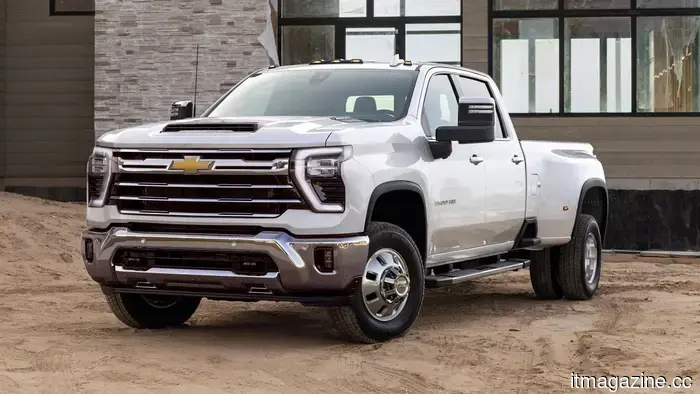 Huawei's attempt to construct AI data centers in Egypt has prompted a rush of activity in Washington.
Huawei has made a proposal to export 2,008 Ascend chips to Egypt. The State Department is putting together a counter-bid involving Nvidia, AMD, and Microsoft.
Huawei's attempt to construct AI data centers in Egypt has prompted a rush of activity in Washington.
Huawei has made a proposal to export 2,008 Ascend chips to Egypt. The State Department is putting together a counter-bid involving Nvidia, AMD, and Microsoft.
 Increasing expenses associated with the token consumption competition.
The reasons behind tokenmaxxing increasing AI expenses, the impact of model selection and context windows on LLM costs, and the importance for companies to prioritize results.
Increasing expenses associated with the token consumption competition.
The reasons behind tokenmaxxing increasing AI expenses, the impact of model selection and context windows on LLM costs, and the importance for companies to prioritize results.
How close are robots to being utilized on production lines? The journey of Galbot towards industrial AI.
For many years, industrial robots have mainly been utilized for performing repetitive tasks. This is especially true on highly standardized production lines, like those in the automotive industry.