
The concept of AI receptionists appears to be risky, especially after a patient disclosed that the system used by her doctor was unable to comprehend her speech.
A general practice surgery in South Yorkshire has discontinued its AI receptionist after a woman who was recovering from a stroke struggled to communicate with it and subsequently switched to another practice. The NHS Accessible Information Standard has mandated that practices identify and address patients' communication needs since 2016.
The woman, whose stroke had left her with fragmented speech and affected her right side, found the automated system unresponsive to her attempts to book an appointment. She eventually chose to register with a different practice, prompting the surgery to withdraw the AI system.
The specifics matter here. The automated service advised her against using speakerphone, which she required to use since she could only hold the handset with one hand.
This issue was not an isolated incident. Healthwatch Rotherham reported that the AI receptionist named Emma "does not respond well to variations in speech such as regional accents or speech impairments."
Some patients expressed frustration over the system. One individual informed the watchdog, “I could never get it to understand me, so I just hung up and gave up trying to book an appointment,” while others opted to visit the surgery in person.
The system's developer, QuantumLoopAI, has a different perspective. They claim that Emma has been trained on a variety of accents and dialects, supports 17 languages, allows callers to request a staff member at any time, and that over 90% of patients have reported improvements.
Nationally, the trend is heading in the opposite direction. The NHS App plans to utilize AI for patient triage as part of a £10 billion technology modernization effort.
Currently, governance is being managed at the local level. South Yorkshire’s integrated care board has stated that it is collaborating with Healthwatch to provide guidance and notes that the adoption of such systems is a decision made by individual GP practices.
What's on the horizon is more advanced, not less. A UK supplier is developing a triage model for the NHS in partnership with Nvidia, aimed at determining patient needs before a clinician sees them.
A standard already exists for this; the Accessible Information Standard mandates GP practices to identify, record, highlight, and address patients’ communication needs, a requirement in place since 2016.
Europe categorizes the technology; the EU AI Act classifies emergency healthcare patient triage as high-risk, which involves rigorous testing, logging, and human oversight responsibilities that a standard booking line does not entail.
In Britain, the standard exists without this classification. What has occurred is one practice that ceased using the AI system after a woman recovering from a stroke opted to go elsewhere.
Other articles
 AOC might surpass Acer in launching the first 5K G-SYNC Pulsar monitor.
AOC has introduced the AGP327KG, a 31.5-inch gaming monitor featuring a 5K resolution, a 144Hz refresh rate, and support for Nvidia G-SYNC Pulsar.
AOC might surpass Acer in launching the first 5K G-SYNC Pulsar monitor.
AOC has introduced the AGP327KG, a 31.5-inch gaming monitor featuring a 5K resolution, a 144Hz refresh rate, and support for Nvidia G-SYNC Pulsar.
 Samsung might be experimenting with large batteries for the Galaxy S27 Ultra.
According to reports, Samsung is evaluating five prototypes of the Galaxy S27 Ultra, with battery capacities between 5,700mAh and 6,000mAh.
Samsung might be experimenting with large batteries for the Galaxy S27 Ultra.
According to reports, Samsung is evaluating five prototypes of the Galaxy S27 Ultra, with battery capacities between 5,700mAh and 6,000mAh.
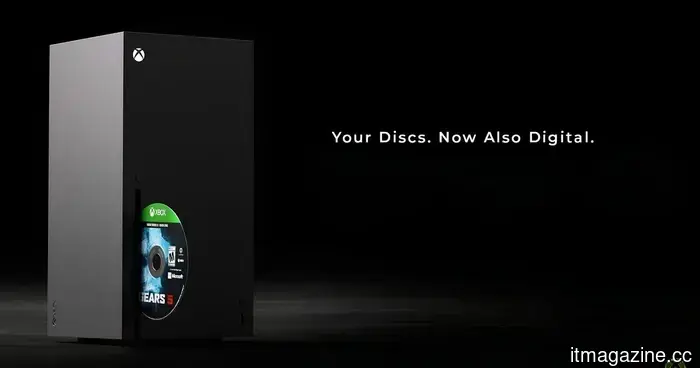 Xbox is providing a digital future for physical game discs.
For many years, the trend in gaming has appeared straightforward: digital formats are on the rise while physical copies are gradually becoming obsolete. However, Microsoft is opting for a different strategy with a new Xbox feature that may provide more flexibility for disc ownership. Xbox has revealed a new feature named “Your Discs. Now Also Digital.” that will […]
Xbox is providing a digital future for physical game discs.
For many years, the trend in gaming has appeared straightforward: digital formats are on the rise while physical copies are gradually becoming obsolete. However, Microsoft is opting for a different strategy with a new Xbox feature that may provide more flexibility for disc ownership. Xbox has revealed a new feature named “Your Discs. Now Also Digital.” that will […]
 Vanguard is purchasing Altruist, the AI custody platform it invested in six years prior.
Vanguard is purchasing Altruist, the AI custody platform designed for independent advisors. In contrast, Europe is addressing the same advice gap through regulatory measures.
Vanguard is purchasing Altruist, the AI custody platform it invested in six years prior.
Vanguard is purchasing Altruist, the AI custody platform designed for independent advisors. In contrast, Europe is addressing the same advice gap through regulatory measures.
 Samsung may be experimenting with large batteries for the Galaxy S27 Ultra.
According to reports, Samsung is experimenting with five prototypes of the Galaxy S27 Ultra, with battery capacities varying from 5,700mAh to as high as 6,000mAh.
Samsung may be experimenting with large batteries for the Galaxy S27 Ultra.
According to reports, Samsung is experimenting with five prototypes of the Galaxy S27 Ultra, with battery capacities varying from 5,700mAh to as high as 6,000mAh.
 Qwen4's architecture is available ahead of time, featuring 6 billion parameters out of a total of 125 billion.
Qwen3.8-Flash-Next utilizes 6 billion of its 125 billion parameters for each token. Under the EU AI Act, the aspect that is significant is its licensing rather than its architecture.
Qwen4's architecture is available ahead of time, featuring 6 billion parameters out of a total of 125 billion.
Qwen3.8-Flash-Next utilizes 6 billion of its 125 billion parameters for each token. Under the EU AI Act, the aspect that is significant is its licensing rather than its architecture.
The concept of AI receptionists appears to be risky, especially after a patient disclosed that the system used by her doctor was unable to comprehend her speech.
A GP practice has removed its AI receptionist after a stroke survivor struggled to communicate with it. The NHS already has an existing legal standard addressing this issue.