
Qwen4's architecture is available ahead of time, featuring 6 billion parameters out of a total of 125 billion.
Alibaba's Qwen team has introduced Qwen3.8-Flash-Next, an open-weight preview of the architecture intended for Qwen4, featuring 125B parameters but activating only 6B for every token. Its license may not meet the EU AI Act's criteria for the open-source exemption.
The Qwen team has unveiled the architecture planned for Qwen4, with Qwen3.8-Flash-Next containing 125B parameters and engaging only 6B of them for each produced token.
The focus of their claim centers on cost rather than capability. The team expresses concern regarding how architectural decisions impact inference expenses as agentic tasks with very long contexts become the standard workload.
They compare it to their previous model. Qwen3.7-Plus has 397B parameters and activates 17B, meaning this new model operates on about one-third of the active computing power.
Three out of the four modifications are fairly conventional. A new sparse attention method operates on micro-blocks instead of individual tokens, a gated residual mechanism regulates the flow between layers, and the training approach eliminates batch-size warmup entirely.
The fourth change is more unusual. Instead of incorporating experts, the model adds 51B parameters as a separate embedding indexed by two- and three-character fragments, which the team claims reduces computational costs and simplifies offloading to memory-limited accelerators.
That last point deserves a second look. Designing for memory-constrained accelerators is typically necessary when top-tier chips are inaccessible, a situation resulting from export controls affecting Chinese labs.
All the data presented comes from Alibaba itself. TNW noted earlier this month that the company labeled Qwen3.8 as the second-best model globally without providing evidence, and these ratings again originate from the team's own assessments.
Some of the decisions made are quite transparent. The model card indicates that Humanity’s Last Exam score was evaluated by GPT-4o rather than the benchmark's official grader, reflecting openness rather than neutrality.
Europe raises questions regarding the license. The weights are available on Hugging Face under a qwen-community license, and TNW reported on August 7 that Alibaba plans to charge its largest commercial users.
The AI Act considers this differentiation significant. Article 53(2) removes two documentation requirements for models under a free and open-source license, and Recital 103 states that components offered for a fee or monetized in any way should not qualify for the exemption.
European companies are not waiting for clarification. Thomson Reuters has developed its model using Qwen, meaning anyone who engages with it will adopt the eventual license outcome.
Published August 26, 2026 - 7:55 pm UTC
Back to top
Other articles
 The concept of AI receptionists appears to be risky, especially after a patient disclosed that the system used by her doctor was unable to comprehend her speech.
A GP practice has removed its AI receptionist after a stroke survivor struggled to communicate with it. The NHS already has an existing legal standard addressing this issue.
The concept of AI receptionists appears to be risky, especially after a patient disclosed that the system used by her doctor was unable to comprehend her speech.
A GP practice has removed its AI receptionist after a stroke survivor struggled to communicate with it. The NHS already has an existing legal standard addressing this issue.
 The original green translucent Xbox Series X25 is now available for pre-order, and it's certainly not inexpensive.
Microsoft's translucent green Xbox Series X25 Limited Edition commemorates 25 years of Xbox with a nostalgic design, includes a Halo bundle, and is priced at $899.99.
The original green translucent Xbox Series X25 is now available for pre-order, and it's certainly not inexpensive.
Microsoft's translucent green Xbox Series X25 Limited Edition commemorates 25 years of Xbox with a nostalgic design, includes a Halo bundle, and is priced at $899.99.
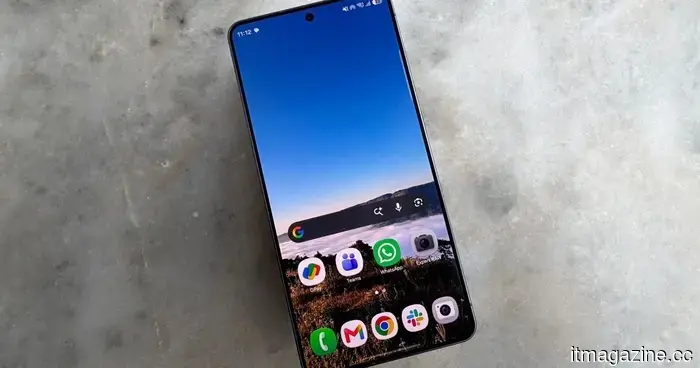 Samsung may be experimenting with large batteries for the Galaxy S27 Ultra.
According to reports, Samsung is experimenting with five prototypes of the Galaxy S27 Ultra, with battery capacities varying from 5,700mAh to as high as 6,000mAh.
Samsung may be experimenting with large batteries for the Galaxy S27 Ultra.
According to reports, Samsung is experimenting with five prototypes of the Galaxy S27 Ultra, with battery capacities varying from 5,700mAh to as high as 6,000mAh.
 According to Kimmeridge, as many as half of the proposed data centers in the US are experiencing delays or are at risk of cancellation.
Kimmeridge reports that nearly 50% of proposed data centers in the US are likely to experience delays or be canceled, which would reduce the gas demand that its LNG terminal was designed to accommodate.
According to Kimmeridge, as many as half of the proposed data centers in the US are experiencing delays or are at risk of cancellation.
Kimmeridge reports that nearly 50% of proposed data centers in the US are likely to experience delays or be canceled, which would reduce the gas demand that its LNG terminal was designed to accommodate.
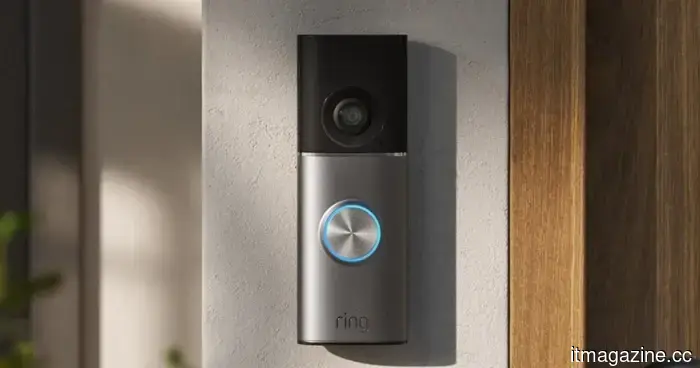 Ring's latest encryption aims to address concerns about surveillance without eliminating any smart functionalities.
Starting in September, Ring's new TAKE encryption will be the default for all cameras, restricting access to your footage for both Ring and law enforcement.
Ring's latest encryption aims to address concerns about surveillance without eliminating any smart functionalities.
Starting in September, Ring's new TAKE encryption will be the default for all cameras, restricting access to your footage for both Ring and law enforcement.
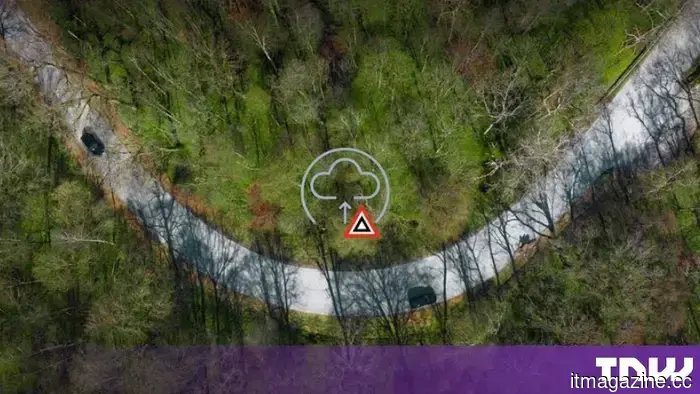 Volvo's electric vehicles can now alert you to the presence of a deer near a blind turn.
Volvo is introducing four new hazard alerts for its electric vehicles. In Europe, they utilize a shared database that includes information from BMW, Ford, Mercedes, and road authorities.
Volvo's electric vehicles can now alert you to the presence of a deer near a blind turn.
Volvo is introducing four new hazard alerts for its electric vehicles. In Europe, they utilize a shared database that includes information from BMW, Ford, Mercedes, and road authorities.
Qwen4's architecture is available ahead of time, featuring 6 billion parameters out of a total of 125 billion.
Qwen3.8-Flash-Next utilizes 6 billion of its 125 billion parameters for each token. Under the EU AI Act, the aspect that is significant is its licensing rather than its architecture.