
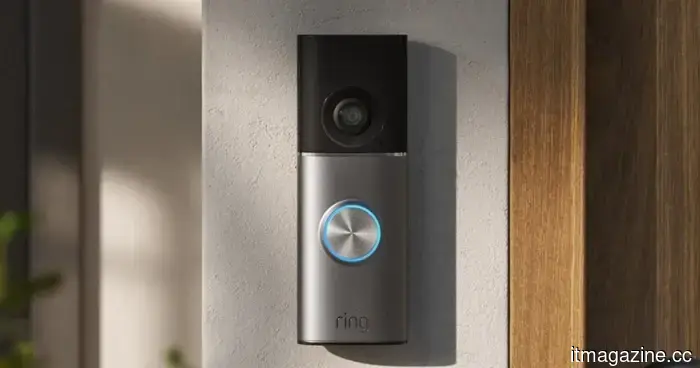
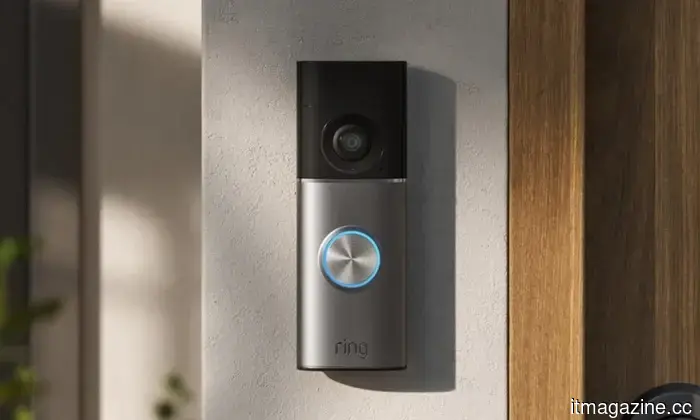
Ring's latest encryption aims to address concerns about surveillance without eliminating any smart functionalities.
Digital Trends may receive a commission when purchases are made through links on our website. Why trust us?
Ring's TAKE encryption provides enhanced control over who can view your camera footage.
Ring has introduced TAKE, which stands for Throw Away the Key Encryption, as part of a privacy overhaul. This new encryption feature will default on all cameras beginning in September.
This move comes in response to criticism, including negative feedback about a Super Bowl advertisement for a lost dog feature and its complicated relationship with law enforcement. TAKE aims to secure your footage while preserving the smart features you purchased the cameras for.
How TAKE secures your videos
With TAKE, your videos are encrypted using rotating keys that change every few minutes. A temporary copy is stored in a secure cloud environment, allowing Ring to unlock it briefly for certain activated features, such as video search or smart alerts. Once that access is done, the key is permanently deleted, leaving you as the sole holder of access.
Ring states that TAKE draws inspiration from end-to-end encryption (E2EE) but operates differently. In true E2EE, Ring doesn’t have access to your keys at all, whereas with TAKE, Ring briefly accesses them during video processing.
If you have Shared Users on your account, they will also receive a copy of the master key. Newer camera models allow users to toggle between TAKE and E2EE, but older models are limited to TAKE because their encryption occurs at the cloud level rather than on the device itself.
What happens if the police request your footage?
According to Ring, it can now only provide basic subscriber information and encrypted video files in response to legal requests from law enforcement, rather than viewing footage. However, TAKE does not offer complete E2EE, as Ring retains your keys for up to 24 hours and can request them again when accessing older clips.
Without a Ring subscription, these features do not apply, although a Ring security hub utilizing a microSD card allows for local storage. If you lose your device, Ring presents several recovery methods including cloud backup, a passphrase, a passkey, an authorized device, or camera-based recovery.
For those seeking the strongest encryption, E2EE remains an option, but it disables most cloud functionalities. For everyone else, TAKE is included at no additional cost with any Ring subscription, subtly changing your control over your own front door.
Manisha Priyadarshini is a tech and entertainment writer with over nine years of editorial experience.
Google Home has finally improved its cumbersome voice commands, but many users still can’t access them.
Google has released a genuinely valuable upgrade for Google Home centered around its voice command feature, but there’s a catch hidden in the details. The latest update enables users to request specific light colors using Kelvin values (or color temperature) and simplifies years of awkward broadcast commands. However, most of this functionality is only available to those who have opted into the early access program.
Amazon is introducing Alexa Plus to Fire TV devices at no additional charge.
For Fire TV users, Amazon has delivered a significant AI enhancement. Alexa+ is being rolled out at no extra charge to compatible Fire TV devices across the U.S., which includes current-generation Fire TV Sticks, the Fire TV Cube, Amazon Ember TVs, and supported models from brands such as Hisense and Panasonic. No subscription is needed to activate it, no app needs to be downloaded, and a Prime membership is not required. Eligible devices will automatically be upgraded.





Other articles
 Meta is set to pay as much as $16.68 billion to resolve the youth safety lawsuit involving 29 states.
According to court documents, Meta is set to pay a maximum of $16.68 billion while implementing daily limits and nighttime restrictions for teenagers.
Meta is set to pay as much as $16.68 billion to resolve the youth safety lawsuit involving 29 states.
According to court documents, Meta is set to pay a maximum of $16.68 billion while implementing daily limits and nighttime restrictions for teenagers.
 The original green translucent Xbox Series X25 is now available for pre-order, and it's certainly not inexpensive.
Microsoft's translucent green Xbox Series X25 Limited Edition commemorates 25 years of Xbox with a nostalgic design, includes a Halo bundle, and is priced at $899.99.
The original green translucent Xbox Series X25 is now available for pre-order, and it's certainly not inexpensive.
Microsoft's translucent green Xbox Series X25 Limited Edition commemorates 25 years of Xbox with a nostalgic design, includes a Halo bundle, and is priced at $899.99.
 Flipboard has acquired Graze, a platform designed for creating personalized social algorithms.
Graze enables anyone to create and monetize a social feed without any coding skills, serving 41 billion posts to 12 million users. It has been acquired by Flipboard.
Flipboard has acquired Graze, a platform designed for creating personalized social algorithms.
Graze enables anyone to create and monetize a social feed without any coding skills, serving 41 billion posts to 12 million users. It has been acquired by Flipboard.
 Apple has set a September 9 event to unveil new iPhones and other products.
Apple has officially announced the date for its highly awaited September event, where the iPhone 18 Pro and iPhone Ultra may be unveiled.
Apple has set a September 9 event to unveil new iPhones and other products.
Apple has officially announced the date for its highly awaited September event, where the iPhone 18 Pro and iPhone Ultra may be unveiled.
 Nvidia’s DLSS 4.5 has several features, so here’s what is most important for gamers.
Nvidia has launched DLSS 4.5 Ray Reconstruction in early access, providing all RTX GPUs with an enhanced AI denoiser, along with improved Super Resolution and frame generation features.
Nvidia’s DLSS 4.5 has several features, so here’s what is most important for gamers.
Nvidia has launched DLSS 4.5 Ray Reconstruction in early access, providing all RTX GPUs with an enhanced AI denoiser, along with improved Super Resolution and frame generation features.
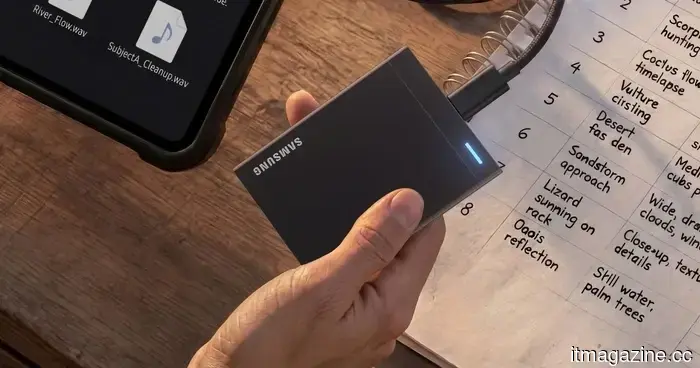 Samsung's latest SSD may render waiting for file transfers obsolete.
At Gamescom 2026, Samsung introduced the P9 and P7 portable SSDs, with the P9 becoming the first 8TB USB4 drive in the world, reaching speeds of 4,000MB/s.
Samsung's latest SSD may render waiting for file transfers obsolete.
At Gamescom 2026, Samsung introduced the P9 and P7 portable SSDs, with the P9 becoming the first 8TB USB4 drive in the world, reaching speeds of 4,000MB/s.
Ring's latest encryption aims to address concerns about surveillance without eliminating any smart functionalities.
Starting in September, Ring's new TAKE encryption will be the default for all cameras, restricting access to your footage for both Ring and law enforcement.