
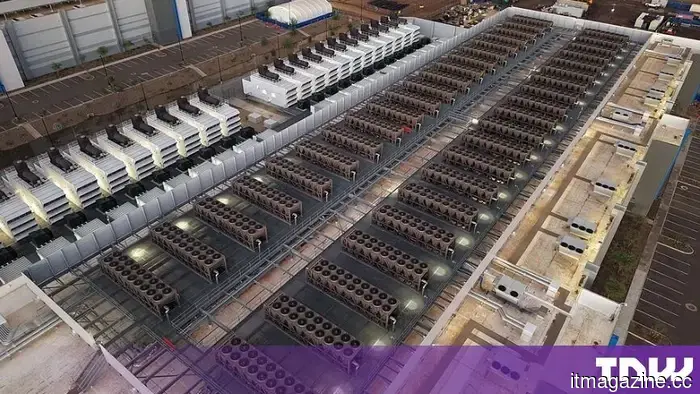
According to Kimmeridge, as many as half of the proposed data centers in the US are experiencing delays or are at risk of cancellation.
Kimmeridge, an investment firm, has indicated that up to half of the proposed data centres in the United States face potential delays or cancellations due to political opposition and challenges in constructing physical infrastructure. This situation is expected to result in lower projections for US gas demand, much of which is currently purchased by Europe.
According to Kimmeridge Energy Management, the risk of delay or cancellation applies to as many as half of the data centres planned in the U.S. The firm attributes this to political backlash and the general difficulties inherent in building physical infrastructure.
Ben Dell, the managing partner and co-founder of the firm, commented at Bloomberg’s New York office that “the Silicon Valley model is facing significant real-world infrastructure constraints.”
It's important to note the source of this estimate. Kimmeridge has investments in gas producers and a Louisiana export terminal, and Dell stated that delays would necessitate reductions in US gas demand forecasts, which positions this warning as being relevant to his own interests.
He provided specific numbers: from an anticipated growth of approximately 30 billion cubic feet per day in US gas demand, primarily driven by LNG exports, Dell mentioned that data centres could represent 5 billion to 10 billion of that demand, with delays pushing expectations towards the lower figure.
The political opposition he refers to is becoming quantifiable. According to TNW, over 500 jurisdictions in the U.S. have imposed restrictions on data centres, with New York freezing environmental permits and Texas suspending approvals while audits are conducted.
Dell pointed out that the opposition is now crossing party lines. States like Pennsylvania, Texas, and Ohio, once viewed as more supportive of these projects, are now seeing resistance and legal challenges, especially as the midterm elections approach.
Europe faces a similar challenge, though for different reasons. The primary obstacle is not typically community opposition, but rather issues with the electrical grid, as highlighted by Nscale’s inability to connect its £2B Essex site in time for its scheduled opening next year.
The two continents are interconnected through fuel supply. Kimmeridge’s Commonwealth LNG made a final investment decision in May for a $13B terminal in Cameron Parish, Louisiana, which is expected to export 9.5 million tonnes per year starting around 2030.
Europe is the intended market for this gas. IEEFA anticipates that the U.S. will provide two-thirds of Europe’s LNG imports this year, with that figure potentially climbing to 80% by 2028, into terminals projected to be three times larger than European demand by 2030.
Thus, delays in the U.S. could impact the supply situation in Europe. Gas that is not utilized in Ohio can be liquefied and sold to a continent urging Big Tech to align its data centres with climate objectives.
Dell's ideal scenario, as he described, would be one of "zero impact," which would mean no net change in water usage, land, emissions, or power prices. However, no one has yet managed to construct such a facility on either continent.
Другие статьи
 Meta устанавливает жесткие ограничения на Facebook и Instagram после урегулирования на сумму 17 миллиардов долларов
Meta обещает значительные изменения для подростковых пользователей, включая ежедневные лимиты времени, блокировки на ночь, скрытые лайки, управление алгоритмами и более строгий родительский контроль.
Meta устанавливает жесткие ограничения на Facebook и Instagram после урегулирования на сумму 17 миллиардов долларов
Meta обещает значительные изменения для подростковых пользователей, включая ежедневные лимиты времени, блокировки на ночь, скрытые лайки, управление алгоритмами и более строгий родительский контроль.
 Anthropic подписывает сделку на $45 миллиардов с британской компанией Nscale
Anthropic согласилась потратить 45 миллиардов долларов за шесть лет на аренду мощностей ИИ в кампусе Nscale в Западной Вирджинии, за несколько недель до того, как лондонская компания выйдет на биржу в Нью-Йорке.
Anthropic подписывает сделку на $45 миллиардов с британской компанией Nscale
Anthropic согласилась потратить 45 миллиардов долларов за шесть лет на аренду мощностей ИИ в кампусе Nscale в Западной Вирджинии, за несколько недель до того, как лондонская компания выйдет на биржу в Нью-Йорке.
 Предзаказ на оригинальную прозрачную зеленую Xbox Series X25 от Xbox уже здесь, и, черт возьми, она недешевая.
Прозрачный зеленый Xbox Series X25 Limited Edition от Microsoft отмечает 25 лет Xbox с ностальгичным дизайном, комплектом Halo и ценой в 899,99 долларов.
Предзаказ на оригинальную прозрачную зеленую Xbox Series X25 от Xbox уже здесь, и, черт возьми, она недешевая.
Прозрачный зеленый Xbox Series X25 Limited Edition от Microsoft отмечает 25 лет Xbox с ностальгичным дизайном, комплектом Halo и ценой в 899,99 долларов.
 IDC ожидает, что Apple поставит 10 миллионов складных iPhone в первый год по цене 2500 долларов.
IDC ожидает, что Apple выпустит 10 миллионов складных iPhone по цене 2500 долларов в первый год. В ЕС телефон должен публиковать рейтинг ремонтопригодности и выживаемости при падении.
IDC ожидает, что Apple поставит 10 миллионов складных iPhone в первый год по цене 2500 долларов.
IDC ожидает, что Apple выпустит 10 миллионов складных iPhone по цене 2500 долларов в первый год. В ЕС телефон должен публиковать рейтинг ремонтопригодности и выживаемости при падении.
 PayRewards запускается в Америке с $28 млн и комиссией 1,75% за получение баллов
Австралийская компания, стоящая за Pay.com.au, запустилась в Америке с 28 миллионами долларов, взимая с бизнеса 1,75% или 3,25% за начисление баллов на оплату счетов.
PayRewards запускается в Америке с $28 млн и комиссией 1,75% за получение баллов
Австралийская компания, стоящая за Pay.com.au, запустилась в Америке с 28 миллионами долларов, взимая с бизнеса 1,75% или 3,25% за начисление баллов на оплату счетов.
 Flipboard приобретает Graze, инструмент для создания собственного социального алгоритма
Graze позволяет любому создавать и монетизировать социальную ленту без кода, предоставляя 41 миллиард постов 12 миллионам пользователей. Flipboard купил его.
Flipboard приобретает Graze, инструмент для создания собственного социального алгоритма
Graze позволяет любому создавать и монетизировать социальную ленту без кода, предоставляя 41 миллиард постов 12 миллионам пользователей. Flipboard купил его.
According to Kimmeridge, as many as half of the proposed data centers in the US are experiencing delays or are at risk of cancellation.
Kimmeridge reports that nearly 50% of proposed data centers in the US are likely to experience delays or be canceled, which would reduce the gas demand that its LNG terminal was designed to accommodate.