

Amazon is shutting down Mechanical Turk, the human labor service it marketed as artificial intelligence.
Amazon is shutting down Mechanical Turk on September 30. The platform, which has been operational for 21 years, compensated users with small amounts for tasks that computers struggled to complete. Jeff Bezos once referred to it as "artificial artificial intelligence."
A notification displayed on the MTurk homepage announces this decision. It states, “We regularly evaluate our programs, tools, and services and make adjustments based on those evaluations.” It continues, “After assessing, we have decided to close AWS Mechanical Turk, effective September 30, 2026.” The notice reiterates the closing date, now stating that Mechanical Turk will "permanently close," and advises both workers and requesters to visit an FAQ page for preparation details.
Annie Palmer reported on the impending closure for CNBC on Tuesday evening. Amazon has not released any additional statements apart from the banner.
What Mechanical Turk was
Launched in 2005, the platform connected workers with what Amazon designates as Human Intelligence Tasks (HITs). These small jobs typically paid a few cents each for tasks such as data labeling, transcription of audio and video, and survey completion. The remainder of the homepage still advertises these services in the present tense, below the closure notice. It highlights offerings like content moderation, data deduplication, product and image categorization, survey participation, and research, describing itself as a global, on-demand workforce available 24/7.
According to Amazon's product documentation, the marketplace had over 500,000 workers across 190 countries. There was no minimum project size, and the workforce was available at all times. Requesters did not incur any costs until they accepted the work, and they could limit tasks to what Amazon refers to as Master Workers. The name "Mechanical Turk" is derived from an 18th-century chess-playing automaton that concealed a human chess master inside. Amazon originally developed the service to assist in labeling data for its own online store, as reported by the New York Times in 2007.
The platform had been in decline
Krista Pawloski, a data worker and organizer with the advocacy group Turkopticon, informed CNBC that MTurk has been declining for years. She noted that Amazon dedicated fewer resources to its improvement while competitors emerged, leading many workers to switch to other platforms. Companies like Scale AI, Mercor, and Prolific now seek workers for model training. Amazon attempted to keep up by promoting MTurk as a data annotation source for SageMaker. Its webpage promised clients the quickest turnaround for human review and labeling tasks, with workers available continuously.
Last month, the company ceased accepting new Mechanical Turk customers. Workers on Reddit interpreted this as a sign of the service’s end, which turned out to be accurate.
Nearly half the workers utilized AI
A 2023 study conducted by researchers in Switzerland revealed that up to 46% of Mechanical Turk workers relied on AI models to complete their tasks. This raised concerns regarding the quality of data generated from the platform. The service existed due to a gap where some tasks were easy for humans but challenging for machines, which the study aimed to measure, and that gap has diminished.
Amazon's own page emphasizes this through the words of a customer. Michael Schmitz, director of engineering at the Allen Institute for AI, is quoted as saying his team utilized MTurk to create datasets that assist models in acquiring common sense knowledge needed for answering basic questions that people find easy but are still difficult for machines.
Who is impacted
Some insurance and travel companies still depend on MTurk for data-related work and are currently rushing to find alternative platforms, according to Pawloski. They have a window of 35 days from the announcement.
Pawloski began working on MTurk in 2008 while on maternity leave to earn extra income. She transitioned to full-time in 2012 after losing her job to care for her son, who has special needs. She started organizing with Turkopticon in 2019. She described the work as a valuable source of income with flexible hours, similar to ride-hailing or Amazon Flex delivery, but with the added benefits of being remote and manageable from a phone. “Some people still do it full-time,” she said. “They are now worried.”
Amazon spokesperson Montana MacLachlan stated that the company remains committed to providing the best experience for all Amazon and AWS customers.
The work has not disappeared
The need for labeled data persists, and demand for supplying it has actually grown. What has changed is who controls that market and the rates buyers are willing to pay. While a HIT was priced at a few cents, newer companies are offering curated workforces and expert annotation.
Bill Gates published an essay on Wednesday cautioning that entry and mid-level jobs are particularly vulnerable to AI. He remarked that companies are advancing without a strategy for managing the changes. We previously covered his Human Reserved proposal and his suggestion for a tax on AI tokens.
Employers are already altering the
Other articles
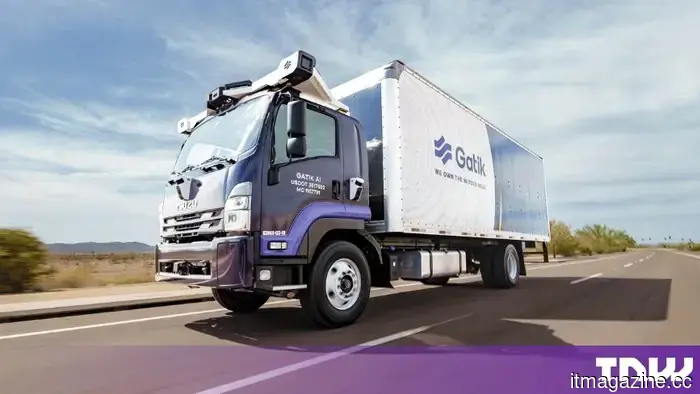 Gatik has secured $200 million to increase the number of driverless box trucks on roads in the United States.
Gatik's largest funding round to date was spearheaded by Qatar Investment Authority and Koch Disruptive Technologies. The autonomous trucking company has now secured approximately $500 million.
Gatik has secured $200 million to increase the number of driverless box trucks on roads in the United States.
Gatik's largest funding round to date was spearheaded by Qatar Investment Authority and Koch Disruptive Technologies. The autonomous trucking company has now secured approximately $500 million.
 JBL's refreshed Quantum gaming headsets maintain their impact, even at a lower price point.
JBL's latest $50 Quantum 120 features the same 50mm carbon drivers, Spatial Sound, Hi-Res support, and detachable boom microphone as the $130 wireless Quantum 520X.
JBL's refreshed Quantum gaming headsets maintain their impact, even at a lower price point.
JBL's latest $50 Quantum 120 features the same 50mm carbon drivers, Spatial Sound, Hi-Res support, and detachable boom microphone as the $130 wireless Quantum 520X.
 Mate Security introduces Gamebooks to provide reliable autonomy in AI-driven security investigations.
Mate Security has introduced Gamebooks, a feature that distinguishes investigative intent from execution steps, allowing AI agents to adjust to evolving security stacks without the need to modify investigation logic. It is now generally available and was highlighted at Fal.Con 2026.
Mate Security introduces Gamebooks to provide reliable autonomy in AI-driven security investigations.
Mate Security has introduced Gamebooks, a feature that distinguishes investigative intent from execution steps, allowing AI agents to adjust to evolving security stacks without the need to modify investigation logic. It is now generally available and was highlighted at Fal.Con 2026.
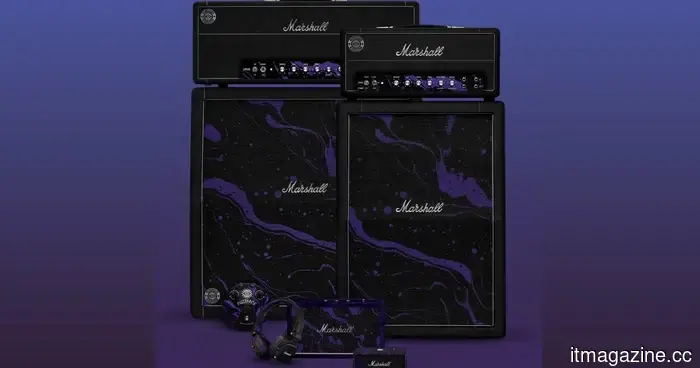 Jimi Hendrix’s Purple Haze dominates Marshall’s assortment of speakers, headphones, and amplifiers.
Marshall has broadened its Jimi Hendrix anniversary collection to include psychedelic editions of the Major V headphones, Emberton III speaker, and a $2,500 tube amplifier.
Jimi Hendrix’s Purple Haze dominates Marshall’s assortment of speakers, headphones, and amplifiers.
Marshall has broadened its Jimi Hendrix anniversary collection to include psychedelic editions of the Major V headphones, Emberton III speaker, and a $2,500 tube amplifier.
 Lenovo's inaugural Android gaming handheld offers a smart solution for your poor Wi-Fi connection.
The Lenovo Legion C700 is an Android gaming handheld priced at $327, featuring a 120Hz display, a large battery, and an innovative method for streaming PC games offline.
Lenovo's inaugural Android gaming handheld offers a smart solution for your poor Wi-Fi connection.
The Lenovo Legion C700 is an Android gaming handheld priced at $327, featuring a 120Hz display, a large battery, and an innovative method for streaming PC games offline.
 Nitter has gone offline after seven years, following the receipt of cease-and-desist letters.
X Corp requested a permanent removal of Nitter and its repository. The open-source X reader and XCancel have both been taken offline after seven years.
Nitter has gone offline after seven years, following the receipt of cease-and-desist letters.
X Corp requested a permanent removal of Nitter and its repository. The open-source X reader and XCancel have both been taken offline after seven years.
Amazon is shutting down Mechanical Turk, the human labor service it marketed as artificial intelligence.
Amazon will shut down Mechanical Turk on September 30. A study conducted in 2023 revealed that as many as 46% of its workers were already utilizing AI to complete the tasks.