

The newest Xperia from Sony has the specifications I wish the Pixel 10a had.
The Pixel 10a is a commendable mid-range smartphone worth considering at its $499 price point. It offers Google’s experienced software, impressive computational photography from its small camera, and an excellent design. However, the underlying hardware has seen minimal updates, relying heavily on software to enhance its usability. Interestingly, Sony emerges as an unexpectedly strong competitor in this market segment.
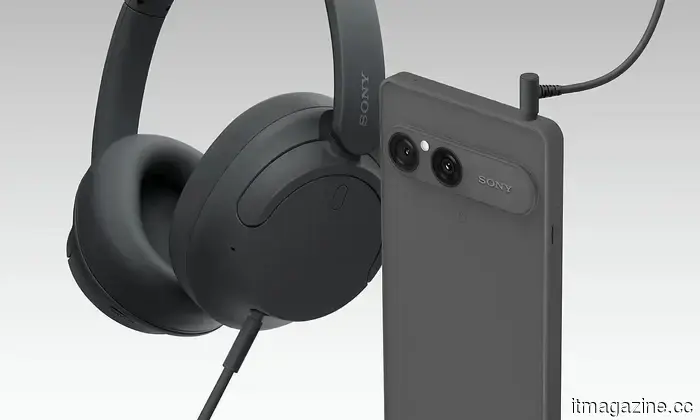
Sony has recently introduced a phone that takes a refreshingly different approach to similar challenges. The new Xperia 10 VIII includes a 3.5mm headphone jack, microSD expansion up to 2TB, a physical camera shutter button, front-facing stereo speakers, and a side-mounted fingerprint sensor.
Sony maintains essential features
I've grown accustomed to manufacturers claiming that features like expandable storage and headphone jacks must be eliminated. While the headphone jack has been considered a "niche" feature reserved for basic or budget phones, Sony continues to incorporate it in modern smartphones. The Xperia 10 VIII offers 128GB of internal storage with microSD support, and the headphone jack is complemented by Sony’s Hi-Res Audio, LDAC, aptX Adaptive, and 360 Reality Audio capabilities.
Additionally, the dedicated shutter button can activate the camera even when the display is off, providing a dedicated physical control for photography rather than relying solely on a touchscreen shortcut. Sony has also improved the everyday hardware. The 6.1-inch 120Hz OLED display is approximately 50% brighter than that of the Xperia 10 VII, while the upgraded front stereo speakers are around 15% louder and produce over 30% stronger low-frequency sound. The phone remains notably compact at 153mm tall and weighs just 168 grams.
A 5,000mAh battery completes the package, with Sony claiming two days of usage between charges and battery-health measures designed to maintain capacity for up to four years. Additionally, it offers IP65/IP68 ratings and Gorilla Glass Victus 2. In the ongoing debate regarding headphone jacks, companies have suggested that removing this critical feature frees up internal space and enhances water resistance. The Xperia 10 VIII exemplifies that there are alternatives to completely eliminating the port.
I have to admit, it is somewhat pricey
Sony’s approach to hardware doesn’t mean everything is aggressive in terms of pricing. The Xperia 10 VIII uses the older Snapdragon 6 Gen 3, 8GB of RAM, and features familiar camera hardware, including a 50MP main sensor and a 13MP ultrawide lens. This doesn’t present a compelling offering when compared to its regional pricing: €599 in Europe and £549 in the UK, in contrast to €449 and £399 for last year’s Xperia 10 VII.
The brand hasn’t escaped the impact of the RAMpocalypse either. The new model is set to release in mid-to-late September, yet Sony still does not officially sell its Xperia phones in the US. Sony promises four operating system upgrades and six years of security updates, which is commendable. By comparison, Google offers seven years of OS and security updates for the cheaper Pixel 10a, along with a richer array of Pixel-exclusive AI and calling features.
These two phones are fascinatingly contrasting. The Pixel 10a encourages users to overlook the specifications due to its superior software. In contrast, Sony highlights that traditional features like the headphone jack, expandable storage, quality speakers, and a physical camera button can still contribute to a phone's appeal. I only wish Sony hadn’t added a €150 price increase to this reminder.

Other articles
 ChatGPT Plus is experiencing throttling once more, and it's supposedly for your own benefit.
OpenAI is reinstating five-hour usage limits for ChatGPT Work and Codex on Plus accounts, concluding a period of about six weeks during which only weekly limits were in effect.
ChatGPT Plus is experiencing throttling once more, and it's supposedly for your own benefit.
OpenAI is reinstating five-hour usage limits for ChatGPT Work and Codex on Plus accounts, concluding a period of about six weeks during which only weekly limits were in effect.
 Parents can now track their teenager's Uber ride in real time using the driver's phone.
Uber is allowing parents to monitor their teenagers' rides in real-time through the driver's phone, with no option for other passengers to opt-out and no information available regarding end-to-end encryption.
Parents can now track their teenager's Uber ride in real time using the driver's phone.
Uber is allowing parents to monitor their teenagers' rides in real-time through the driver's phone, with no option for other passengers to opt-out and no information available regarding end-to-end encryption.
 Apple's M5 Ultra Mac Studio receives a significant AI enhancement, Thunderbolt 5, and a new networking chip.
Apple's latest Mac Studio features the M5 Max and M5 Ultra chips, offers up to 512GB of RAM, and includes Wi-Fi 7. Prices start at $2,499, with shipping scheduled for September 22.
Apple's M5 Ultra Mac Studio receives a significant AI enhancement, Thunderbolt 5, and a new networking chip.
Apple's latest Mac Studio features the M5 Max and M5 Ultra chips, offers up to 512GB of RAM, and includes Wi-Fi 7. Prices start at $2,499, with shipping scheduled for September 22.
 ROG’s latest gaming mice are designed for esports, yet they will also be a great asset for your spreadsheets.
At Gamescom 2026, ASUS ROG unveiled the Gladius IV Ace and Spatha X 65K gaming mice, in addition to announcing new esports collaborations and a new Instagram channel for its fans.
ROG’s latest gaming mice are designed for esports, yet they will also be a great asset for your spreadsheets.
At Gamescom 2026, ASUS ROG unveiled the Gladius IV Ace and Spatha X 65K gaming mice, in addition to announcing new esports collaborations and a new Instagram channel for its fans.
 Australia's music charts have now prohibited songs created by AI, and this is significant news.
Beginning this week, Australia’s music charts mandate that every song must be predominantly created by humans, in response to the controversy surrounding an AI-assisted cover of a Madonna song that reached number 2.
Australia's music charts have now prohibited songs created by AI, and this is significant news.
Beginning this week, Australia’s music charts mandate that every song must be predominantly created by humans, in response to the controversy surrounding an AI-assisted cover of a Madonna song that reached number 2.
 Apple introduces the M6 and M5 Ultra chips, boasting increased performance and enhanced AI computing capabilities.
Apple WWDC This article is part of our full coverage of Apple WWDC Updated under 7 hours ago Apple is introducing a dual approach to its Mac lineup: one chip aimed at enhancing everyday tasks and on-device AI, while another is crafted for high-demand workloads that most users likely won't fully utilize. The company has unveiled […]
Apple introduces the M6 and M5 Ultra chips, boasting increased performance and enhanced AI computing capabilities.
Apple WWDC This article is part of our full coverage of Apple WWDC Updated under 7 hours ago Apple is introducing a dual approach to its Mac lineup: one chip aimed at enhancing everyday tasks and on-device AI, while another is crafted for high-demand workloads that most users likely won't fully utilize. The company has unveiled […]
The newest Xperia from Sony has the specifications I wish the Pixel 10a had.
Sony's Xperia 10 VIII retains the headphone jack, offers expandable storage, includes a physical camera button, and features front speakers, contrasting sharply with Google’s software-centric Pixel 10a.