

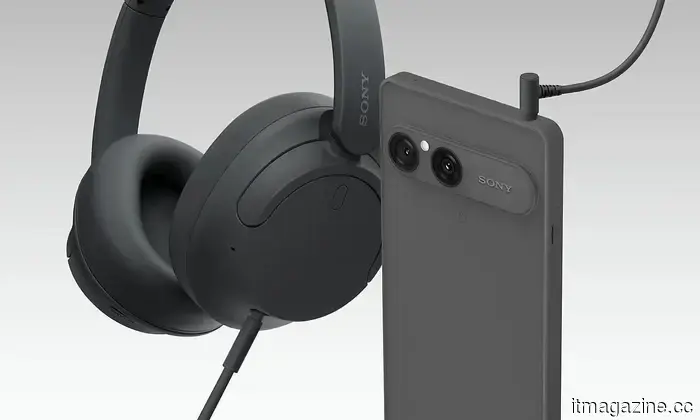
The latest Xperia from Sony features the hardware that I wish the Pixel 10a had.
The Pixel 10a is a reliable mid-range smartphone worth considering at its price of $499. It offers Google's well-established and feature-rich software experience, impressive computational photography despite its small camera, and excellent design. However, the underlying hardware has seen minimal updates, relying heavily on software for its appeal. Surprisingly, Sony has emerged as a capable competitor in this market.
Sony has recently unveiled a phone that tackles similar issues from a refreshingly different angle. The new Xperia 10 VIII still includes a 3.5mm headphone jack, microSD expansion up to 2TB, a dedicated physical camera shutter button, front-facing stereo speakers, and a side-mounted fingerprint sensor.
Sony maintains the essential features
I have grown accustomed to manufacturers insisting that expandable storage and headphone jacks needed to be eliminated. While it seemed the headphone jack was relegated to basic or budget smartphones, Sony is keeping it relevant in modern devices. The Xperia 10 VIII combines 128GB of internal storage with microSD expansion, while the headphone jack is complemented by Sony’s Hi-Res Audio, LDAC, aptX Adaptive, and 360 Reality Audio support.
Additionally, the dedicated shutter button can activate the camera even when the screen is off, offering a tactile control for photography rather than relying solely on a touchscreen shortcut. Sony has also enhanced the daily interaction experience with improved hardware. Its 6.1-inch 120Hz OLED display is about 50% brighter than that of the Xperia 10 VII, while upgraded front stereo speakers are approximately 15% louder overall and provide over 30% stronger low-frequency response. The phone remains relatively compact at 153mm in height and weighs just 168 grams.
A 5,000mAh battery completes the package, with Sony claiming it can last two days between charges and includes battery-health measures intended to maintain its capacity for four years. It also features IP65/IP68 waterproofing and Gorilla Glass Victus 2. In the debate over headphone jacks, brands often argued that removing this crucial feature helped create more internal space and enhanced water resistance. Thus, the Xperia 10 VIII is yet another instance showing that a solution existed without entirely eliminating the port.
I must admit, it is a bit pricey
Sony's traditional hardware approach does not imply all aspects are competitively priced. The Xperia 10 VIII continues to use the aging Snapdragon 6 Gen 3, 8GB of RAM, and largely familiar camera components, including a 50MP main sensor and 13MP ultrawide lens. This arrangement seems less appealing when considering its regional pricing: €599 in Europe and £549 in the UK, up from €449 and £399 for last year’s Xperia 10 VII.
The company hasn’t avoided the trends affecting RAM either. The new model is set for release in mid-to-late September, and Sony has yet to sell its Xperia phones officially in the US. Sony promises four OS upgrades and six years of security updates, which is commendable. In contrast, Google offers the more affordable Pixel 10a seven years of OS and security updates, along with a broader range of Pixel-exclusive AI and calling features.
These two phones are intriguing contrasts. The Pixel 10a aims for you to prioritize software over specs due to its usability. In contrast, Sony serves as a reminder that enduring features like the headphone jack, expandable storage, quality speakers, and a physical camera button can also enhance a phone's appeal. I just wish Sony hadn’t imposed a €150 price increase with this reminder.

Other articles
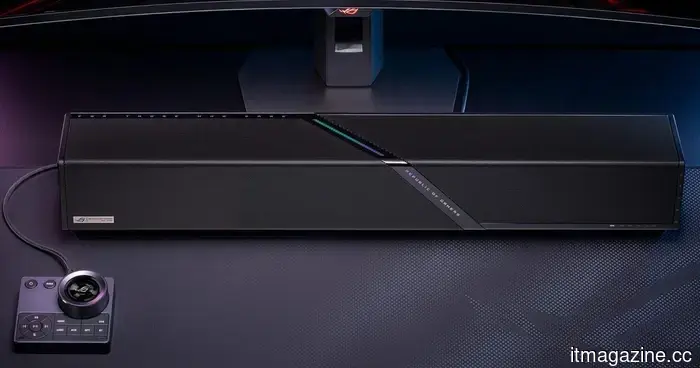 ASUS's ROG soundbar, priced at $600, allows you to engage in trash-talk without needing a headset, and it's now available in the US.
ASUS' inaugural ROG gaming soundbar features 2.1.2 Dolby Atmos, a wireless subwoofer, and integrated noise-canceling microphones intended for multiplayer gaming without the need for headsets.
ASUS's ROG soundbar, priced at $600, allows you to engage in trash-talk without needing a headset, and it's now available in the US.
ASUS' inaugural ROG gaming soundbar features 2.1.2 Dolby Atmos, a wireless subwoofer, and integrated noise-canceling microphones intended for multiplayer gaming without the need for headsets.
 Nothing OS 5.0 encourages you to stop alternating between applications and begin fully engaging with your phone.
Fresh fonts, new widgets, and updated clock faces. Nothing OS 5.0 is poised to be the most significant software enhancement from the brand to date.
Nothing OS 5.0 encourages you to stop alternating between applications and begin fully engaging with your phone.
Fresh fonts, new widgets, and updated clock faces. Nothing OS 5.0 is poised to be the most significant software enhancement from the brand to date.
 ChatGPT Plus is once again experiencing throttling, and it seems to be for your benefit.
OpenAI is reinstating five-hour usage limits for ChatGPT Work and Codex on Plus accounts, concluding a period of about six weeks during which only weekly limits were in effect.
ChatGPT Plus is once again experiencing throttling, and it seems to be for your benefit.
OpenAI is reinstating five-hour usage limits for ChatGPT Work and Codex on Plus accounts, concluding a period of about six weeks during which only weekly limits were in effect.
 Apple introduces the M6 and M5 Ultra chips, showcasing a significant increase in AI performance.
Apple has introduced its inaugural 2nm chip and its first quad-die M-series component, featuring 512GB of unified memory to support the operation of large models entirely on the device.
Apple introduces the M6 and M5 Ultra chips, showcasing a significant increase in AI performance.
Apple has introduced its inaugural 2nm chip and its first quad-die M-series component, featuring 512GB of unified memory to support the operation of large models entirely on the device.
 ChatGPT Plus is experiencing throttling once more, and it's supposedly for your own benefit.
OpenAI is reinstating five-hour usage limits for ChatGPT Work and Codex on Plus accounts, concluding a period of about six weeks during which only weekly limits were in effect.
ChatGPT Plus is experiencing throttling once more, and it's supposedly for your own benefit.
OpenAI is reinstating five-hour usage limits for ChatGPT Work and Codex on Plus accounts, concluding a period of about six weeks during which only weekly limits were in effect.
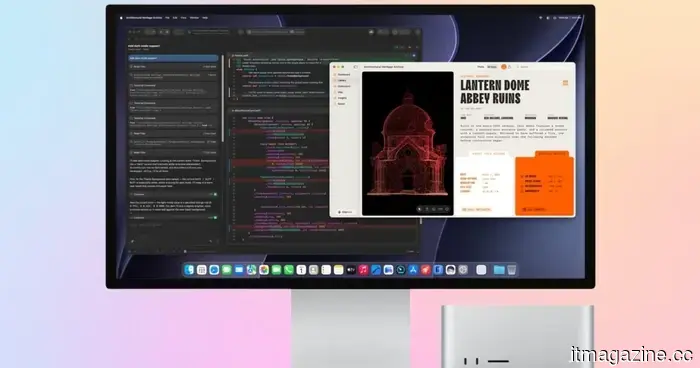 Apple's M5 Ultra Mac Studio receives a significant AI enhancement, Thunderbolt 5, and a new networking chip.
Apple's latest Mac Studio features the M5 Max and M5 Ultra chips, offers up to 512GB of RAM, and includes Wi-Fi 7. Prices start at $2,499, with shipping scheduled for September 22.
Apple's M5 Ultra Mac Studio receives a significant AI enhancement, Thunderbolt 5, and a new networking chip.
Apple's latest Mac Studio features the M5 Max and M5 Ultra chips, offers up to 512GB of RAM, and includes Wi-Fi 7. Prices start at $2,499, with shipping scheduled for September 22.
The latest Xperia from Sony features the hardware that I wish the Pixel 10a had.
Sony’s Xperia 10 VIII retains features such as the headphone jack, expandable storage, a physical camera button, and front-facing speakers, contrasting sharply with Google’s software-centric Pixel 10a.