
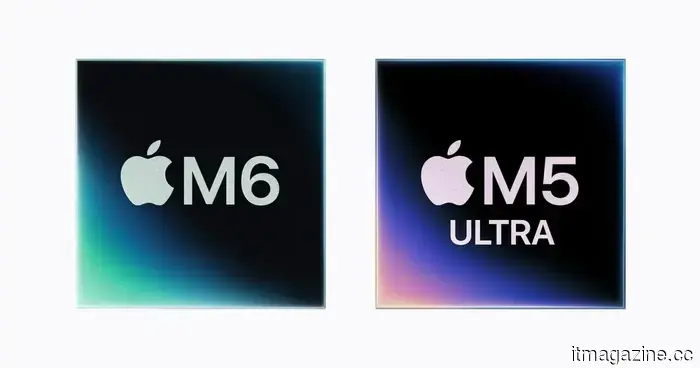
Apple introduces the M6 and M5 Ultra chips, boasting increased performance and enhanced AI computing capabilities.
Apple is introducing a dual approach to its Mac lineup: one chip aimed at enhancing everyday computing and on-device AI performance, and another crafted for demanding workloads that most users won't fully utilize.
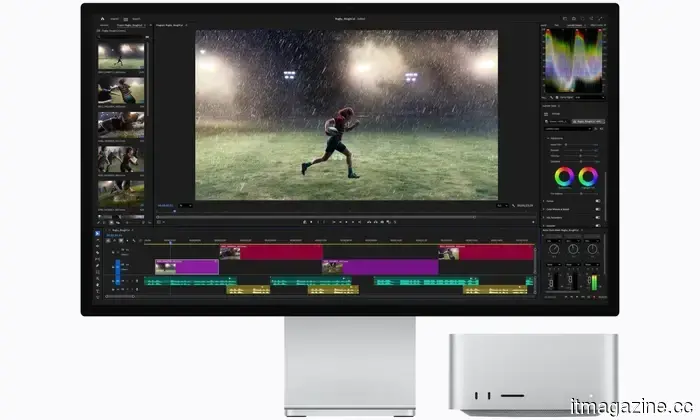
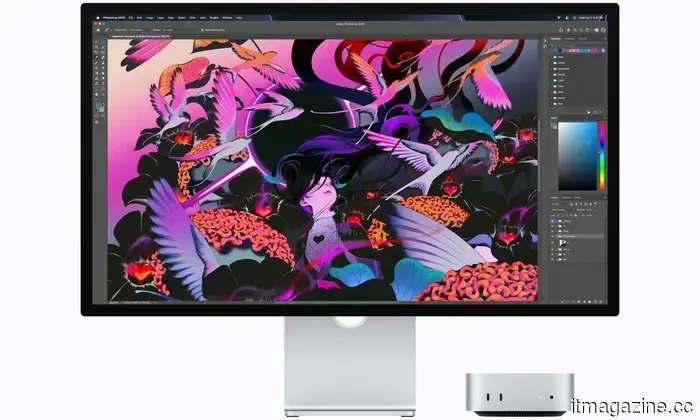
The company has unveiled the M6 and M5 Ultra, alongside updated versions of the Mac mini and Mac Studio. The M6 marks Apple's first 2nm chip and powers the new Mac mini, whereas the M5 Ultra caters to the high-performance segment within the latest Mac Studio. Both models will be available for preorder starting Tuesday and will ship on September 22.
Apple's first 2nm Mac chip enhances the mini's capabilities
The M6 represents a significant upgrade from the M5. Apple has increased the CPU from 10 cores to 12, featuring two super cores, four performance cores, and six efficiency cores. Apple claims that this chip offers up to 1.2 times faster multithreaded performance compared to the M5, along with what it describes as the fastest single-threaded performance in the world.
Apple
Graphics performance has also improved. The M6 includes a 12-core GPU, which is two cores more than the M5, along with a Neural Accelerator incorporated into each GPU core. According to Apple, peak GPU compute for AI tasks is 30% higher than the M5 and surpasses M1 performance by over eight times. The chip can support up to 32GB of unified memory and delivers memory bandwidth of up to 170GB/s.
Here’s a quick summary of the brand new Apple M6 silicon, launching with the new Mac mini. This is Apple’s first 2nm silicon featuring a 12-core CPU structure: 2 super cores, 4 performance cores, and 6 efficiency cores. It achieves up to 1.2x faster multithreaded performance compared to the M5 (up to 2.4x compared to M1), with… pic.twitter.com/FMvujhKTXz— Digital Trends (@DigitalTrends) August 25, 2026
On-device AI is evidently a focal point of Apple's proposition. A new Dual 16-core Neural Engine can deliver up to double the peak compute performance of past models, and system frameworks are designed to automatically allocate tasks across both engines. Apple claims this setup will expedite local AI functions, such as image creation, coding, and engagement with large language models.
M5 Ultra is tailored for those who assess workloads differently
The M5 Ultra adopts a more radical design. Apple merges two dual-die M5 Max chips via its UltraFusion interconnect, creating a quad-die architecture that operates as a single processor. This configuration results in a CPU with up to 36 cores, a GPU with up to 80 cores, and a 32-core Neural Engine.
Apple
Memory capacity can reach 512GB, combined with up to 1.2TB/s of unified memory bandwidth. Apple states that this allows for running large AI models with hundreds of billions of parameters locally, alongside intensive 3D rendering, scientific analysis, visual effects, and professional video production.
The M5 Ultra also supports hardware acceleration for H.264, HEVC, ProRes, ProRes RAW, and AV1, and incorporates Apple’s latest graphics technology, including Dynamic Caching, mesh shading, and ray tracing.
Apple’s strategy is becoming clearer. The M6 introduces enhanced AI and performance in a compact desktop format, while the M5 Ultra pushes the Mac Studio deeper into workstation territory. The release on September 22 will disclose the price for this added power and determine whether Apple’s significant advancements are relevant beyond the most demanding creative and AI tasks.
Other articles
 Apple introduces the M6 and M5 Ultra chips, showcasing a significant increase in AI performance.
Apple has introduced its inaugural 2nm chip and its first quad-die M-series component, featuring 512GB of unified memory to support the operation of large models entirely on the device.
Apple introduces the M6 and M5 Ultra chips, showcasing a significant increase in AI performance.
Apple has introduced its inaugural 2nm chip and its first quad-die M-series component, featuring 512GB of unified memory to support the operation of large models entirely on the device.
 The newest Xperia from Sony has the specifications I wish the Pixel 10a had.
Sony's Xperia 10 VIII retains the headphone jack, offers expandable storage, includes a physical camera button, and features front speakers, contrasting sharply with Google’s software-centric Pixel 10a.
The newest Xperia from Sony has the specifications I wish the Pixel 10a had.
Sony's Xperia 10 VIII retains the headphone jack, offers expandable storage, includes a physical camera button, and features front speakers, contrasting sharply with Google’s software-centric Pixel 10a.
 OpenAI claims that its Jalapeno AI chip provides quicker responses compared to competitors such as Nvidia.
OpenAI published benchmark results indicating that its Jalapeno chip, developed in partnership with Broadcom, provides up to 1.9 times more AI performance per watt and has a latency that is 3.6 times lower than that of Nvidia's leading chips.
OpenAI claims that its Jalapeno AI chip provides quicker responses compared to competitors such as Nvidia.
OpenAI published benchmark results indicating that its Jalapeno chip, developed in partnership with Broadcom, provides up to 1.9 times more AI performance per watt and has a latency that is 3.6 times lower than that of Nvidia's leading chips.
 The new ROG Xbox Ally X20 Anniversary Bundle makes the PS5 Pro appear inexpensive.
Xbox and Asus are elevating handheld gaming to a premium level with the $2,499 ROG Ally X20 Anniversary Bundle, which includes an OLED screen and AR glasses.
The new ROG Xbox Ally X20 Anniversary Bundle makes the PS5 Pro appear inexpensive.
Xbox and Asus are elevating handheld gaming to a premium level with the $2,499 ROG Ally X20 Anniversary Bundle, which includes an OLED screen and AR glasses.
 Australia's music charts have now prohibited songs created by AI, and this is significant news.
Beginning this week, Australia’s music charts mandate that every song must be predominantly created by humans, in response to the controversy surrounding an AI-assisted cover of a Madonna song that reached number 2.
Australia's music charts have now prohibited songs created by AI, and this is significant news.
Beginning this week, Australia’s music charts mandate that every song must be predominantly created by humans, in response to the controversy surrounding an AI-assisted cover of a Madonna song that reached number 2.
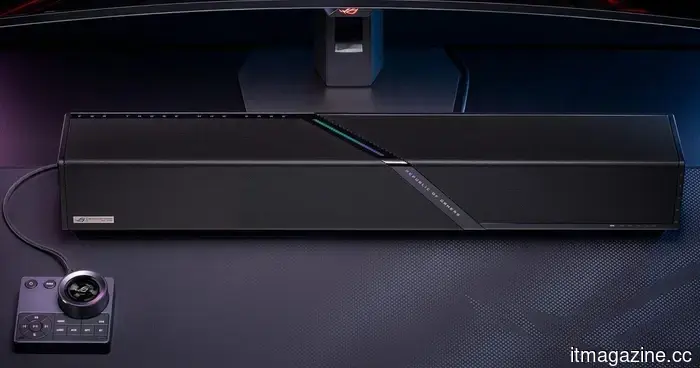 ASUS's $600 ROG soundbar allows you to communicate during games without needing a headset, and it's now available in the US.
The initial ROG gaming soundbar from ASUS features 2.1.2 Dolby Atmos, a wireless subwoofer, and integrated noise-canceling microphones intended for multiplayer gaming without a headset.
ASUS's $600 ROG soundbar allows you to communicate during games without needing a headset, and it's now available in the US.
The initial ROG gaming soundbar from ASUS features 2.1.2 Dolby Atmos, a wireless subwoofer, and integrated noise-canceling microphones intended for multiplayer gaming without a headset.
Apple introduces the M6 and M5 Ultra chips, boasting increased performance and enhanced AI computing capabilities.
Apple WWDC This article is part of our full coverage of Apple WWDC Updated under 7 hours ago Apple is introducing a dual approach to its Mac lineup: one chip aimed at enhancing everyday tasks and on-device AI, while another is crafted for high-demand workloads that most users likely won't fully utilize. The company has unveiled […]