

ERP, MES, SCADA: a unified low-code platform for industry instead of a "zoo"
The Russian MES systems market will exceed 15 billion rubles by 2026, maintaining a growth rate of no less than 8%. However, behind these figures lies a deeper transformation: customers are increasingly abandoning the "zoo" of disparate solutions in favor of unified platforms capable of covering the entire production cycle. AggreGate, one of the developers of such platforms, recently released updates to its key products — SCADA/HMI 6.4 and MES — to respond to this market demand.
The market has outgrown the stage of emergency import substitution, and now customers are interested not just in the availability of a Russian product, but its real business value: the depth of industry expertise, the quality of implementations, and the ability to integrate into a broader digital framework of the enterprise. This is especially relevant for the industry, where data from equipment should become the basis for management decisions, rather than just being displayed on dispatcher screens.
Low-code as a new standard
One of the key trends in recent years has been the shift to low-code platforms. This allows enterprises to be independent of the vendor with each change in business processes and to adapt systems to their real processes, rather than the other way around. According to the same TAdviser study, MES developers have split into two camps: some focus on platforming and flexible configuration, while others focus on industry specialization. AggreGate confidently belongs to the first camp, consistently implementing a strategy for a unified digital space where industrial data, MES, SCADA/HMI, and IT infrastructure monitoring work together.
How the platform approach turns into specific tools: the example of AggreGate SCADA/HMI 6.4
The strategy of a unified digital space is not just a concept. In the release of AggreGate SCADA/HMI 6.4, it is embodied in several key innovations. The new version of the dispatching system focuses on three tasks: accelerating implementation, increasing performance when working with big data (video walls, thousands of tags), and simplifying integration with external systems and equipment.
A direct driver for Siemens S7 allows connecting to controllers without intermediate OPC servers. This simplifies the architecture and reduces latency. The editor for mnemonic diagrams has been completely redesigned for creating industrial-scale diagrams and outputting to video walls. A mechanism for template bindings has appeared: an engineer can bind a mnemonic symbol to a digital twin once and clone it without reconfiguration.
The new architecture of digital twins with the entity "tag" simplifies the description of assets, and the alarm system has received a new dashboard and a setup wizard for quickly creating automatic response scenarios.
AggreGate MES: a customizable system, not a rigid product
Alongside SCADA, the company introduced an update to the production management system — AggreGate MES. The product is positioned as a link between strategic planning (ERP) and operational management (SCADA/PLC). It consists of modules:
MES Core — the core that describes the production environment according to the ISA-95 standard. It includes models for describing the hierarchy of production objects, digital twins of warehouses and tools, products, recipes, and technological maps. The low-code architecture allows easily redefining and supplementing the properties of entities to fit the specifics of a particular enterprise.
MES Planning & Scheduling — a module for automating planning and creating production schedules. Based on orders and technical maps, it builds an optimal schedule considering equipment availability, staff qualifications, and other constraints. It supports manual, automatic, and phased planning modes.
MES OEE — a tool for assessing equipment utilization efficiency. It calculates OEE based on availability, performance, and quality. The platform allows collecting statistics by shifts and other time intervals for detailed analysis.
MES Track & Trace — a module for product traceability. It logs changes, allows restoring the state of any object at a point in time, and builds a traceability graph from raw materials to finished products and back. It is critically important for the food, pharmaceutical, and other regulated industries.
It is important that MES does not require a complete overhaul of the enterprise's IT infrastructure and can be implemented in stages, starting with one workshop or production line. The OEE module helps to see equipment efficiency (availability, performance, quality) in real-time, while the production traceability module ensures end-to-end genealogy from raw materials to finished products, which is critical for any production, especially in the food and pharmaceutical industries.
Among the key features of AggreGate MES are spreadsheets with live data. These are not just tables, but a full-fledged tool where formulas work with history and sensors in real-time, and the interface allows importing and exporting Excel files. For many enterprises, this means abandoning manual data reconciliation and transitioning to automatic analytics directly in the MES environment.
Import substitution without loss of quality
AggreGate MES and SCADA/HMI are part of the unified AggreGate platform, which is included in the Register of domestic software. This allows enterprises not just to replace foreign systems, but to obtain a full-fledged alternative that surpasses them in several parameters. Among the systems being replaced are Siemens Opcenter, AVEVA MES, PI System, InTouch HMI, SIMATIC WinCC, ETM WinCC OA, and others. At the same time, the platform supports operation with Russian operating systems (Astra Linux, RED OS) and DBMS (Arenadata Picodata, Tantor Basic, Perseus), which is especially important for critical information infrastructure (CII) facilities.
A unified platform as a strategy
The main thing that unites both releases is the architectural philosophy. Both systems are built on a single AggreGate platform, sharing a common data model, development environment, and integration approaches. The customer can start small (monitoring, SCADA) and gradually increase functionality (MES, analytics), without worrying about compatibility.
Experts call this approach the main trend: the transition from disparate solutions to a single managed framework. The forced replacement of Western software is giving way to a conscious choice of platforms that bring real business value. Data from equipment is now directed not only to the dispatcher but also to analytics and MES, transforming telemetry from a technical necessity into a strategic asset.

Other articles
 The new ROG Xbox Ally X20 Anniversary Bundle makes the PS5 Pro appear inexpensive.
Xbox and Asus are elevating handheld gaming to a premium level with the $2,499 ROG Ally X20 Anniversary Bundle, which includes an OLED screen and AR glasses.
The new ROG Xbox Ally X20 Anniversary Bundle makes the PS5 Pro appear inexpensive.
Xbox and Asus are elevating handheld gaming to a premium level with the $2,499 ROG Ally X20 Anniversary Bundle, which includes an OLED screen and AR glasses.
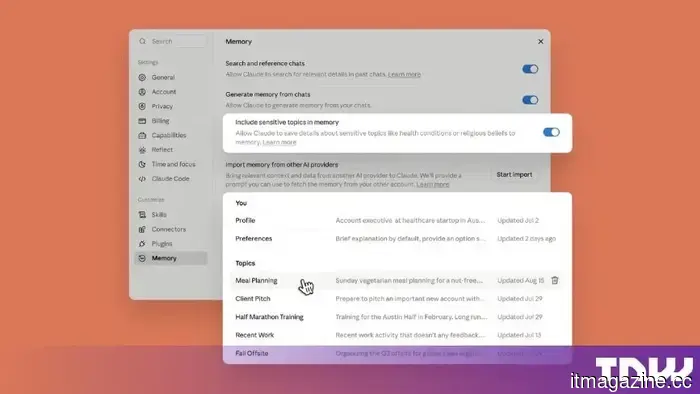 Anthropic integrates Claude chat and Cowork memory, which is enabled by default.
Anthropic has integrated Claude chat with Cowork memory. The company states that this feature is enabled by default, while discussions on sensitive topics require opting in.
Anthropic integrates Claude chat and Cowork memory, which is enabled by default.
Anthropic has integrated Claude chat with Cowork memory. The company states that this feature is enabled by default, while discussions on sensitive topics require opting in.
 Anthropic is anticipated to present investors with a $30 trillion market opportunity.
According to the WSJ, Anthropic is expected to inform IPO investors that its market value exceeds $30 trillion, surpassing the $28.5 trillion that SpaceX asserted.
Anthropic is anticipated to present investors with a $30 trillion market opportunity.
According to the WSJ, Anthropic is expected to inform IPO investors that its market value exceeds $30 trillion, surpassing the $28.5 trillion that SpaceX asserted.
 Stability AI secures $76 million in funding from Universal, Warner, Sony Music, and EA.
According to the company, Universal, Warner, and Sony Music have participated in Stability AI's $76 million Series B funding round, along with Electronic Arts and AMD Ventures.
Stability AI secures $76 million in funding from Universal, Warner, Sony Music, and EA.
According to the company, Universal, Warner, and Sony Music have participated in Stability AI's $76 million Series B funding round, along with Electronic Arts and AMD Ventures.
 Android 17 has finally introduced the Pixel feature that my motion-sensitive self has been anticipating.
The new Motion Assist feature from Android 17 is being rolled out to Pixel 11 phones, incorporating animated screen cues aimed at alleviating the sensory mismatch that leads to motion sickness.
Android 17 has finally introduced the Pixel feature that my motion-sensitive self has been anticipating.
The new Motion Assist feature from Android 17 is being rolled out to Pixel 11 phones, incorporating animated screen cues aimed at alleviating the sensory mismatch that leads to motion sickness.
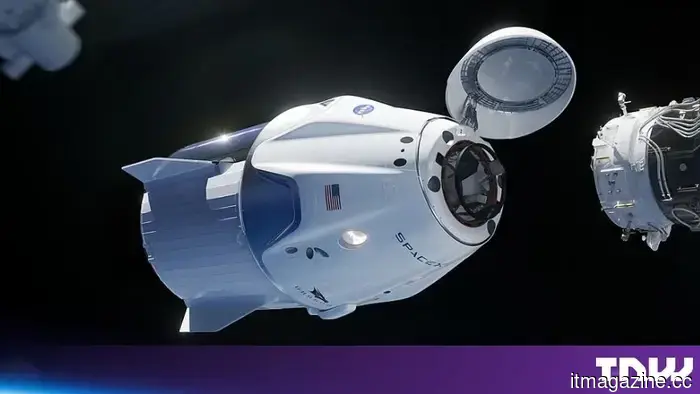 SpaceX aims to construct a $100 billion spaceport designed for thousands of launches annually.
SpaceX plans to invest as much as $100 billion in a Louisiana spaceport designed to handle thousands of launches each year, compared to the Ariane 6, which has a maximum capacity of nine to ten launches annually.
SpaceX aims to construct a $100 billion spaceport designed for thousands of launches annually.
SpaceX plans to invest as much as $100 billion in a Louisiana spaceport designed to handle thousands of launches each year, compared to the Ariane 6, which has a maximum capacity of nine to ten launches annually.
ERP, MES, SCADA: a unified low-code platform for industry instead of a "zoo"
The Russian MES systems market will exceed 15 billion rubles in 2026, maintaining a growth rate of no less than 8%. However, behind these figures lies a deeper transformation: customers are increasingly rejecting the "zoo" of disparate solutions in favor of unified platforms capable of covering the entire production cycle. AggreGate, one of the developers of such platforms, recently released updates to its key products — SCADA/HMI 6.4 and MES — to respond to this market demand.