
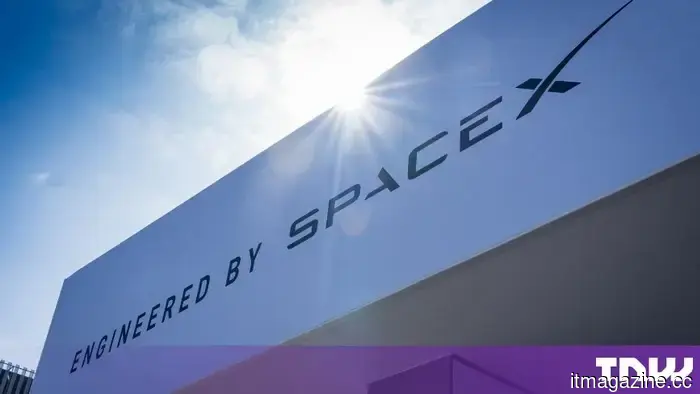
SpaceX is seeking to employ a natural gas trader for its rockets and chips.
SpaceX is looking for a natural gas trader to establish and lead a trading team for its fuel and power requirements, as reported by Bloomberg. Julian Hast, who monitors US gas markets from Houston, discovered the job listing on Friday.
The position “centers around physical and financial natural gas trading,” according to the description.
Job Location
The announcement specifies that the job will be based either in Cape Canaveral, Florida, or Starbase, Texas. Neither of these locations is known as a center for gas trading, as the company primarily operates from Houston, Calgary, and Stamford, Connecticut, none of which are included in the hiring plans. The posting indicates that remote work will not be an option, meaning the hired individual will work close to the rockets or the manufacturing facility. Cape Canaveral is SpaceX’s launch site in Florida, while Texas aligns the trader with the state of the semiconductor factory that requires power.
Reason for a Rocket Company to Use Natural Gas
Starship uses super-chilled methane combined with liquid oxygen, where methane is a principal component of natural gas. Therefore, gas serves as a raw material for SpaceX instead of merely an operational cost. This highlights the distinction between purchasing electricity and procuring materials like steel.
The Connection to a Semiconductor Factory
Earlier this month, SpaceX announced plans to construct its own gas-fired power plants to supply energy for the semiconductor plant it is developing in Texas in conjunction with Tesla. Musk began construction on this $16.8 billion facility at the start of August, describing it as the most valuable building in the world. Such a large facility requires a stable power supply that standard utilities may not be able to provide quickly enough due to rising energy demands influenced by data centers and new factories driving developers toward new gas plants across the United States.
Interest in Drilling for Gas
In June, SpaceX's president and COO, Gwynne Shotwell, elaborated that the company plans to construct its own gas pipelines and is exploring the possibility of drilling for natural gas directly. She mentioned in a CNBC interview that these are “significant investments to cultivate our own propellant and deliver it to the rocket.” This literally means procuring a rocket fuel source from the commodity market rather than relying on an external supplier. Fuel transitions from an ordered service to a commodity held as an asset.
A Clear Strategy Emerges
Taking all this information into account, the strategy becomes evident: drill for gas, transport it through pipelines, trade it, combust it in power plants, or liquefy it for use in a Starship.
Previous Similar Endeavors by Musk
Musk has consistently favored vertical integration, as noted by Bloomberg, and the move toward establishing gas plants aligns with this approach. Owning the fuel supply introduces similar instincts into a commodity market, creating a different kind of business model with unique risks.
Wider Trend Among Corporations
According to Bloomberg, major companies like Meta and OpenAI are also moving into power trading as their energy needs increase. OpenAI is looking to hire a lead for power trading related to its data center operations, and this month, electrical power has transitioned from being merely an expense to a position on its balance sheet. Meta has adopted a similar approach, exiting the RE100 agreement as its gas projects surpassed its renewable initiatives. Nvidia has recently invested in three land and power companies, including acquiring a stake in Cloverleaf. The trend is evident: companies that once purchased energy are evolving into entities that source their own.
SpaceX's Ambitious Plan
SpaceX differentiates itself from these organizations by desiring not only electricity for its facilities but also the same natural gas for its fuel tanks.
Understanding the Nature of a Trading Desk
A trading team differs from a procurement team; physical trading involves receiving gas and distributing it where necessary, while financial trading encompasses holding contracts amid price fluctuations. Both avenues help avoid being mere price takers, which is crucial for a company that must fuel its launches timely and sustain uninterrupted operations at its fabrication site. This level of involvement also means that an aerospace company begins to undertake the risks associated with an energy company; a poorly timed hedge could incur losses regardless of the business focus.
SpaceX is Now Publicly Traded
SpaceX made its Nasdaq debut in June, altering the significance of a trading desk, as positions and hedges will eventually affect financial statements visible to investors. Concurrently, the company's revenue model is undergoing a transformation. Musk mentioned in a recent all-hands meeting that he expects SpaceX’s AI division to surpass rocket-related earnings by September, which underscores the importance of the chip factory in this narrative. Tesla, a key partner in this factory, has also been discussing a potential sell-off in China that could facilitate a merger with SpaceX, making the energy initiatives relevant to this development.
Challenges at Starbase
The Texas aspect relates to Starbase, where 80 residents filed a lawsuit against SpaceX in June, claiming that rocket launches were causing damage to their homes
Other articles
 OpenAI has experienced the departure of its second sales leader within a week, as they move to Salesforce.
Kaylin Voss, OpenAI's Vice President of Americas Sales, has stepped down after five months and is going back to Salesforce, as reported by The Information.
OpenAI has experienced the departure of its second sales leader within a week, as they move to Salesforce.
Kaylin Voss, OpenAI's Vice President of Americas Sales, has stepped down after five months and is going back to Salesforce, as reported by The Information.
 In July, the share of electric vehicles (EVs) in Europe reached 25%, with sales increasing by 51%.
In July, EV registrations in Europe increased by 51%, achieving a 25% market share, while Chinese brands captured 34% of the plug-in hybrid market, which is not yet affected by tariffs.
In July, the share of electric vehicles (EVs) in Europe reached 25%, with sales increasing by 51%.
In July, EV registrations in Europe increased by 51%, achieving a 25% market share, while Chinese brands captured 34% of the plug-in hybrid market, which is not yet affected by tariffs.
 Hackers connected to Iran disabled a power plant in the UK for four days.
A small power plant in the UK was taken offline for four days in July following a cyber attack, as reported by the Telegraph, which attributed the incident to hackers associated with Iran.
Hackers connected to Iran disabled a power plant in the UK for four days.
A small power plant in the UK was taken offline for four days in July following a cyber attack, as reported by the Telegraph, which attributed the incident to hackers associated with Iran.
 As the music industry struggles with a wave of challenges, Dr. Dre encourages artists to embrace AI technology.
While AI-generated music is saturating the internet, Dr. Dre is not shying away from it. He believes that artists ought to embrace and learn to utilize AI.
As the music industry struggles with a wave of challenges, Dr. Dre encourages artists to embrace AI technology.
While AI-generated music is saturating the internet, Dr. Dre is not shying away from it. He believes that artists ought to embrace and learn to utilize AI.
 By 2036, Australian data centres are projected to consume seven times more energy.
According to grid operator AEMO, by 2035-36, Australian data centres are projected to account for 13% of the national electricity market, an increase from the current 3%.
By 2036, Australian data centres are projected to consume seven times more energy.
According to grid operator AEMO, by 2035-36, Australian data centres are projected to account for 13% of the national electricity market, an increase from the current 3%.
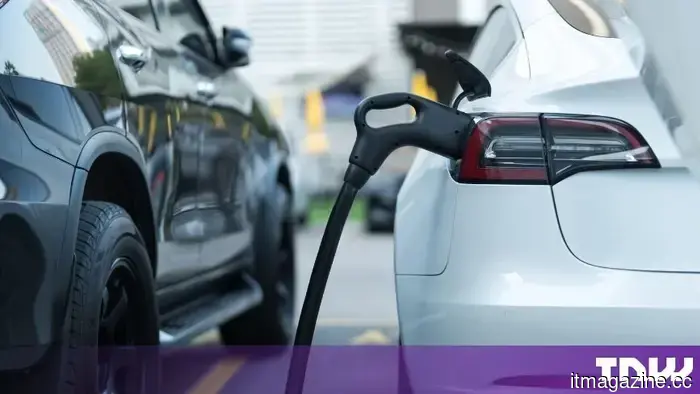 Walmart increased its number of charging stations from none to 100 in less than two years.
Walmart has launched its 100th EV fast-charging station, spanning 20 states, featuring 400kW chargers that are exclusively manufactured by ABB and Italy's Alpitronic.
Walmart increased its number of charging stations from none to 100 in less than two years.
Walmart has launched its 100th EV fast-charging station, spanning 20 states, featuring 400kW chargers that are exclusively manufactured by ABB and Italy's Alpitronic.
SpaceX is seeking to employ a natural gas trader for its rockets and chips.
According to Bloomberg, SpaceX is forming a natural gas trading team for its rockets and its chip manufacturing facility in Texas. The position is not located in Houston.