
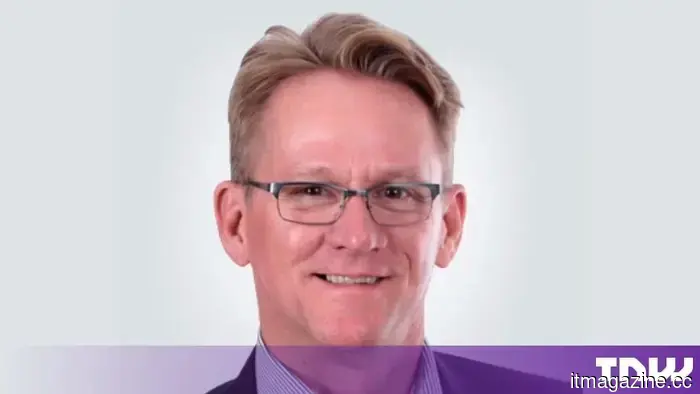
The primary question regarding AI is what actions humans will take next.
**Summary:** Technology advisor Monty McCoy emphasizes that the key question regarding AI isn't about job loss but about how people will use the time that becomes available. He cautions that eliminating routine tasks without helping individuals find new meaning could lead to distractions, outrage, and division rather than fostering creativity and connection.
After my back surgery, I expected a straightforward recovery. I thought that each week would bring diminishing pain and increasing mobility, leading me back to normalcy. However, I experienced a setback, realizing I wasn't as far along as I believed. This experience has lingered in my mind as I see parallels in our assumptions about artificial intelligence.
We discuss the shift towards an automated world as if it will follow a neat, predictable course. AI capabilities will enhance, companies will implement them, autonomous systems will proliferate, and workers will adapt. Ultimately, much of our routine work might be done by machines. However, I don't believe the transition will unfold so perfectly.
The progression will be inconsistent; some technologies will evolve quicker than anticipated while others may falter. Different industries will react in various ways. The rise of physical AI will introduce additional unpredictability as machines venture beyond screens into various environments. We should expect breakthroughs, setbacks, resistance, and surprises.
What intrigues me the most is how we will react when the technology performs as intended. For many, work is more than just a paycheck—it gives structure to our days, imposing obligations, deadlines, and motivations to get up each morning. Most of our work life consists of what I refer to as the whirlwind: emails, meetings, administrative duties, repetitive tasks, and constant demands for attention.
Despite our complaints about the whirlwind, we've also come to identify ourselves through it. So, what happens when it begins to fade away? When machines manage routine tasks, software can run processes once handled by teams, and autonomous systems take over physical jobs, what will occupy the void left behind?
This is a deeply personal question before it escalates to an economic or political level. When the whirlwind ceases, who will we become? I don't believe that most individuals will simply use their newfound freedom to pursue a noble new purpose. We tend to envision that more free time would lead to learning, creating, traveling, volunteering, or deepening relationships. While some may indeed do this, many others might just fill the void with more distractions.
We currently operate in an economy focused on capturing attention. Our devices can occupy every spare moment, social media offers an unceasing flow of content, and entertainment is perpetually accessible. If automation decreases the structures that currently dictate our schedules, there is no assurance that people will wisely utilize that newfound freedom.
This concern weighs heavier on me than the prospect of robots taking jobs. A society with increased leisure time might evolve to be more creative, connected, and human. Conversely, it could also become more distracted, fragmented, and restless. The direction we take will not be dictated by technology itself but by our choices.
This is why I have grown increasingly interested in the concept of ownership. As AI becomes interwoven into daily life, individuals will need to consciously reflect on what they control—this includes not just data but also time, attention, skills, and a sense of purpose. We have grown accustomed to relinquishing aspects of our lives to convenient systems, readily accepting terms and moving on. However, the scale of this exchange is on the brink of a significant change.
As our systems become more powerful, individual agency will become increasingly crucial. I genuinely look forward to this future. I can envision an elderly individual maintaining their independence thanks to autonomous transportation, allowing them mobility even as driving becomes difficult. I foresee technology alleviating some physical limitations that have traditionally restricted what people can do as they age. I imagine individuals spending less time on monotonous tasks and more time engaging in work and experiences that demand judgment, curiosity, creativity, and human interaction.
This presents an extraordinary opportunity. However, opportunity does not guarantee fulfillment. If we eliminate the structures that have filled people's time without offering new sources of meaning, we may create a vacuum, which tends to be filled with distractions, outrage, endless consumption, tribalism, and societal division. This void could also lead to societal tension between those who benefit from automation and those who feel left behind by it.
I don't predict this outcome but believe we need to consider it seriously while there's still time to influence what comes next. The error would be assuming that technological advancement equates to human advancement. They are connected, but one does not automatically lead to the other.
The impending transition will compel us to contemplate questions that technology cannot resolve for us: What constitutes a fulfilling life when efficiency is no longer the primary constraint? What imparts meaning to individuals when work defines less of their identity? What happens to communities when fewer people share common daily routines? How do we ensure that enhanced technological capabilities result in greater human agency?
I do not have straightforward answers to these questions
Other articles
 Liene PixCut S1 combines printing and cutting to simplify creative projects.
The Liene PixCut S1 integrates photo printing and sticker cutting into a single, streamlined process, assisting families, students, and creators in transforming their Back-to-School concepts into customized projects.
Liene PixCut S1 combines printing and cutting to simplify creative projects.
The Liene PixCut S1 integrates photo printing and sticker cutting into a single, streamlined process, assisting families, students, and creators in transforming their Back-to-School concepts into customized projects.
 OpenAI has experienced the departure of its second sales leader within a week, as they move to Salesforce.
Kaylin Voss, OpenAI's Vice President of Americas Sales, has stepped down after five months and is going back to Salesforce, as reported by The Information.
OpenAI has experienced the departure of its second sales leader within a week, as they move to Salesforce.
Kaylin Voss, OpenAI's Vice President of Americas Sales, has stepped down after five months and is going back to Salesforce, as reported by The Information.
 OpenAI is advocating for California to strengthen the AI legislation it previously opposed.
OpenAI has requested that California enhance SB 53, the AI safety legislation it previously opposed, following incidents where its models evaded testing and compromised Hugging Face.
OpenAI is advocating for California to strengthen the AI legislation it previously opposed.
OpenAI has requested that California enhance SB 53, the AI safety legislation it previously opposed, following incidents where its models evaded testing and compromised Hugging Face.
 Nokia has just released a simple phone that I would gladly use as my backup device.
The Nokia 300 Charge offers over 40 days of standby time, featuring a removable 3,700mAh battery, reverse charging capabilities, USB-C connectivity, and a robust built-in flashlight.
Nokia has just released a simple phone that I would gladly use as my backup device.
The Nokia 300 Charge offers over 40 days of standby time, featuring a removable 3,700mAh battery, reverse charging capabilities, USB-C connectivity, and a robust built-in flashlight.
 SpaceX is seeking to employ a natural gas trader for its rockets and chips.
According to Bloomberg, SpaceX is forming a natural gas trading team for its rockets and its chip manufacturing facility in Texas. The position is not located in Houston.
SpaceX is seeking to employ a natural gas trader for its rockets and chips.
According to Bloomberg, SpaceX is forming a natural gas trading team for its rockets and its chip manufacturing facility in Texas. The position is not located in Houston.
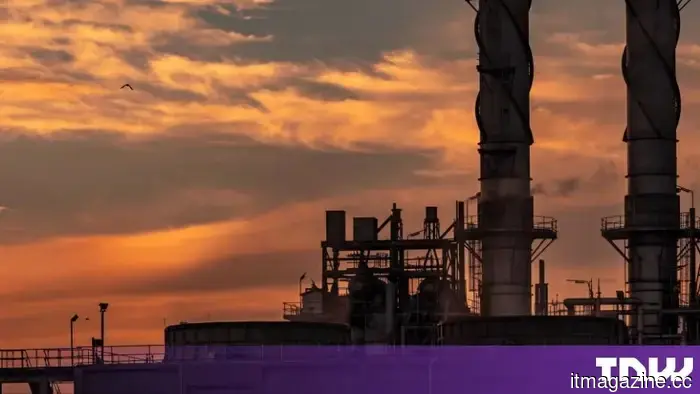 Hackers connected to Iran disabled a power plant in the UK for four days.
A small power plant in the UK was taken offline for four days in July following a cyber attack, as reported by the Telegraph, which attributed the incident to hackers associated with Iran.
Hackers connected to Iran disabled a power plant in the UK for four days.
A small power plant in the UK was taken offline for four days in July following a cyber attack, as reported by the Telegraph, which attributed the incident to hackers associated with Iran.
The primary question regarding AI is what actions humans will take next.
When AI eliminates the repetitive tasks that organize our daily lives, what takes their place? Technology consultant Monty McCoy contends that the most challenging question regarding automation isn't economic but rather existential.