

In China, artificial intelligence has arrived at dumpling shops where customers can also enjoy compute tokens.
Markus Spiske / charlesdeluvio / Unsplash / Digital Trends
Envision visiting a dumpling shop to savor a plate of steaming, delicious treats. As you stand in line, you're provided with compute tokens for AI interactions and access to an intelligent system that recommends dishes and assists customers in navigating the menu interactively. This is precisely what a popular dumpling shop in the capital of China is offering.
The unexpected combination of AI systems with dumplings might not be surprising, especially for the Chinese market.
It's not solely about corporate competition, as companies are delivering advanced AI models at a significantly lower price compared to American alternatives like ChatGPT and Gemini. Earlier this year, during the OpenClaw craze, China was operating on an entirely different level with AI systems. Even individuals in their 50s and 60s lined up to have the intelligent system installed on their smartphones, and local governments in China began providing subsidies for OpenClaw initiatives.
A dumpling eatery in Beijing now provides AI computing along with your meal. After finishing your dumplings, you report your table number at the counter and collect free tokens for your AI assistant. Each table features a card that reads: “You’re full. Now feed your agent some compute.” This is Jingu… pic.twitter.com/HhavocDtUt— Poe Zhao (@poezhao0605) August 5, 2026
Can I have some AI tokens with my dumplings, please!
However, the saying goes that a technology can only claim to have achieved mass-market or universal adoption when it has penetrated the lowest levels of social interactions. In China, the enthusiasm seems to be reaching right into the homes (and stomachs) of the target audience. What about a dumpling shop?
The establishment, known as Jinguyuan, was founded by 41-year-old Li Bo, according to Rest of World. Interestingly, Li holds a degree in telecommunications engineering from the Beijing University of Posts and Telecommunications, but instead of pursuing a career related to his field of study, he ventured into the food industry.
At his dumpling shop, customers are given coupons for AI usage tokens valued at $1.50, which they can use for interactions with AI models. Additionally, Li has developed an AI-coded website to monitor the queues at two other locations of his shop.
Overall, the rapid incorporation of AI in China has been quite a spectacle. In June, the Chinese government eliminated over 12,000 university degrees and replaced them with new courses focused on AI and robotics. Chinese AI companies are hiring talent directly from high schools, and the government is also advocating for AI education at all educational levels.
Nadeem is the Managing Editor at Digital Trends.
ASUS Zenbook A14 review: The lightweight ultraportable laptop I’ve been anticipating, almost.
The MacBook Air contender Windows on Arm has been needed.
Quick Overview
Picking up the ASUS Zenbook A14 for the first time altered my perspective on how much a 14-inch laptop should weigh. My review model weighs merely 0.99kg, and somehow that figure still does not prepare you for how it feels in your hands. This isn’t my first experience with such a lightweight laptop, but it still feels refreshing.
Read more
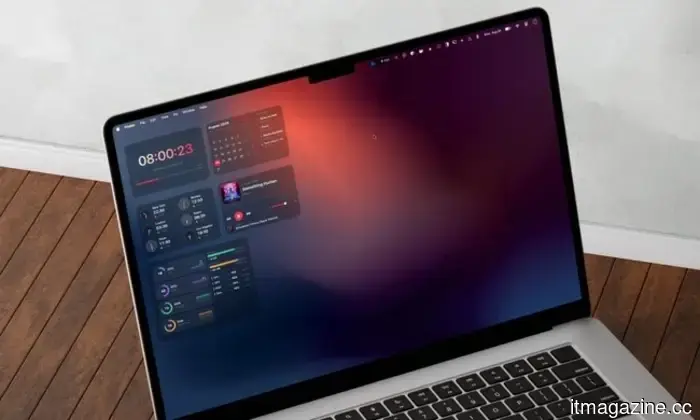
I never paid attention to Mac desktop widgets until I discovered this app.
Your Mac desktop just received a remarkable makeover.
Apple introduced desktop widgets to Macs with macOS Sonoma in 2023. I recall dragging a few onto my desktop on the first day and then quickly removing them minutes later. The native widgets didn’t fit well with my Mac usage. They felt out of place, and honestly, there simply weren’t enough to make it worthwhile.
Since then, I’ve been searching for something that would provide options for Macs similar to what widget apps like Widgetsmith offered for iPhones. I desired more choices, and crucially, I wanted widgets that genuinely seemed to belong on a Mac desktop rather than looking forced.
Read more
A new iMac is on the way before the end of 2026, but don’t expect much beyond the M6 chip.
Historically speaking, Apple’s M6 iMac may debut after the September iPhone event.
Anyone anticipating a new iMac may only have a few more months to wait. According to Bloomberg’s Mark Gurman, Apple is set to release an updated model that should be available for purchase by the end of 2026.
The update is expected to bring Apple’s forthcoming M6 chip along with some new color options. Beyond that, however, customers shouldn’t expect Apple to make significant changes to its all-in-one desktop this year. Gurman notes that the upcoming model will not change much else, indicating that Apple is likely to maintain the familiar 24-inch design instead of introducing a larger display, OLED panel, or major chassis redesign.
Read more




Other articles
 Apple’s event in September 2026: What we know so far about the launch of the iPhone 18 Pro and iPhone Ultra.
This year, Apple has chosen to forgo the standard iPhone 18, opting instead for three high-end models: the iPhone 18 Pro, Pro Max, and a foldable Ultra, which may launch at around $2,000.
Apple’s event in September 2026: What we know so far about the launch of the iPhone 18 Pro and iPhone Ultra.
This year, Apple has chosen to forgo the standard iPhone 18, opting instead for three high-end models: the iPhone 18 Pro, Pro Max, and a foldable Ultra, which may launch at around $2,000.
 Samsung might be considering two different sizes for the Galaxy S27 Ultra next year.
A leaked CAD model indicates that the Galaxy S27 Ultra might be available in two sizes next year, although the smaller version could still be the speculated Galaxy S27 Pro.
Samsung might be considering two different sizes for the Galaxy S27 Ultra next year.
A leaked CAD model indicates that the Galaxy S27 Ultra might be available in two sizes next year, although the smaller version could still be the speculated Galaxy S27 Pro.
 Phonak's latest EON hearing aids utilize two AI systems on a chip designed for low power consumption.
Phonak's EON hearing aids simultaneously perform speech separation and scene classification using a new chip, offering 38 hours of battery life and supporting Auracast.
Phonak's latest EON hearing aids utilize two AI systems on a chip designed for low power consumption.
Phonak's EON hearing aids simultaneously perform speech separation and scene classification using a new chip, offering 38 hours of battery life and supporting Auracast.
 Phonak's latest EON hearing aids feature two AI systems on a chip designed for low power consumption.
Phonak’s EON hearing aids feature simultaneous speech separation and scene classification on a new chip, offering 38 hours of battery life and support for Auracast.
Phonak's latest EON hearing aids feature two AI systems on a chip designed for low power consumption.
Phonak’s EON hearing aids feature simultaneous speech separation and scene classification on a new chip, offering 38 hours of battery life and support for Auracast.
 Samsung believes that the Exynos 2700 has the potential to outperform Qualcomm’s top next-generation chip.
The Exynos 2700 from Samsung is said to aim for improved CPU, GPU, and AI capabilities compared to Qualcomm's upcoming flagship Snapdragon processor, all while using less energy.
Samsung believes that the Exynos 2700 has the potential to outperform Qualcomm’s top next-generation chip.
The Exynos 2700 from Samsung is said to aim for improved CPU, GPU, and AI capabilities compared to Qualcomm's upcoming flagship Snapdragon processor, all while using less energy.
 Motorola is preparing to launch phones compatible with GrapheneOS, but they may be more expensive than the Google Pixel.
In 2027, Motorola is anticipated to introduce high-end GrapheneOS smartphones, providing privacy-conscious Android users an option apart from Google Pixel devices.
Motorola is preparing to launch phones compatible with GrapheneOS, but they may be more expensive than the Google Pixel.
In 2027, Motorola is anticipated to introduce high-end GrapheneOS smartphones, providing privacy-conscious Android users an option apart from Google Pixel devices.
In China, artificial intelligence has arrived at dumpling shops where customers can also enjoy compute tokens.
A dumpling restaurant called Jinguyuan in Beijing provides AI tokens to its customers and has developed an interactive system that allows them to engage with the dishes on the menu.