
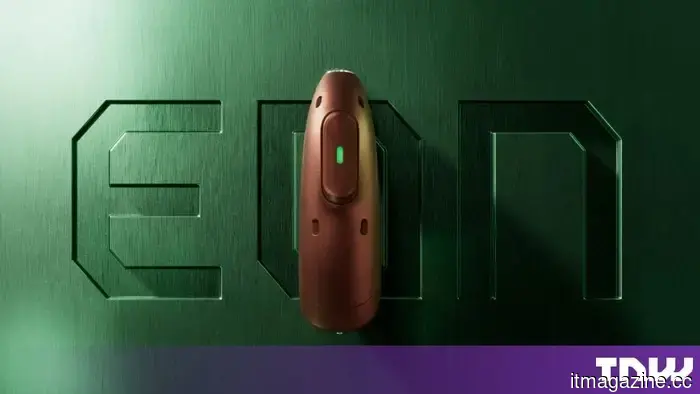
Phonak's latest EON hearing aids utilize two AI systems on a chip designed for low power consumption.
Phonak has introduced EON, a hearing aid platform built around a new processor known as HYPERSONIC, which the company claims operates two artificial intelligence systems simultaneously while consuming 37% less power than its predecessor.
The Sonova-owned brand is addressing two long-standing issues in the hearing aid market: understanding speech in noisy environments and ensuring the devices justify their cost.
The first AI system, Spheric Speech Clarity 3.0, utilizes a deep neural network to differentiate speech from background noise as it is received. The second system, AutoSense OS AI 8.0, evaluates the surrounding sound environment and adjusts the features accordingly, allowing users to move from settings like restaurants to streets without needing to manually switch programs.
Running both systems simultaneously is made possible by the HYPERSONIC chip. “With the HYPERSONIC chip, we have engineered a significant step forward in power efficiency without compromising real-time AI performance,” stated Anders Rosengren, Sonova’s chief R&D officer.
These efficiency improvements are reflected in the device's size and battery life. According to Phonak, EON is 25% smaller and 20% lighter than the previous Sphere generation and can operate for up to 38 hours on a single charge, which is impressive for a device designed to fit behind the ear while continuously processing audio.
In terms of performance, the company references its own tests instead of third-party evaluations. Phonak claims that users of Spheric Speech Clarity 3.0 are twice as likely to comprehend every word spoken from any direction compared to identical hearing aids without the feature activated.
The device also features a dedicated subsystem for wind noise. WindBlock 2.0 can diminish wind noise by up to 50 dB and enhance the signal-to-noise ratio by as much as 30 dB, which addresses a common concern among outdoor hearing aid users.
EON's connectivity features target a broader consumer audio market. Phonak describes the platform as Made-For-All, indicating compatibility with virtually any Bluetooth device instead of being limited to a specific phone. It combines Bluetooth Classic with the company's proprietary Roger Direct wireless microphone protocol and Auracast.
Auracast, more significant than it may initially appear, is a broadcast standard that comes under the Bluetooth LE Audio specification. It allows venues to transmit audio to an unlimited number of receivers at once. This means that environments like museums, theaters, or airport gates can deliver sound directly into a user's ears rather than relying on outdated loop systems.
The practical benefits are especially relevant in places where assistive listening has historically fallen short, such as during departure lounge announcements or guided tours, as users can connect directly to the broadcast instead of searching for a receiver at a counter.
Phonak will offer three configurations: Audéo EON Sphere and Audéo EON R, both designed for mild to profound hearing loss, and CROS EON R, which caters to unilateral loss by directing sound from the unaided side to the better ear. The lineup will be available in eight colors.
“EON sets a new benchmark for intelligent hearing,” declared Josipa Kern, Phonak's global head. “It brings together the capabilities that matter most in daily life: understanding speech, adapting automatically, and staying connected with confidence.”
Licensed hearing care professionals in the United States can start placing orders from Monday, followed by markets in Germany, France, the United Kingdom, Australia, and others in September. Phonak has not disclosed pricing, which is typical for products sold through clinicians and determined by national reimbursement policies rather than standard list prices.
This distribution model provides context for such a launch. Hearing aids remain a prescription-associated product fitted by professionals, even as consumer earbuds enter the market from the opposite direction, with specifications on both sides converging more quickly than the sales channels for each.
Other articles
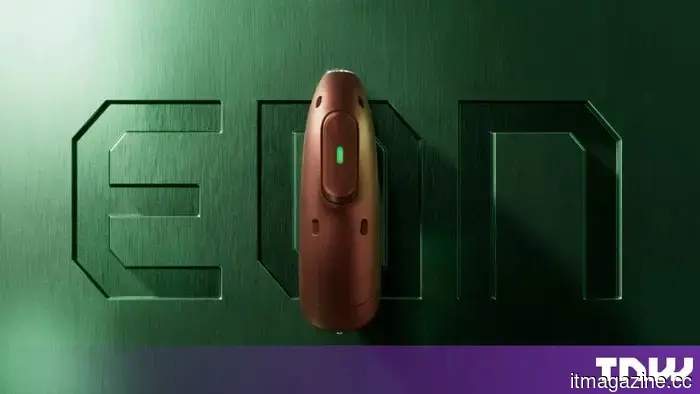 Phonak's latest EON hearing aids feature two AI systems on a chip designed for low power consumption.
Phonak’s EON hearing aids feature simultaneous speech separation and scene classification on a new chip, offering 38 hours of battery life and support for Auracast.
 SoftBank is set to conduct a record retail bond sale in Japan amounting to $6.3 billion.
SoftBank intends to issue a record retail bond valued at 1 trillion yen to finance its commitments to OpenAI, as banks have shown hesitance in accepting the seven-year sub-investment risk.
 New Zealand has joined the worldwide effort to prevent those under the age of 16 from using social media.
New Zealand plans to introduce legislation that will prohibit individuals under the age of 16 from using social media. However, two coalition partners are against the proposal, and there will be no vote on it before the elections in November.
 Apple’s event in September 2026: What we know so far about the launch of the iPhone 18 Pro and iPhone Ultra.
This year, Apple has chosen to forgo the standard iPhone 18, opting instead for three high-end models: the iPhone 18 Pro, Pro Max, and a foldable Ultra, which may launch at around $2,000.
 GoWish, the Danish wishlist application, has a valuation exceeding $200 million following its most recent funding round.
According to Bloomberg, GoWish has secured funding at a valuation exceeding $200 million. The wishlist app from Copenhagen boasts 18 million users, with 50% of them being from the United States.
 In China, AI has made its way into dumpling shops, where you can also indulge in compute tokens.
A dumpling establishment called Jinguyuan in Beijing provides AI tokens to its patrons and has developed an interactive system that allows them to engage with the menu's delights.
Phonak's latest EON hearing aids utilize two AI systems on a chip designed for low power consumption.
Phonak's EON hearing aids simultaneously perform speech separation and scene classification using a new chip, offering 38 hours of battery life and supporting Auracast.