

Motorola is preparing to launch phones compatible with GrapheneOS, but they may be more expensive than the Google Pixel.
Motorola is set to become the first significant smartphone manufacturer outside of Google to release devices designed for GrapheneOS, the privacy-centric Android alternative renowned for its stringent security standards. However, these will not be budget-friendly phones.
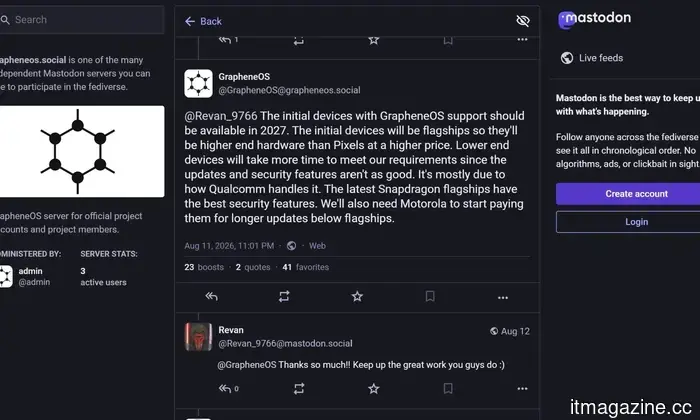
A post on Mastodon by GrapheneOS indicates that Motorola and the GrapheneOS team aim to launch their first supported devices in 2027, with an initial lineup likely comprising premium flagship models. These phones are expected to be priced higher than Google's Pixel devices, which have historically been the only mainstream smartphones officially compatible with GrapheneOS.
GrapheneOS is advancing beyond just Pixel devices.
This partnership, which was revealed earlier this year, signifies a notable expansion for GrapheneOS. The open-source operating system prioritizes privacy and security, incorporating features like hardened memory management, detailed network permissions, enhanced sandboxing, and additional defenses that go beyond standard Android protections.
Previously, Pixel devices have been the primary choice for the project due to Google’s hardware complying with GrapheneOS' rigorous security standards. However, Motorola’s forthcoming devices will change the landscape, as the company collaborates with the project to provide software support.
The cost, however, may be substantial. According to Ars Technica, the GrapheneOS team anticipates that the initial Motorola models will be high-end flagship devices, likely surpassing the pricing of Google's Pixel range. With the Pixel 11 starting at $900 and the Pixel 11 Pro XL reaching $1,300, Motorola’s privacy-oriented smartphones could easily enter the four-digit price range.
This Mastodon thread provides additional insight into Motorola’s objectives. The initial devices are expected to deliver seven years of comprehensive software updates and are likely to feature Snapdragon hardware. GrapheneOS has mentioned that Qualcomm's latest flagship chips offer enhanced support for memory tagging, isolated components, and other essential hardware-level security attributes for the project.
A pricier phone could offer a unique form of freedom.
This partnership is significant as GrapheneOS users have essentially been confined to a single hardware manufacturer. Those wanting the system's security benefits had to purchase a compatible Pixel phone, regardless of their preference for Google’s devices.
Motorola offers an alternative for these users, even if the first devices are not aimed at budget-conscious buyers. Furthermore, the company’s premium smartphones might eventually facilitate GrapheneOS support for device types that Google currently does not provide, including foldable models. Ars Technica highlights that Motorola’s recent flagship emphasis has increasingly gravitated toward foldable devices, making them a feasible candidate for the new software.
More crucial than the hardware itself is the change in what GrapheneOS signifies. A project that was once almost entirely reliant on Pixel hardware is now beginning to establish connections with major Android manufacturers. The thread also notes that Motorola is allocating engineering resources for porting and maintenance tasks, while GrapheneOS will directly contribute to firmware and software support. The project claims the phones should fulfill or exceed its security requirements, including seven years of updates and protection for features like boot modes.
Motorola has not disclosed specific details about the phones or confirmed their pricing. GrapheneOS support is expected to be available around the 2027 launch, with installation likely facilitated through the project’s web-based installer. The pressing question remains whether privacy-minded consumers will be willing to pay a premium for greater choice. GrapheneOS may finally be moving beyond the Pixel, but personal freedom, it appears, could come with a flagship-level price.

Other articles
 Hugging Face is considering a sale with a valuation of $13 billion, which is almost three times higher than its previous valuation.
Hugging Face has engaged bankers to consider a sale priced at $13 billion or higher, which is almost three times its valuation of $4.5 billion in 2023.
Hugging Face is considering a sale with a valuation of $13 billion, which is almost three times higher than its previous valuation.
Hugging Face has engaged bankers to consider a sale priced at $13 billion or higher, which is almost three times its valuation of $4.5 billion in 2023.
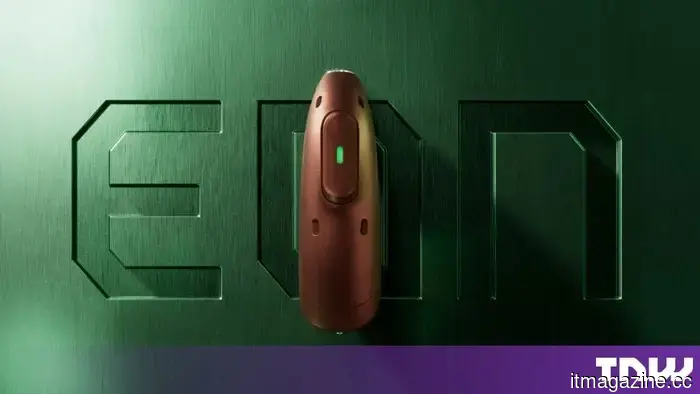 Phonak's latest EON hearing aids utilize two AI systems on a chip designed for low power consumption.
Phonak's EON hearing aids simultaneously perform speech separation and scene classification using a new chip, offering 38 hours of battery life and supporting Auracast.
Phonak's latest EON hearing aids utilize two AI systems on a chip designed for low power consumption.
Phonak's EON hearing aids simultaneously perform speech separation and scene classification using a new chip, offering 38 hours of battery life and supporting Auracast.
 In China, AI has made its way into dumpling shops, where you can also indulge in compute tokens.
A dumpling establishment called Jinguyuan in Beijing provides AI tokens to its patrons and has developed an interactive system that allows them to engage with the menu's delights.
In China, AI has made its way into dumpling shops, where you can also indulge in compute tokens.
A dumpling establishment called Jinguyuan in Beijing provides AI tokens to its patrons and has developed an interactive system that allows them to engage with the menu's delights.
 Apple’s event in September 2026: What we know so far about the launch of the iPhone 18 Pro and iPhone Ultra.
This year, Apple has chosen to forgo the standard iPhone 18, opting instead for three high-end models: the iPhone 18 Pro, Pro Max, and a foldable Ultra, which may launch at around $2,000.
Apple’s event in September 2026: What we know so far about the launch of the iPhone 18 Pro and iPhone Ultra.
This year, Apple has chosen to forgo the standard iPhone 18, opting instead for three high-end models: the iPhone 18 Pro, Pro Max, and a foldable Ultra, which may launch at around $2,000.
 GoWish, the Danish wishlist application, has a valuation exceeding $200 million following its most recent funding round.
According to Bloomberg, GoWish has secured funding at a valuation exceeding $200 million. The wishlist app from Copenhagen boasts 18 million users, with 50% of them being from the United States.
GoWish, the Danish wishlist application, has a valuation exceeding $200 million following its most recent funding round.
According to Bloomberg, GoWish has secured funding at a valuation exceeding $200 million. The wishlist app from Copenhagen boasts 18 million users, with 50% of them being from the United States.
 Alibaba introduces Wan3.0, its 30-second video model, just days after securing $10 billion.
Alibaba's Wan3.0 creates 30-second 1080p videos from PDFs and slides, offers a lower price than Veo, and comes with pre-installed weights.
Alibaba introduces Wan3.0, its 30-second video model, just days after securing $10 billion.
Alibaba's Wan3.0 creates 30-second 1080p videos from PDFs and slides, offers a lower price than Veo, and comes with pre-installed weights.
Motorola is preparing to launch phones compatible with GrapheneOS, but they may be more expensive than the Google Pixel.
In 2027, Motorola is anticipated to introduce high-end GrapheneOS smartphones, providing privacy-conscious Android users an option apart from Google Pixel devices.