
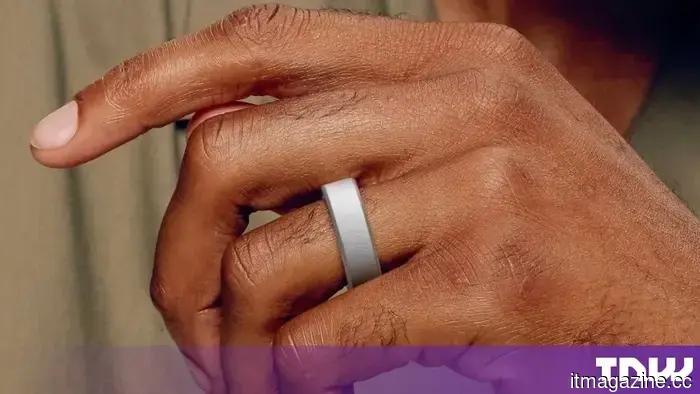
A lawsuit claims that Oura's sleep stage assessments are merely AI predictions with the same probability as a coin flip.
A proposed class action lawsuit filed in San Francisco claims that Oura’s sleep staging is determined by AI estimates instead of actual measurements, naming the Finnish parent company Oura Health Oy as a defendant. Oura asserts that it stands by its science and accuracy claims.
The figures Oura lists on its product pages are now under legal scrutiny. The class action, filed in the Northern District of California, contends that the company's sleep tracking cannot validate its accuracy assertions, naming both Oura Inc. and its Finnish parent, Oura Health Oy.
The specific claim in dispute is the assertion of “95% Sleep Staging Accuracy compared to clinical sleep lab,” which the lawsuit argues cannot be backed by a finger-worn device.
At the heart of the argument is the physical measurement aspect. A polysomnography sleep study tracks brain activity, eye movement, and muscle tone using electrodes, none of which a ring is equipped to do.
The language used in the filing is direct. It refers to Oura’s sleep stages as “AI-generated guesses,” suggesting they have "about a coin flip’s chance" of being accurate.
The complaint references published research for its claims. It cites a study involving 45 patients, which found the overall accuracy of sleep stage classification to be just 53.18%, with REM sleep being overestimated by an average of 31.56 minutes.
Oura disputes this characterization. A spokesperson stated, “We stand behind our science, research, and accuracy claims,” noting that its sleep staging has been favorably compared to polysomnography in several studies.
The lawsuit includes seven counts, such as fraud through misrepresentation and violations of California’s Unfair Competition Law and False Advertising Law. Along with seeking damages, it demands a corrective advertising injunction that would require visible disclaimers.
The timing of the lawsuit is noteworthy. Oura confidentially filed for a U.S. initial public offering in May after achieving an $11 billion valuation, making it Europe’s most valuable consumer health hardware company.
Europe has a vested interest in this matter beyond ownership. The same 95% claim is targeted at European consumers, where the Unfair Commercial Practices Directive prohibits misleading claims about a product's key characteristics and the results of any tests performed on the product.
Until recently, this issue had less practical impact. Since June 2023, the Representative Actions Directive allows designated consumer organizations to initiate collective redress actions across the EU, and unfair commercial practices are included in its annex.
Oura is familiar with the legal landscape, having previously sued a competitor over its own patents. Whether any European consumer organization pursues this case will reveal more about the new redress framework than about the ring itself.
Other articles
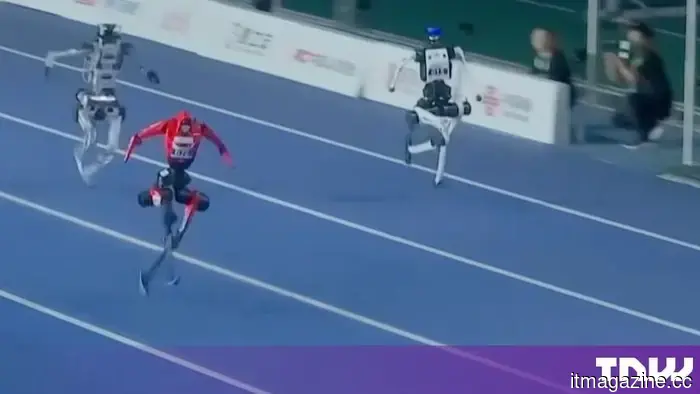 A humanoid robot has surpassed Usain Bolt’s 100m record, but roboticists are not particularly impressed, and for valid reasons.
A humanoid robot completed a 100m dash in 9.39 seconds in Beijing. Experts in robot construction claim that sprinting is actually the simpler aspect of the challenge.
A humanoid robot has surpassed Usain Bolt’s 100m record, but roboticists are not particularly impressed, and for valid reasons.
A humanoid robot completed a 100m dash in 9.39 seconds in Beijing. Experts in robot construction claim that sprinting is actually the simpler aspect of the challenge.
 Alibaba is securing $10.2 billion and intends to invest the entire amount in AI.
Alibaba is offering HK$80 billion worth of new shares in Hong Kong, with all net proceeds directed towards AI infrastructure, just days after reporting a 75% decline in profit attributed to the same expenses.
Alibaba is securing $10.2 billion and intends to invest the entire amount in AI.
Alibaba is offering HK$80 billion worth of new shares in Hong Kong, with all net proceeds directed towards AI infrastructure, just days after reporting a 75% decline in profit attributed to the same expenses.
 Harvey has introduced its initial in-house model for legal work.
Harvey's initial proprietary model, Tenet, has undergone post-training using Kimi K3 from China's Moonshot, establishing a Chinese foundation for work protected by legal privilege.
Harvey has introduced its initial in-house model for legal work.
Harvey's initial proprietary model, Tenet, has undergone post-training using Kimi K3 from China's Moonshot, establishing a Chinese foundation for work protected by legal privilege.
 ChatGPT for iPhone can now access your recent photos with a long press.
OpenAI introduced a long-press shortcut for attaching recent photos in ChatGPT on the iPhone, although Apple's camera assistant remains unavailable in the EU.
ChatGPT for iPhone can now access your recent photos with a long press.
OpenAI introduced a long-press shortcut for attaching recent photos in ChatGPT on the iPhone, although Apple's camera assistant remains unavailable in the EU.
A lawsuit claims that Oura's sleep stage assessments are merely AI predictions with the same probability as a coin flip.
A proposed class action claims that Oura's sleep stages are merely AI estimates. The Finnish parent company has been named as a defendant, just months ahead of the firm's intended listing in the US.