
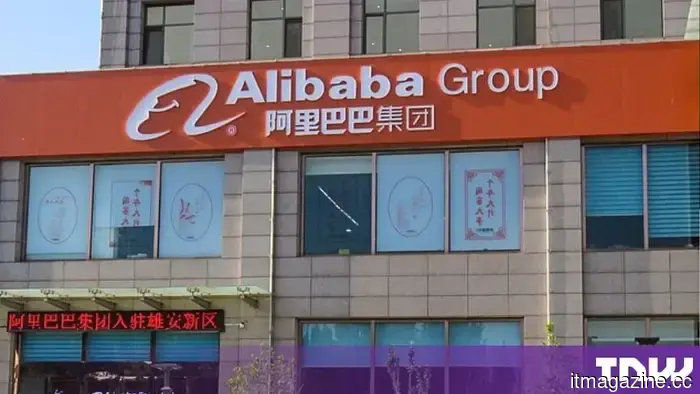
Alibaba is securing $10.2 billion and intends to invest the entire amount in AI.
Alibaba is issuing HK$80 billion, approximately $10.2 billion, in new shares in Hong Kong, announcing that all net proceeds will be directed towards AI infrastructure and capabilities. This announcement follows a report revealing a 75% decline in the company's quarterly net profit, attributed to the same investments.
The company is actively seeking funding for its AI initiatives and is being transparent about the allocation. Alibaba is placing HK$80 billion in new shares in Hong Kong, around $10.2 billion, and states that 100% of the net proceeds will be used to enhance its complete AI capabilities, including infrastructure.
This offering is notable for two reasons. Alibaba claims it is the largest primary follow-on offering ever by a company listed in Hong Kong, as well as the largest Regulation S equity offering to date, which refers to shares sold to investors outside the United States.
On a global scale, it ranks third this year, with only Alphabet, which raised $85 billion in equity, and Intel having executed larger primary follow-ons in 2026.
The timing adds significant interest. Just three days prior, Alibaba reported a 75% decrease in quarterly net profit alongside a 75% increase in capital expenditure, reaching 67.68 billion yuan for the April to June quarter.
This spending appears to be driving growth. Revenue from cloud and AI services surged by 45% to 48.44 billion yuan, and the company has indicated that its AI model services now generate an annual recurring revenue exceeding 16 billion yuan.
Eddie Wu, the chief executive, has been clear about the rationale behind these investments. “To capture future growth, we must first make capital expenditures to develop the necessary computing capacity,” he noted.
This move supplements a prior commitment that has already seen substantial investment. Alibaba initially pledged 380 billion yuan over three years in early 2025, and reports suggest the company may increase that commitment to 480 billion yuan. Wu also mentioned that its own chips could significantly enhance margins as they gain scale.
In comparison to Europe's initiatives, the EU has allocated about €20 billion to its AI gigafactory program, which means that Alibaba's single afternoon share placement in Hong Kong equates to nearly half of the continent's primary compute budget.
Alibaba is not merely an external competitor; it established two availability zones in Paris in June, marking its third European hub after Germany and the UK, thereby positioning itself as a distinct option for European clients.
Conversely, Brussels is developing regulations that may counteract this trend. The Cloud and AI Development Act, proposed in June, introduces a four-tier sovereignty framework, with more stringent levels demanding EU ownership and operational independence—criteria that a China-based provider may find challenging to meet.
Thus, these two trends appear to be in direct opposition. Europe is seeking additional computing resources while establishing rules governing ownership, whereas the company engaged in fundraising is actively expanding within that region regardless.
Otros artículos
 Una demanda dice que las etapas del sueño de Oura son suposiciones de IA con las mismas probabilidades que una moneda al aire.
Una demanda colectiva propuesta dice que las etapas de sueño de Oura son suposiciones de IA. La empresa matriz finlandesa es un demandado nombrado, meses antes de la lista planificada de la compañía en EE. UU.
Una demanda dice que las etapas del sueño de Oura son suposiciones de IA con las mismas probabilidades que una moneda al aire.
Una demanda colectiva propuesta dice que las etapas de sueño de Oura son suposiciones de IA. La empresa matriz finlandesa es un demandado nombrado, meses antes de la lista planificada de la compañía en EE. UU.
 El primer modelo interno de Harvey para trabajo legal está aquí.
El primer modelo propietario de Harvey, Tenet, se ha entrenado posteriormente en Kimi K3 de Moonshot de China, poniendo una base china bajo un trabajo cubierto por privilegio legal.
Alibaba está recaudando $10.2 mil millones y gastando todo en IA.
Alibaba está vendiendo 80 mil millones de HK$ en nuevas acciones en Hong Kong, con todos los ingresos netos destinados a la infraestructura de IA, días después de que las ganancias cayeran un 75% debido al mismo gasto.
El primer modelo interno de Harvey para trabajo legal está aquí.
El primer modelo propietario de Harvey, Tenet, se ha entrenado posteriormente en Kimi K3 de Moonshot de China, poniendo una base china bajo un trabajo cubierto por privilegio legal.
Alibaba está recaudando $10.2 mil millones y gastando todo en IA.
Alibaba está vendiendo 80 mil millones de HK$ en nuevas acciones en Hong Kong, con todos los ingresos netos destinados a la infraestructura de IA, días después de que las ganancias cayeran un 75% debido al mismo gasto.
 ChatGPT para iPhone ahora captura tus fotos recientes con una pulsación larga.
OpenAI agregó un atajo de pulsación larga para adjuntar fotos recientes en ChatGPT en iPhone, mientras que el asistente de cámara de Apple sigue sin estar disponible en la UE.
ChatGPT para iPhone ahora captura tus fotos recientes con una pulsación larga.
OpenAI agregó un atajo de pulsación larga para adjuntar fotos recientes en ChatGPT en iPhone, mientras que el asistente de cámara de Apple sigue sin estar disponible en la UE.
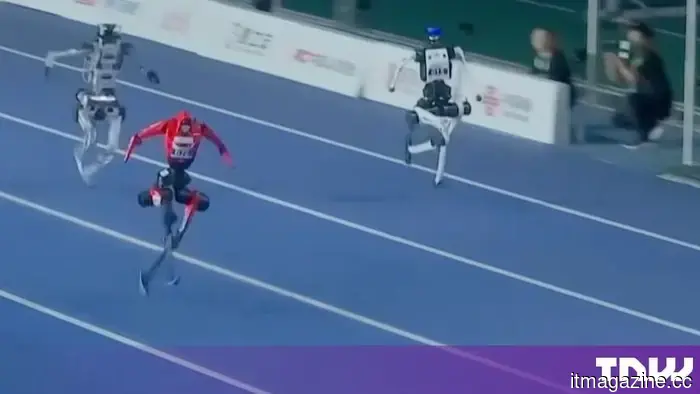 Un robot humanoide acaba de superar el récord de 100 metros de Usain Bolt, y los robóticos no están impresionados por una buena razón.
Un robot humanoide corrió 100 m en 9.39 segundos en Pekín. Las personas que construyen robots para ganarse la vida dicen que correr es la parte fácil del problema.
Un robot humanoide acaba de superar el récord de 100 metros de Usain Bolt, y los robóticos no están impresionados por una buena razón.
Un robot humanoide corrió 100 m en 9.39 segundos en Pekín. Las personas que construyen robots para ganarse la vida dicen que correr es la parte fácil del problema.
Alibaba is securing $10.2 billion and intends to invest the entire amount in AI.
Alibaba is offering HK$80 billion worth of new shares in Hong Kong, with all net proceeds directed towards AI infrastructure, just days after reporting a 75% decline in profit attributed to the same expenses.