
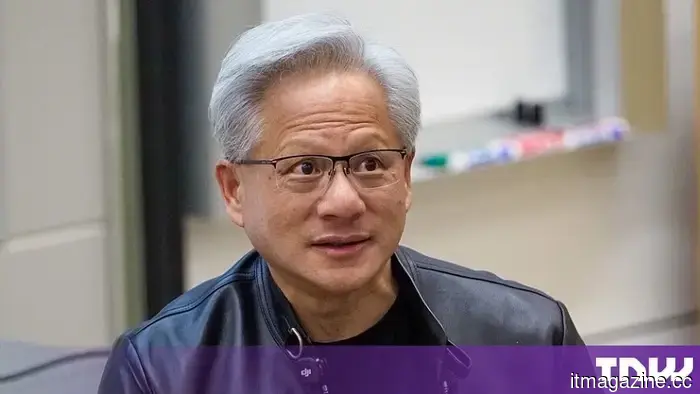
Nvidia is engaged in discussions with the Korean chip designer Rebellions, specializing in inference technology.
Nvidia is reportedly in initial discussions with Korean AI chip manufacturer Rebellions regarding a potential technical partnership, investment, or even acquisition, according to a Bloomberg report released on Friday. Jensen Huang, Nvidia's CEO, met with Rebellions co-founder and CEO Sunghyun Park at Nvidia’s headquarters in Santa Clara earlier this week, as per sources familiar with the situation who requested anonymity since the information is confidential.
These discussions are still in the early stages and may not lead to a final agreement. Nvidia did not respond to inquiries from Bloomberg, and a representative for Rebellions declined to provide comments. This would mark Nvidia's fourth similar arrangement in less than a year, as the company has focused on gaining access to competing chip designs rather than outright buying the firms.
Rebellions, founded in 2020 and located in Bundang, south of Seoul, specializes in designing neural processing units for data centers, primarily for AI inference purposes rather than model training. Inference refers to running an AI service once its model is established, which requires less computing power per query than training, but overall necessitates significantly greater resources.
The company has raised about $850 million from investors such as SK Hynix, Samsung Ventures, and Arm, along with direct investment from the Korean government, with a recent valuation around $2.3 billion. As reported by Silicon Republic, Nvidia's investment portfolio exceeds $63 billion, primarily in companies like Intel and SpaceX, while Nvidia’s market valuation is approximately $5.2 trillion.
Rebellions has been operational for three years, with its Atom and Atom Max NPUs entering mass production in 2023. According to DataCenterDynamics, these units have been deployed by clients in Japan, Saudi Arabia, and the United States. Furthermore, Rebellions merged with Sapeon Korea in 2024, a chip company spun off from SK Telecom in 2016, and entered into a partnership with Marvell last year for hardware related to sovereign AI projects.
The structure described by Bloomberg aligns with Nvidia’s previous strategy: securing a license, hiring associated engineers, taking a stake, and allowing the company to remain operational independently. Nvidia previously acquired a $20 billion nonexclusive license from Groq and integrated much of its engineering talent while allowing Groq to function as a separate entity. A similar structure was seen recently when Nvidia agreed to pay $6 billion for Poolside's model factory, along with an agreement to hire 109 of its employees.
Other competitors have pursued similar strategies, with AMD acquiring Taalas, a startup focused on etching models into silicon, in August.
The case of Groq has completed its arc, though not positively. Nvidia valued its license at $20 billion, but Groq later raised $650 million and recently closed a funding round at a $3.5 billion valuation, with Nvidia participating. Silicon Republic highlighted that this valuation fell significantly.
The discussion about Rebellions is made clearer by the fact that Nvidia has already begun selling products that utilize the Groq license, specifically unveiling the Nvidia Groq 3 language processing unit at GTC in March. Nvidia plans to release a new LPU architecture annually alongside its GPU releases, with the chips shipping later this year in liquid-cooled racks that contain 256 LPUs.
Rebellions produces a comparable product, meaning Nvidia would be acquiring a second inference architecture after commercializing the first.
Ian Buck, who oversees Nvidia's data center division, addressed the economic considerations at GTC, noting that while the LPU is optimized for low-latency token generation, the performance requires numerous chips, leading to relatively low economics per chip.
Challenges might arise in finalizing a deal due to regulatory scrutiny. Nvidia's significant share in training chips for frontier models makes it subject to antitrust scrutiny, and major tech acquisitions require approval from the US Department of Justice. The proposed license-and-hire structure could bypass such reviews.
Additionally, regulatory concerns in Korea may pose complications, as the government views advanced semiconductors as strategic assets, working closely with companies like Samsung and SK Hynix, which is a Rebellions shareholder and has supported the rapid valuation growth of other semiconductor firms.
Rebellions has expressed interest in pursuing an IPO rather than an acquisition exit, with CFO Sungkyue Shin indicating last year that going public was part of their "master plan." In March, they raised over $400 million in a pre-IPO round and launched two rack-scale platforms, RebelRack and RebelPod. The timeline for a potential public listing has not been revealed, but an Nvidia license might offer the company cash without the need for going public, similar to the paths taken by Groq and Poolside.
However, it’s important to note that no agreement has been finalized. Bloomberg's sources indicated that discussions are still at an early stage and may not culminate in a transaction. Details regarding any structure, pricing, or stakes involved remain unreported, leaving questions about
Other articles
 Broadcom is looking to raise over $60 billion in debt to finance AI chips for Anthropic.
Broadcom is negotiating to secure over $60 billion in debt to fund AI chip production for Anthropic and other companies, in collaboration with Apollo and Blackstone.
Broadcom is looking to raise over $60 billion in debt to finance AI chips for Anthropic.
Broadcom is negotiating to secure over $60 billion in debt to fund AI chip production for Anthropic and other companies, in collaboration with Apollo and Blackstone.
 Two 21-year-olds developed an AI that operates online shops.
Siml assumes control over store operations rather than just individual tasks. Two founders who began by selling hand sanitizer at age 15 now manage AI agents in over 1,000 stores, and Adobe data indicates that shoppers directed by AI convert at a rate 42% higher than those from paid search.
Two 21-year-olds developed an AI that operates online shops.
Siml assumes control over store operations rather than just individual tasks. Two founders who began by selling hand sanitizer at age 15 now manage AI agents in over 1,000 stores, and Adobe data indicates that shoppers directed by AI convert at a rate 42% higher than those from paid search.
 Nothing’s new CMF earbuds provide noise cancellation at a price point similar to that of Apple’s wired EarPods.
CMF has introduced its most affordable earbuds to date, featuring ANC, spatial audio, and extended battery life, but U.S. consumers currently do not have access to them.
Nothing’s new CMF earbuds provide noise cancellation at a price point similar to that of Apple’s wired EarPods.
CMF has introduced its most affordable earbuds to date, featuring ANC, spatial audio, and extended battery life, but U.S. consumers currently do not have access to them.
 Google is encouraging publishers to add a button that allows readers to choose them.
Google's new Preferred Sources button allows readers to select a publisher without navigating away from the current page. It secures a position in Top Stories and AI Mode.
Google is encouraging publishers to add a button that allows readers to choose them.
Google's new Preferred Sources button allows readers to select a publisher without navigating away from the current page. It secures a position in Top Stories and AI Mode.
 Meta pays Microsoft several hundred million dollars annually to lease AI models.
According to Bloomberg, Meta invests several hundred million dollars annually on renting AI models from Microsoft's Azure. Both companies have refrained from commenting on the matter.
Meta pays Microsoft several hundred million dollars annually to lease AI models.
According to Bloomberg, Meta invests several hundred million dollars annually on renting AI models from Microsoft's Azure. Both companies have refrained from commenting on the matter.
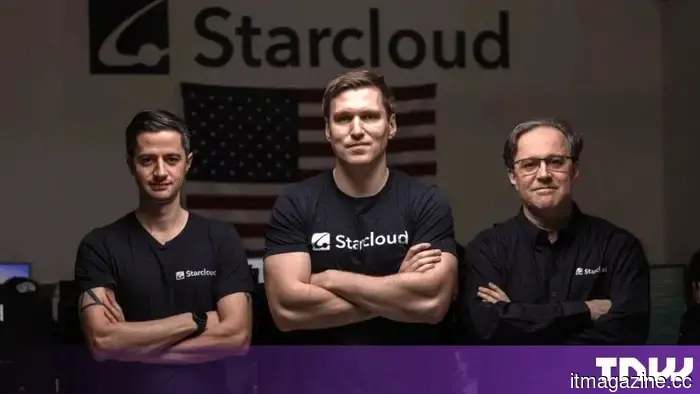 Starcloud secured $250 million to purchase rockets that it is not yet able to book.
Starcloud secured $250 million at a valuation of $2.3 billion to conduct AI inference in orbit. Nvidia has joined the venture. The challenging aspect will be securing launch bookings once the Falcon 9 retires in 2028.
Starcloud secured $250 million to purchase rockets that it is not yet able to book.
Starcloud secured $250 million at a valuation of $2.3 billion to conduct AI inference in orbit. Nvidia has joined the venture. The challenging aspect will be securing launch bookings once the Falcon 9 retires in 2028.
Nvidia is engaged in discussions with the Korean chip designer Rebellions, specializing in inference technology.
Jensen Huang met with the CEO of Rebellions in Santa Clara. This would mark Nvidia's fourth licensing and hiring agreement within a year, following Groq and Poolside.