
Nvidia is negotiating with the Korean inference chip manufacturer Rebellions.
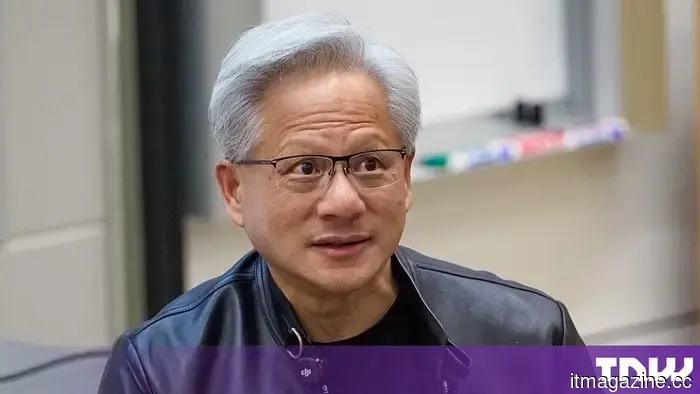
Nvidia is currently engaged in initial discussions with the Korean AI chip firm Rebellions regarding a potential technical collaboration, investment, or even an acquisition, as reported by Bloomberg on Friday. Jensen Huang, Nvidia's CEO, met with Rebellions’ co-founder and CEO, Sunghyun Park, at Nvidia’s headquarters in Santa Clara this week, according to sources familiar with the situation who requested anonymity due to the confidential nature of the information.
These discussions are still in the early stages and may not result in a formal agreement. Nvidia has not responded to inquiries from Bloomberg, and a representative from Rebellions declined to comment. If a deal is reached, it would mark Nvidia’s fourth similar arrangement in less than a year, as the company has focused on obtaining access to rival chip and model designs instead of outright acquisitions.
Rebellions is based in Bundang, located south of Seoul, and was established in 2020. The company specializes in designing neural processing units (NPUs) tailored for AI inference in data centers rather than training tasks. Inference relates to the operation of running an AI service once the model is established, requiring less computational power per query than training but demanding significantly greater total compute resources.
Rebellions has raised approximately $850 million from investors including SK Hynix, Samsung Ventures, and Arm, along with direct investment from the Korean government. Its latest valuation stood at around $2.3 billion. According to Silicon Republic, Nvidia's investment portfolio exceeds $63 billion, primarily concentrated in Intel and SpaceX, with Nvidia itself valued at about $5.2 trillion.
Rebellions has been producing NPUs for three years, with its Atom and Atom Max models entering mass production in 2023. DataCenterDynamics reported deployments of these products by customers in Japan, Saudi Arabia, and the United States. The company merged with Sapeon Korea in 2024, a chip business that SK Telecom had spun off in 2016, and formed a partnership with Marvell last year for hardware related to sovereign AI projects.
Nvidia has established a pattern for these kinds of arrangements, often opting for licenses, hiring engineers, and maintaining a stake while allowing the company to continue operating independently. For instance, Nvidia paid Groq $20 billion for a non-exclusive license and assimilated much of its engineering talent while Groq continued to function separately.
Nvidia recently repeated this approach with a $6 billion agreement to acquire Poolside’s model production capabilities, employing 109 of its employees. Competing firms are following suit; for example, AMD acquired a startup called Taalas, which specializes in etching models into silicon, in August.
The situation with Groq serves as a cautionary tale. After Nvidia assigned a $20 billion value to the license it acquired, Groq later secured $650 million for its remaining assets. Recently, Groq raised $350 million at a $3.5 billion valuation, with Nvidia participating in the funding round, highlighting a decline in its valuation of nearly 50%.
Nvidia’s current discussions with Rebellions are potential opportunities for further licensing arrangements. Nvidia has already taken the Groq license and developed its own inference chip, the Nvidia Groq 3 language processing unit, introduced at GTC in March. The product is set to launch in the latter half of this year, utilizing liquid-cooled racks housing 256 LPUs, 128GB of on-chip memory, and 640 terabytes per second of scalable bandwidth.
As both companies are focused on designing similar types of components, Nvidia would be pursuing a second inference architecture to complement its existing offerings.
Ian Buck, who oversees Nvidia's data center operations, commented on the economics of this technology at GTC, noting the trade-off between low-latency performance and the need for multiple chips to achieve desired output, emphasizing that the economics per chip in this sector are not favorable.
Potential obstacles to a deal include scrutiny from regulators. Nvidia holds a significant market share in chips for training frontier models, which raises antitrust concerns, and major tech acquisitions must be cleared by the US Department of Justice. The license-and-hire strategy could avoid the regulatory scrutiny that would accompany an outright acquisition.
Additionally, Korea presents another challenge, as advanced semiconductors are considered strategic national assets. Major players like Samsung and SK Hynix collaborate closely with the government on investment initiatives, with SK Hynix being a shareholder in Rebellions, which recently backed Etched—a company whose valuation soared to $10.3 billion in just seven months.
Rebellions has expressed interest in pursuing an IPO rather than seeking an exit via acquisition. CFO Sungkyue Shin indicated a year ago that going public was part of the “master plan.” In March, the company raised over $400 million in a pre-IPO round and launched two new platforms, RebelRack and RebelPod. A timeline for the public offering has not been made public; obtaining a license from
Other articles
 Apple Music will categorize AI-generated songs, and the associated tags are now required.
Apple Music will require its AI Transparency Tags and plans to display Made With AI labels later this year. However, it hasn't specified how it will enforce these requirements.
Apple Music will categorize AI-generated songs, and the associated tags are now required.
Apple Music will require its AI Transparency Tags and plans to display Made With AI labels later this year. However, it hasn't specified how it will enforce these requirements.
 AI does not have to take the place of humans to diminish human ability.
Researchers at MIT discovered that writers aided by large language models demonstrated reduced brain engagement and performed more poorly after the tool was taken away. Dr. Vishal Kapoor suggests that organizations should evaluate not only what AI automates but also whether their employees are still capable of reasoning independently without it.
AI does not have to take the place of humans to diminish human ability.
Researchers at MIT discovered that writers aided by large language models demonstrated reduced brain engagement and performed more poorly after the tool was taken away. Dr. Vishal Kapoor suggests that organizations should evaluate not only what AI automates but also whether their employees are still capable of reasoning independently without it.
 Google is encouraging publishers to add a button that allows readers to choose them.
Google's new Preferred Sources button allows readers to select a publisher without navigating away from the current page. It secures a position in Top Stories and AI Mode.
Google is encouraging publishers to add a button that allows readers to choose them.
Google's new Preferred Sources button allows readers to select a publisher without navigating away from the current page. It secures a position in Top Stories and AI Mode.
 Two 21-year-olds developed an AI that operates online shops.
Siml assumes control over store operations rather than just individual tasks. Two founders who began by selling hand sanitizer at age 15 now manage AI agents in over 1,000 stores, and Adobe data indicates that shoppers directed by AI convert at a rate 42% higher than those from paid search.
Two 21-year-olds developed an AI that operates online shops.
Siml assumes control over store operations rather than just individual tasks. Two founders who began by selling hand sanitizer at age 15 now manage AI agents in over 1,000 stores, and Adobe data indicates that shoppers directed by AI convert at a rate 42% higher than those from paid search.
 Astromech secured $20 million at a valuation of $3.8 billion to predict how biological systems fail.
Ben Lamm and George Church secured $20 million at a valuation of $3.8 billion for Astromech, an AI capable of analyzing 3.8 billion years of evolution to forecast potential biological failures.
Astromech secured $20 million at a valuation of $3.8 billion to predict how biological systems fail.
Ben Lamm and George Church secured $20 million at a valuation of $3.8 billion for Astromech, an AI capable of analyzing 3.8 billion years of evolution to forecast potential biological failures.
 Broadcom is looking to raise over $60 billion in debt to finance AI chips for Anthropic.
Broadcom is negotiating to secure over $60 billion in debt to fund AI chip production for Anthropic and other companies, in collaboration with Apollo and Blackstone.
Broadcom is looking to raise over $60 billion in debt to finance AI chips for Anthropic.
Broadcom is negotiating to secure over $60 billion in debt to fund AI chip production for Anthropic and other companies, in collaboration with Apollo and Blackstone.
Nvidia is negotiating with the Korean inference chip manufacturer Rebellions.
Jensen Huang met with the CEO of Rebellions in Santa Clara. This would be Nvidia's fourth license-and-hire agreement within a year, following those with Groq and Poolside.