
Google reports that Gemma has surpassed one billion downloads.
Google reports that its Gemma family of open models has achieved over a billion downloads. The company announced in a blog post on Thursday that developers have created more than 100,000 Gemma variants in the last two years, as stated by Clement Farabet, a vice president at Google DeepMind, and product director Olivier Lacombe. Google refers to the surrounding ecosystem of these variants as the Gemmaverse.
“What matters much more than the number of downloads is what the community is creating with them,” they mentioned.
Gus Martins, a Google developer relations engineer, provided a note on Bluesky, stating, “1B Gemma downloads. Fun fact: this doesn’t include Android and Chrome integrations.” Google has not provided a breakdown of the total downloads by model, year, or platform. Omar Sanseviero, who is involved with Gemma at Google DeepMind, shared insights on X about its application, saying, “From running underwater to running in space.”
In comparison, Alibaba made a larger claim just five days prior. TNW reported on August 16 that Alibaba stated Qwen surpassed 3 billion downloads, while Hugging Face’s State of Open Models report counted 2.045 billion Qwen downloads this year. Regarding derivatives, Alibaba reported more than 300,000, whereas Hugging Face noted 151,448 Qwen-based derivatives in its hub, which the report described as 2.6 times Meta’s total presence there. Google’s count of 100,000 Gemma variants pertains to a two-year period and is based on the company's own metrics. Hugging Face clarifies that its download figures reflect activity within its hub and do not account for API usage, private deployments, or models shared elsewhere.
On the topic of Gemma's application in orbit, Google indicated that NASA, Satlyt, and Starcloud are utilizing Gemma on their spacecraft. The reported uses include onboard image analysis, optimizing limited downlink bandwidth, and managing communication between satellites. Satlyt and Starcloud are startups, while NASA represents the agency. Google asserts that these implementations demonstrate Gemma’s capability to perform complex reasoning in restricted environments, although it did not specify which Gemma models are in use on which spacecraft or their operational timeline.
In India, the National Health Authority has incorporated Gemma 4 along with Google’s open-source Medical Data Toolkit into its Aarogya Setu 2.0 app. Google claims the app has exceeded 100 million downloads on Android. Gemma 4 is designed to convert medical reports into standardized digital formats, enabling citizens to manage and share health records with various service providers.
Concerning the cancer pathway discovery, researchers from Yale and Google developed a model known as C2S-Scale on Gemma to interpret single-cell language. Google states that C2S-Scale "successfully identified a novel cancer therapy pathway verified in living cells," marking the first instance of an AI system yielding newly discovered therapeutic pathways confirmed in living cells. This information is included in Google’s announcement, which links to a prior write-up rather than an academic paper.
MedGemma is the domain-specific medical model developed by Google, which the company claims is being used in clinical applications, including outpatient triage at the All India Institute of Medical Sciences and systems that support frontline health workers in rural Uganda. DolphinGemma emerged from a partnership with Georgia Tech and the Wild Dolphin Project, processing dolphin vocalizations to anticipate sound sequences. Google mentioned that this research is ongoing and under refinement.
Additionally, Google has introduced a GitHub repository named Awesome Gemma, serving as the official directory for the Gemmaverse. This repository is expected to showcase community projects, fine-tunes, tutorials, and developer tools. Philipp Schmid, who is part of Google’s AI developer experience, highlighted the repository's contents on X, which include model cards and collections for 16 Gemma variants, setup guides for Ollama, vLLM, and LiteRT, as well as fine-tuning recipes for Unsloth, Tunix, and MLX. TNW reported in July that Ollama secured $65 million as its open-model runner neared 9 million developers. Google also noted its Gemma Challenge on Kaggle, which received over 1,600 project submissions, with the winners yet to be revealed. Ollama reiterated its partnership, stating, “Gemma is one of the most popular open models; it’s been an incredible journey being a close partner.”
Regarding the operational scope of Gemma, Google stated that it was developed for deployment across various environments, ranging from local devices to edge infrastructure. TNW recently reported that Google created an offline translator operating on a Raspberry Pi using Gemma. Lacombe summarized the original aim on X, stating, “Build open models that are lightweight, highly capable, and flexible enough to run anywhere.” In last year's equivalent post, Google emphasized developers who created AI assistants for the visually impaired and offline educational hubs in areas lacking
Other articles
 Meta pays Microsoft several hundred million dollars annually to lease AI models.
According to Bloomberg, Meta invests several hundred million dollars annually on renting AI models from Microsoft's Azure. Both companies have refrained from commenting on the matter.
Meta pays Microsoft several hundred million dollars annually to lease AI models.
According to Bloomberg, Meta invests several hundred million dollars annually on renting AI models from Microsoft's Azure. Both companies have refrained from commenting on the matter.
 The absent $20,000 electric vehicle: The reason small, budget-friendly electric cars fail to succeed on North American highways.
In Europe and China, inexpensive electric cars are flourishing, while in North America, regulations, road conditions, and a preference for larger vehicles have caused affordable EVs to lag behind.
The absent $20,000 electric vehicle: The reason small, budget-friendly electric cars fail to succeed on North American highways.
In Europe and China, inexpensive electric cars are flourishing, while in North America, regulations, road conditions, and a preference for larger vehicles have caused affordable EVs to lag behind.
 Apple has eliminated over 200 positions within the Siri and Vision Pro teams.
Apple is eliminating over 200 positions within Siri, its AI software division, and Vision Pro, primarily disbanding the gaming team for the headset as it shifts focus to glasses.
Apple has eliminated over 200 positions within the Siri and Vision Pro teams.
Apple is eliminating over 200 positions within Siri, its AI software division, and Vision Pro, primarily disbanding the gaming team for the headset as it shifts focus to glasses.
 YouTube Premium is set for another increase in its prices, and it may affect your finances shortly.
YouTube Premium users in various countries are experiencing new price hikes, with Singapore already announcing increased rates and indications that additional markets may also see similar changes.
YouTube Premium is set for another increase in its prices, and it may affect your finances shortly.
YouTube Premium users in various countries are experiencing new price hikes, with Singapore already announcing increased rates and indications that additional markets may also see similar changes.
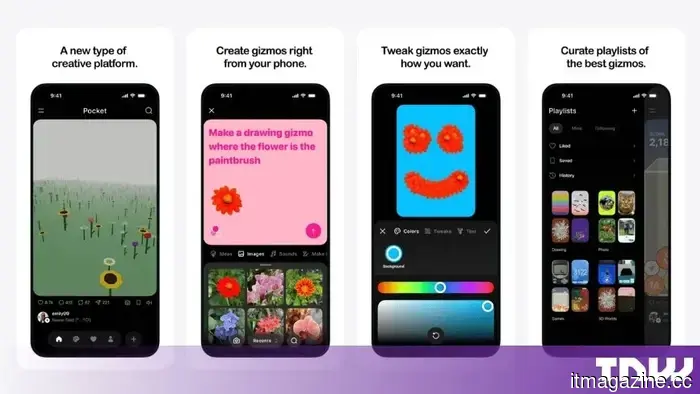 Meta introduced Pocket in the United States, and the app from which it originated ceased operations on the same day.
Meta's Pocket app has launched nationwide in the US. It was developed by the Gizmo team that Meta brought on board in March, and the original Gizmo app was discontinued on the same day.
Meta introduced Pocket in the United States, and the app from which it originated ceased operations on the same day.
Meta's Pocket app has launched nationwide in the US. It was developed by the Gizmo team that Meta brought on board in March, and the original Gizmo app was discontinued on the same day.
 Google is encouraging publishers to add a button that allows readers to choose them.
Google's new Preferred Sources button allows readers to select a publisher without navigating away from the current page. It secures a position in Top Stories and AI Mode.
Google is encouraging publishers to add a button that allows readers to choose them.
Google's new Preferred Sources button allows readers to select a publisher without navigating away from the current page. It secures a position in Top Stories and AI Mode.
Google reports that Gemma has surpassed one billion downloads.
According to Google, Gemma has achieved over a billion downloads and has 100,000 variants. A Google engineer noted that this count does not include integrations with Android and Chrome.