

Research indicates that animated warnings can assist distracted drivers in more consistently identifying hazards.
Researchers at the University of Glasgow tested augmented reality (AR) glasses featuring an animated robot avatar and discovered that it enabled distracted drivers to identify road hazards nearly as effectively as those who were fully focused.
Self-driving cars face an ongoing challenge: when a driver’s focus shifts to their phone or laptop, how can you quickly redirect their attention back to the road to spot potential dangers? A recent study from the University of Glasgow indicates that the solution may not be another alert sound or flashing light, but rather a small animated character that behaves like a human by looking and gesturing toward the danger.
Introducing a more prominent cue bridged the attention deficit
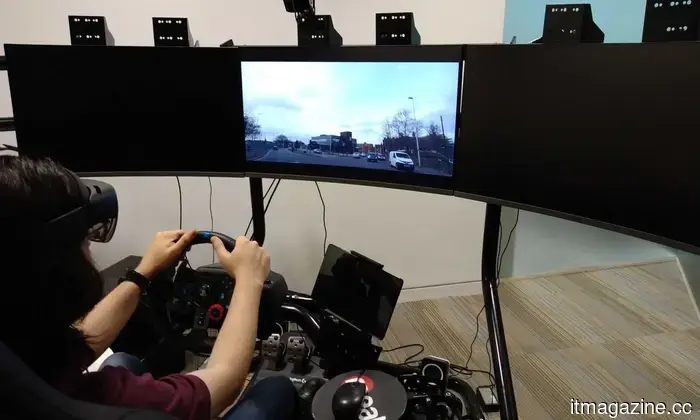
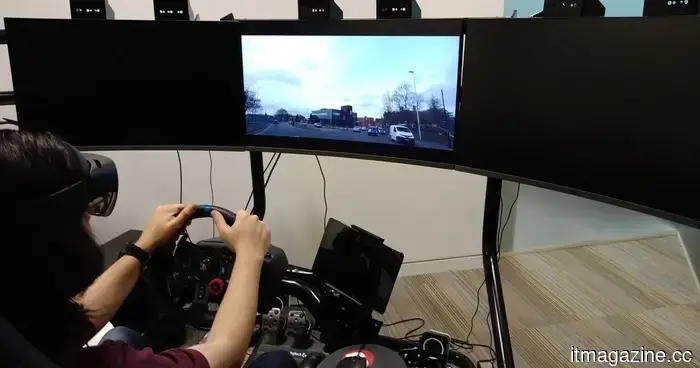
Led by PhD candidate Thomas Goodge, researchers examined this concept using AR glasses on 48 volunteers in a driving simulator. The participants engaged in a mixed reality game while viewing dashcam footage of real driving situations, simulating the experience of a driver distracted by emails or games. A warning was issued just before a hazard appeared in the video, and the researchers inquired about what the driver noticed.
In the initial tests, distracted participants overlooked hazards significantly more often than a control group that viewed the footage without playing the game, regardless of whether the alert was a colored bar or an animated robot head indicating danger. However, when a secondary layer—a red highlight—was combined with the colored bar or head movement, it completely eliminated that discrepancy. Both warning methods enabled distracted drivers to accurately identify hazards around 80 percent of the time, aligning with the success rate of fully attentive participants.
Too much character caused issues
Despite the robot's effectiveness, there were limits to its utility. When researchers equipped it with visible signs of stress, such as trembling and sweating, participants became sidetracked by trying to interpret its emotional state, resulting in even more missed hazards. Professor Stephen Brewster, a co-author of the study, highlighted another subtle concern: some drivers relied entirely on the robot's warnings instead of monitoring the road themselves, similar to over-reliance seen in systems like Cadillac’s Super Cruise, which tracks driver attention and pulls over if unresponsive.
The researchers plan to incorporate sound and dialogue in the next stage of their investigation to examine how drivers react to a warning system that engages in conversation.
Pranob is an experienced tech journalist with over eight years of experience in consumer technology reporting. His work has been...
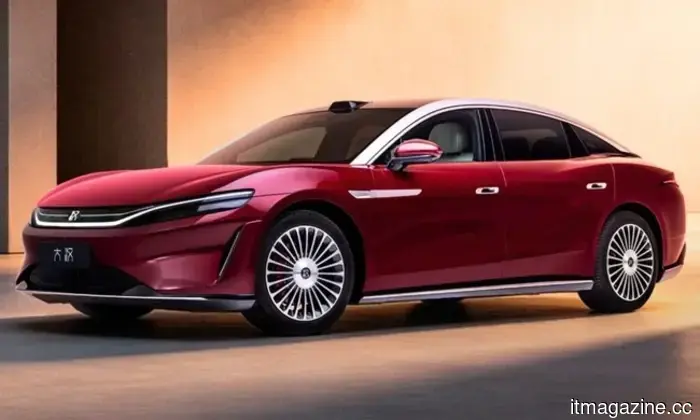
BYD has unveiled its $37,000 Da Han EV, providing range and features typically associated with luxury vehicles in the US.
Recently, BYD has launched a sedan that offers a range and luxury features for a price lower than that of a base Tesla Model 3 in the US. In recent years, Chinese car manufacturers have considerably elevated the standards for what affordable sedans—and cars in general—can provide, with BYD's latest release standing out as a clear demonstration. The Da Han has recently opened for pre-orders in China with a price tag below $37,000, comparable to entry-level pricing in the United States, yet boasting a feature list akin to a flagship vehicle's specifications.
The absent $20,000 EV: The reason affordable electric cars aren't appearing in North America
The reasons behind the absence of affordable electric cars available overseas in North American dealerships.
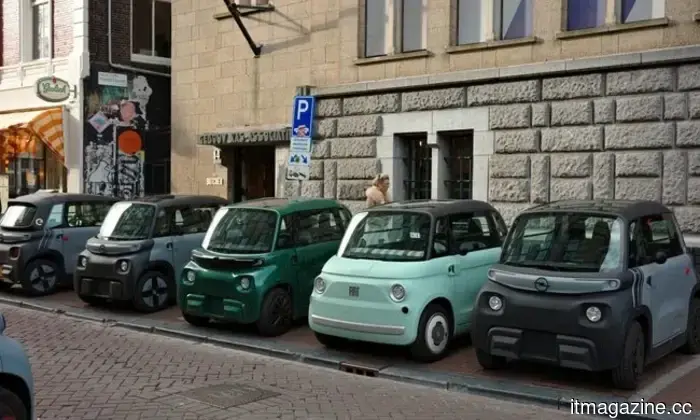
In the last day, the Chinese market has witnessed the introduction of three cars priced significantly below the $20,000 mark, including models from Volkswagen, Hyundai, and MG. All of these were sedans. On the contrary, hatchbacks were even more affordable. Now let's consider a different continent. Strolling through the historic downtown areas of Paris, Milan, or Amsterdam, one quickly realizes they are on a "minicar safari." The narrow, centuries-old streets are filled with a variety of electric micro-vehicles.
From the compact $6,600 Citroën Ami to the retro Microlino, these small battery-powered vehicles navigate through traffic and easily fit into tight parallel parking spaces that would be unmanageable for a standard sedan, let alone a full-sized SUV. The G-Wiz, manufactured in India and sold there as well as in the UK, also comes to mind. Despite market reviews labeling it a "Death Trap," it enjoyed popularity as a small electric vehicle, making its mark globally, but it never arrived in North America.
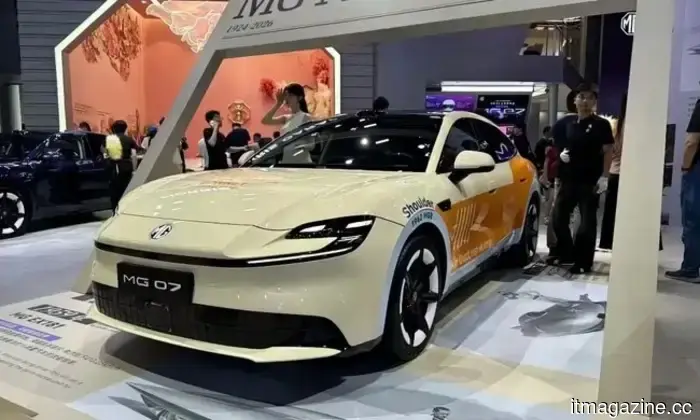
MG's new electric sedan, the MG 07, priced from under $16,000, signifies that US options are still inadequate.
Featuring zero-gravity seats, LiDAR technology, and starting prices as low as $16,000, sedans are regaining intrigue. At the 2026 Chengdu Auto Show, the MG brand, a subsidiary of SAIC, officially introduced its new mid-size sedan, the MG 07, which may genuinely surprise consumers with its pricing. According to CarNewsChina, the vehicle comes in seven versions, priced between 108,900 yuan and 159,900 yuan, which translates to approximately $16,000 to $23,500, making it one of the

Other articles
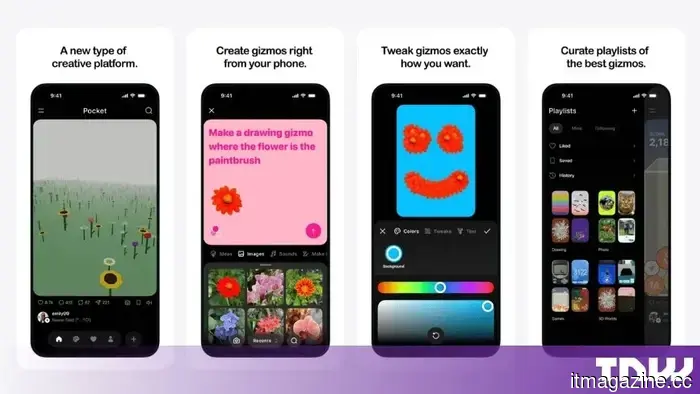 Meta introduced Pocket in the United States, and the app from which it originated ceased operations on the same day.
Meta's Pocket app has launched nationwide in the US. It was developed by the Gizmo team that Meta brought on board in March, and the original Gizmo app was discontinued on the same day.
Meta introduced Pocket in the United States, and the app from which it originated ceased operations on the same day.
Meta's Pocket app has launched nationwide in the US. It was developed by the Gizmo team that Meta brought on board in March, and the original Gizmo app was discontinued on the same day.
 World ID and peaqOS introduce privacy-enhancing human verification for robots and machines.
Robots operating on peaqOS can now confirm they are engaging with a genuine human using World ID's zero-knowledge proofs, all while keeping the individual's identity confidential. This integration can be accessed via robotic.sh, and there is no need for an API key or any fee per verification.
World ID and peaqOS introduce privacy-enhancing human verification for robots and machines.
Robots operating on peaqOS can now confirm they are engaging with a genuine human using World ID's zero-knowledge proofs, all while keeping the individual's identity confidential. This integration can be accessed via robotic.sh, and there is no need for an API key or any fee per verification.
 Research indicates that animated alerts can assist distracted drivers in identifying hazards more effectively.
A recent study indicates that a small animated figure that indicates danger could assist distracted drivers in identifying hazards they may overlook.
Research indicates that animated alerts can assist distracted drivers in identifying hazards more effectively.
A recent study indicates that a small animated figure that indicates danger could assist distracted drivers in identifying hazards they may overlook.
 Uber has been penalized with a fine of 825 million euros regarding the suspension of automated drivers.
The Dutch regulatory authority imposed a fine of 825 million euros on Uber for disabling driver accounts through software without notifying them. This penalty is surpassed only by that imposed on Meta.
Uber has been penalized with a fine of 825 million euros regarding the suspension of automated drivers.
The Dutch regulatory authority imposed a fine of 825 million euros on Uber for disabling driver accounts through software without notifying them. This penalty is surpassed only by that imposed on Meta.
 Meta pays Microsoft several hundred million dollars annually to lease AI models.
According to Bloomberg, Meta invests hundreds of millions annually in renting AI models via Microsoft's Azure. Both companies have refrained from making any comments.
Meta pays Microsoft several hundred million dollars annually to lease AI models.
According to Bloomberg, Meta invests hundreds of millions annually in renting AI models via Microsoft's Azure. Both companies have refrained from making any comments.
 Apple has eliminated over 200 positions within the Siri and Vision Pro teams.
Apple is eliminating over 200 positions within Siri, its AI software division, and Vision Pro, primarily disbanding the gaming team for the headset as it shifts focus to glasses.
Apple has eliminated over 200 positions within the Siri and Vision Pro teams.
Apple is eliminating over 200 positions within Siri, its AI software division, and Vision Pro, primarily disbanding the gaming team for the headset as it shifts focus to glasses.
Research indicates that animated warnings can assist distracted drivers in more consistently identifying hazards.
A recent study indicates that a small animated figure that gestures towards potential dangers could assist distracted drivers in noticing hazards they might overlook.