
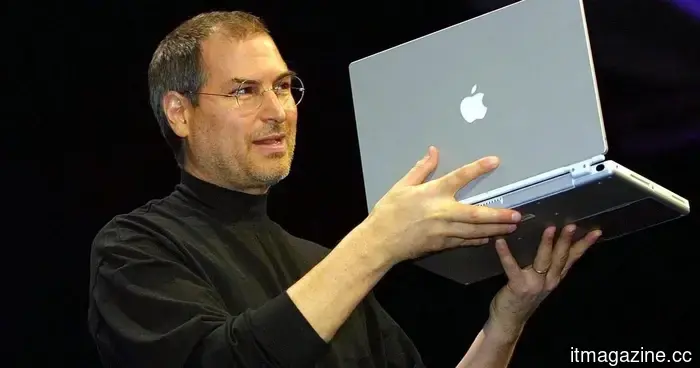
The hidden CIA link that contributed to NeXT's continuation and Steve Jobs' comeback at Apple.
Steve Jobs' return to Apple is often recounted as one of Silicon Valley's significant comeback narratives. However, a new report suggests there was another, much less visible aspect that made it possible: a covert relationship between Jobs’ struggling computer firm, NeXT, and the CIA.
According to a report by Sharon Weinberger in The Wall Street Journal, the CIA quietly emerged as a key customer for NeXT in the late 1980s, purchasing thousands of specially tailored workstations at a time when Jobs’ company was in dire need of sales. This arrangement, as stated in the report, helped stabilize NeXT and allowed Jobs several additional years to mature as a business leader before his return to Apple in 1996.
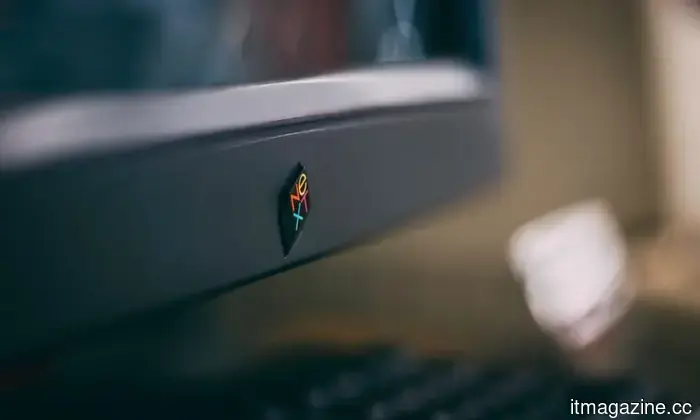
The partnership began in 1986 when CIA officials Joe Romello and Jeff Harris approached Jobs shortly after he launched NeXT. The agency sought powerful computing hardware to support intelligence operations, including satellite imagery analysis. Initially, Jobs was unaware of the full extent of the government’s requirements, according to the Journal's narrative.
A covert customer aided NeXT's survival
NeXT’s workstations were technologically advanced yet costly, leading to challenges in attracting sufficient customers. Sales to universities, which Jobs had envisioned as a major revenue source, did not meet the scale NeXT required.
The CIA contract shifted the dynamics. As reported by Weinberger, an intelligence agency committed to purchasing 20,000 NeXT workstations, with these machines receiving modified components and enhanced graphics after leaving NeXT. Ultimately, the computers were utilized by analysts at the National Reconnaissance Office for processing and analyzing satellite imagery and sharing intelligence across defense and intelligence networks.
This arrangement also reportedly allowed NeXT to rapidly boost production, advancing from a few hundred workstations in its first month to thousands. Much of this partnership remained concealed from NeXT employees and even within the federal government, where the National Security Agency was officially recognized as the customer.
The unexpected pathway back to Apple
The importance of this story extends beyond a previously unnoticed government contract. NeXT became the platform for Jobs to rebuild his reputation after being ousted from Apple, while its technology ultimately proved more impactful than its hardware sales.
Apple acquired NeXT in 1996, reinstating Jobs at the company he originally co-founded. NeXTSTEP, the company’s operating system, later became the technical foundation for Apple’s software, affecting products that would eventually encompass everything from the Mac to the iPhone and iPad.
Weinberger suggests that the intelligence relationship effectively provided Jobs with extra time and financial flexibility to develop NeXT prior to his return to Apple. The CIA connection eventually diminished as defense spending from the Cold War era declined and Silicon Valley shifted more toward consumer technology.
This narrative emerges at a time when the relationship between Silicon Valley and Washington is once again becoming increasingly intertwined, particularly regarding artificial intelligence and defense technologies. In this light, the secret history of NeXT serves as a reminder that the realms of consumer technology and national security have been interconnected for a longer time than is often recognized.
Other articles
 Just acquired a Pixel 11? Here are the top accessories I would invest in.
I reviewed numerous accessories compatible with Pixelsnap for the Pixel 11 to determine which ones are truly worth purchasing.
Just acquired a Pixel 11? Here are the top accessories I would invest in.
I reviewed numerous accessories compatible with Pixelsnap for the Pixel 11 to determine which ones are truly worth purchasing.
 The covert CIA link that contributed to NeXT's endurance and facilitated Jobs' comeback to Apple
A recently disclosed connection with the CIA might have played a role in supporting Steve Jobs' struggling NeXT, ultimately establishing an unforeseen link to his eventual comeback at Apple.
The covert CIA link that contributed to NeXT's endurance and facilitated Jobs' comeback to Apple
A recently disclosed connection with the CIA might have played a role in supporting Steve Jobs' struggling NeXT, ultimately establishing an unforeseen link to his eventual comeback at Apple.
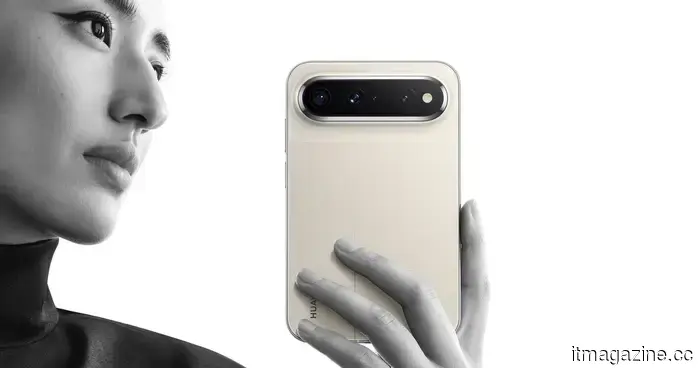 Huawei aims to revive the popularity of small phones, and you'll find yourself wanting one as well.
The Huawei Pura X View aims to bring back the appeal of wide-body foldable phones while maintaining strong internal specifications. For instance, it boasts a substantial battery despite its slim design.
Huawei aims to revive the popularity of small phones, and you'll find yourself wanting one as well.
The Huawei Pura X View aims to bring back the appeal of wide-body foldable phones while maintaining strong internal specifications. For instance, it boasts a substantial battery despite its slim design.
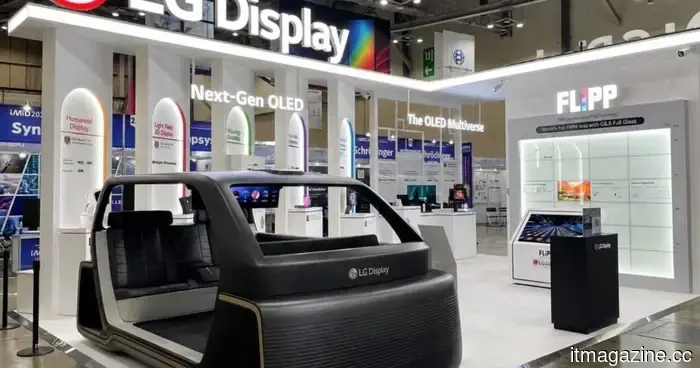 LG's latest OLED technology can endure 2.4 times longer, with monitors being the first to benefit.
LG Display's FLiPP OLED technology claims to offer a lifespan that is 2.4 times longer, increased brightness, and reduced power consumption, with monitors and tablets expected to serve as the initial testing grounds.
LG's latest OLED technology can endure 2.4 times longer, with monitors being the first to benefit.
LG Display's FLiPP OLED technology claims to offer a lifespan that is 2.4 times longer, increased brightness, and reduced power consumption, with monitors and tablets expected to serve as the initial testing grounds.
 Recently acquired a Pixel 11? Here are the top accessories I would recommend investing in.
I explored numerous accessories compatible with Pixelsnap for the Pixel 11 to determine which ones are truly worth purchasing.
Recently acquired a Pixel 11? Here are the top accessories I would recommend investing in.
I explored numerous accessories compatible with Pixelsnap for the Pixel 11 to determine which ones are truly worth purchasing.
 How a 23-year-old construction worker simplified AI video production.
At the age of 13, Sean Grindal began coding, later managing a web agency for clients listed on NASDAQ. He then created Yapper, an AI content studio that achieved a $2M run rate in less than a year with just a two-person team and 300,000 users.
How a 23-year-old construction worker simplified AI video production.
At the age of 13, Sean Grindal began coding, later managing a web agency for clients listed on NASDAQ. He then created Yapper, an AI content studio that achieved a $2M run rate in less than a year with just a two-person team and 300,000 users.
The hidden CIA link that contributed to NeXT's continuation and Steve Jobs' comeback at Apple.
A recently disclosed connection with the CIA might have played a role in sustaining Steve Jobs' struggling NeXT, paving an unexpected path for his eventual comeback to Apple.