
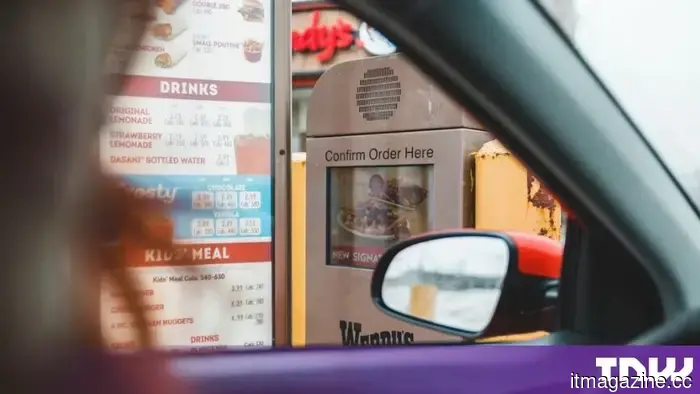
The expansion of Taco Bell's voice AI indicates a new stage for the drive-thru experience.
**TL;DR:** Taco Bell has rolled out voice AI technology to over 890 locations in 38 states. However, independent testing reveals crucial insights: Bojangles, using Hi Auto, had a 3% employee intervention rate compared to Taco Bell's 30% and Wendy's 33%. Hi Auto manages over 100 million drive-thru orders yearly across about 1,000 quick-service restaurant (QSR) locations. The drive-thru AI market is transitioning from trial phases to operational norms, with the maturity of technology platforms becoming a key distinguishing factor.
Voice AI is evolving from being experimental to an essential operational choice for QSRs. Food On Demand reported Taco Bell's expansion of its voice AI partnership with Omilia to over 890 U.S. restaurants across 38 states. This trend includes other brands like Wendy’s, Bojangles, Taco John’s, and Zaxby’s, indicating a shift toward integrating automated ordering into everyday restaurant functions.
The rationale for this shift is clear: drive-thrus represent a highly labor-intensive aspect of QSR operations, characterized by a high volume of transactions in noisy settings, ever-changing menus, and inconsistent customer orders. Voice AI can manage customer interactions, allowing employees to concentrate on food prep, hospitality, and other responsibilities.
Yet, the most significant aspect may not be which restaurant boasts the largest implementation, but rather which technology platforms have proven their voice AI effectiveness across different brands, markets, and operational contexts.
**The Technology Partners Behind The Headlines:**
Restaurant chains often dominate the media narrative since customers interact with the technology at the drive-thru. However, the actual impact resides significantly with the technology providers enabling these systems.
For instance, Hi Auto operates its AI Order Taker across nearly 1,000 QSR locations in the U.S., U.K., Australia, and New Zealand, processing over 100 million drive-thru orders annually—an achievement hard to match with a single-brand deployment.
This distinction is vital; scaling voice AI involves more than just implementing a conversational interface. The system must accommodate different accents, interruptions, substitutions, changes in inventory, and the unpredictable chaos of a live drive-thru while integrating seamlessly with restaurant operations.
Thus, the true challenge is not whether an AI system can perform well in a controlled trial but whether its performance remains consistent amidst the complex interactions of thousands of employees, numerous franchisees, and millions of customers across various establishments.
**Independent Testing Points to a Maturity Gap:**
Third-party studies offer further insights into this issue. Intouch Insight’s 2025 Emerging Experiences Study utilized mystery shoppers to assess voice AI performance at Bojangles, Taco Bell, and Wendy’s. In 120 visits where voice AI was confirmed to be in operation, employees intervened in 22% of the interactions, with significant variances among brands.
Bojangles, utilizing Hi Auto’s AI order taker, saw a mere 3% employee intervention rate, while Taco Bell and Wendy's reported 30% and 33%, respectively. Furthermore, 67% of shoppers at Bojangles described their experience as “easy and smooth,” compared to 57% for Taco Bell and just 23% for Wendy’s, alongside a notable 40-second improvement in wait times and 100% clarity in speaker responses. This data emphasizes that deployment maturity significantly impacts the customer experience rather than simply naming a leading brand.
**Scale Becomes the Differentiator:**
This maturity is increasingly reflected in how operators view their technological partners. In 2025, Bojangles recognized Hi Auto as its “Legendary Supplier of the Year” for deploying the Bo-Linda AI Order Taker across over 400 restaurants. This acknowledgment was significant as it was the first time a technology partner received such an award from the chain.
For QSRs, these relationships suggest a shifting perspective on AI success. The objective is not to replace human workers in the drive-thru but to provide additional capacity amid ongoing challenges related to labor availability, service efficiency, and revenue growth.
When an AI system effectively manages routine orders at scale, employees can allocate more time to aspects of the customer experience that necessitate human engagement while utilizing conversational ordering to enhance throughput and explore potential opportunities like suggestive selling.
**The Next Stage of Restaurant AI:**
Thus, Taco Bell’s expansion signifies more than a single rollout; it indicates the QSR sector's increasing acceptance of voice AI as a fundamental part of its operational framework rather than merely a technological showcase.
The future competitive challenge will revolve around which platforms can sustain their performance as deployments expand across various brands, regions, menus, and franchise structures. In this evolving landscape, tailored technology and real-world experience may prove more valuable than the novelty of adding AI voices to drive-thru operations.
The restaurant industry does not require AI merely for its popularity; it demands technology that effectively navigates the complexities and volume of the drive-thru while remaining reliable as the business grows. Companies
Other articles
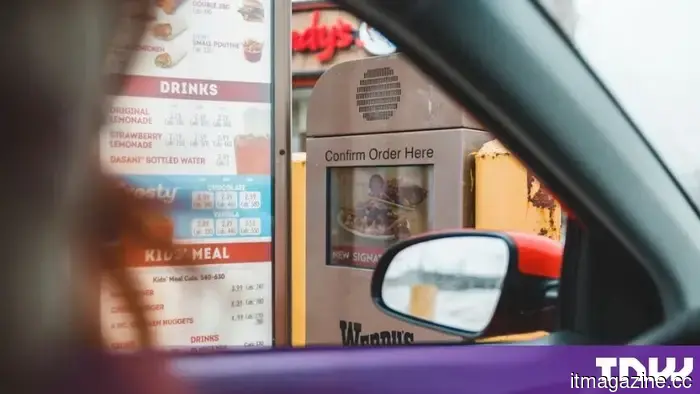 Taco Bell's expansion of its voice AI indicates that the drive-thru has reached a new level.
Taco Bell has implemented voice AI in over 890 restaurants across the U.S. Independent evaluations indicate that employee intervention rates vary between 3% and 33% among different brands, highlighting the significance of deployment maturity in drive-thru AI systems.
Taco Bell's expansion of its voice AI indicates that the drive-thru has reached a new level.
Taco Bell has implemented voice AI in over 890 restaurants across the U.S. Independent evaluations indicate that employee intervention rates vary between 3% and 33% among different brands, highlighting the significance of deployment maturity in drive-thru AI systems.
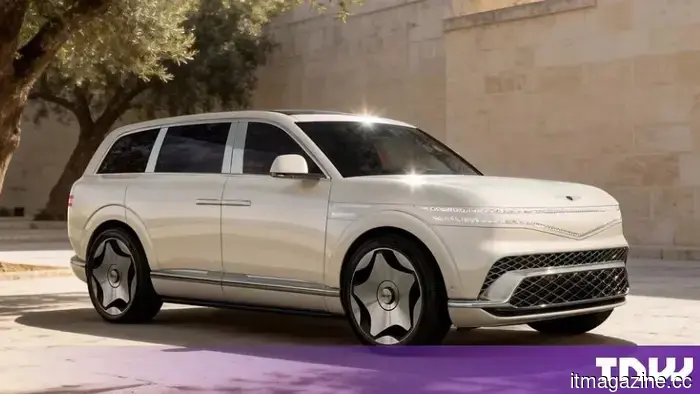 Hyundai's premium brand has introduced a new flagship electric vehicle, but there are no plans for its release in Europe.
The Genesis GV90 is an electric SUV boasting 490 kW of power and a 123.5 kWh battery, featuring coach doors. It will be available for purchase in the US early next year, although no plans for a European launch have been revealed.
Hyundai's premium brand has introduced a new flagship electric vehicle, but there are no plans for its release in Europe.
The Genesis GV90 is an electric SUV boasting 490 kW of power and a 123.5 kWh battery, featuring coach doors. It will be available for purchase in the US early next year, although no plans for a European launch have been revealed.
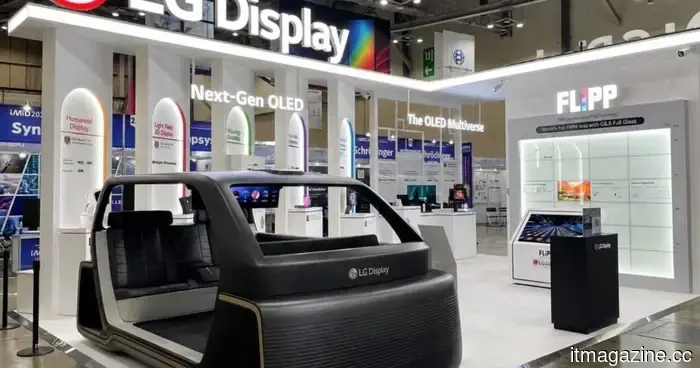 LG's latest OLED technology can endure 2.4 times longer, with monitors being the first to benefit.
LG Display's FLiPP OLED technology claims to offer a lifespan that is 2.4 times longer, increased brightness, and reduced power consumption, with monitors and tablets expected to serve as the initial testing grounds.
LG's latest OLED technology can endure 2.4 times longer, with monitors being the first to benefit.
LG Display's FLiPP OLED technology claims to offer a lifespan that is 2.4 times longer, increased brightness, and reduced power consumption, with monitors and tablets expected to serve as the initial testing grounds.
 Pew reports that 10% of the internet currently displays indications of having been created by AI.
Pew identified significant evidence of AI authorship in approximately 10% of a random selection of webpages, with the figure exceeding one-third for pages published after the launch of ChatGPT.
Pew reports that 10% of the internet currently displays indications of having been created by AI.
Pew identified significant evidence of AI authorship in approximately 10% of a random selection of webpages, with the figure exceeding one-third for pages published after the launch of ChatGPT.
 To experiment with Android 17's new feature aimed at reducing mindless scrolling, you'll require a Pixel 11.
Google's latest Pause Point feature introduces a 10-second delay before launching apps you’ve flagged as distracting, although this Digital Wellbeing tool is currently exclusive to the Pixel 11 series.
To experiment with Android 17's new feature aimed at reducing mindless scrolling, you'll require a Pixel 11.
Google's latest Pause Point feature introduces a 10-second delay before launching apps you’ve flagged as distracting, although this Digital Wellbeing tool is currently exclusive to the Pixel 11 series.
 Mark Zuckerberg purchases a 440-acre estate located in County Waterford, Ireland.
Mark Zuckerberg has purchased Strancally Castle along with 440 acres in County Waterford, marking the third significant Irish estate acquired by a tech billionaire since 2021.
Mark Zuckerberg purchases a 440-acre estate located in County Waterford, Ireland.
Mark Zuckerberg has purchased Strancally Castle along with 440 acres in County Waterford, marking the third significant Irish estate acquired by a tech billionaire since 2021.
The expansion of Taco Bell's voice AI indicates a new stage for the drive-thru experience.
Taco Bell has implemented voice AI in over 890 locations across the U.S. Testing conducted independently indicates that employee intervention rates vary between 3% and 33% among different brands, highlighting the importance of deployment maturity in drive-thru AI.