
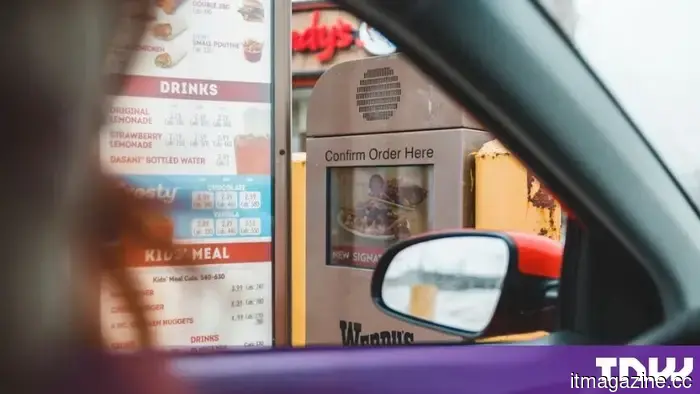
Taco Bell's expansion of its voice AI indicates that the drive-thru has reached a new level.
Taco Bell has broadened the implementation of voice AI to over 890 restaurants in 38 states. However, more revealing insights emerge from independent mystery-shopper assessments: Bojangles (utilizing Hi Auto) registered a 3% intervention rate by employees, compared to 30% at Taco Bell and 33% at Wendy’s. Hi Auto manages more than 100 million orders annually across approximately 1,000 quick-service restaurant locations. The drive-thru AI industry is transitioning from trial phases to operational decisions, with the maturity of platforms becoming a key differentiator.
Voice AI is evolving from an experimental phase into a fundamental operational choice for quick-service restaurants. Food On Demand recently highlighted that Taco Bell has extended its voice AI capabilities to over 890 locations in the U.S., strengthening its collaboration with Omilia. This expansion is part of a growing trend among brands like Wendy’s, Bojangles, Taco John’s, and Zaxby’s, indicating that automated ordering is moving from isolated testing to regular restaurant operations.
For restaurant managers, the advantages are clear. Drive-thrus represent one of the most labor-intensive aspects of quick-service restaurant management, characterized by high transaction rates, loud environments, and ever-changing menus, alongside customers who often deviate from standard ordering scripts. Voice AI can manage the ordering processes, allowing staff to concentrate on food preparation, customer service, and other responsibilities within the restaurant.
The most significant aspect may not be which restaurant chain claims the largest implementation but rather which technology platforms have proven that voice AI can consistently operate across various brands, markets, and settings.
The Technology Partners Behind The Headlines
Restaurant chains often steal the spotlight due to consumers’ direct interaction with technology at the ordering kiosk. However, the broader landscape of this sector increasingly depends on the technology providers that support these implementations.
For instance, Hi Auto operates its AI Order Taker across roughly 1,000 quick-service restaurant locations in the U.S., U.K., Australia, and New Zealand. The company claims its platform processes over 100 million drive-thru orders every year, showcasing a level of transaction traffic that is challenging to achieve through a single brand.
This distinction is crucial since scaling voice AI involves more than merely placing a conversational interface in front of a menu. The system must handle accents, interruptions, substitutions, modifications, fluctuating inventory, and the unpredictable noise of a live drive-thru, all while integrating seamlessly with restaurant operations.
Thus, the true challenge lies not in whether an AI system can succeed in a controlled environment but in its performance under the demands of thousands of employees, multiple franchisees, and millions of customers in diverse restaurant settings.
Independent Testing Points To A Maturity Gap
Third-party research offers another perspective on this issue.
Intouch Insight’s 2025 Emerging Experiences Study employed mystery shoppers to assess voice AI at Bojangles, Taco Bell, and Wendy’s. In 120 visits where voice AI was confirmed to be used, employees intervened in 22% of interactions. However, the variance between individual deployments was notable.
At Bojangles, where the AI order taker is powered by Hi Auto, the employee intervention rate was only 3%, compared to 30% at Taco Bell and 33% at Wendy’s. Additionally, 67% of shoppers at Bojangles described their interaction as “easy and smooth,” in contrast to 57% for Taco Bell and 23% for Wendy’s.
Results from Bojangles also indicated a 40-second reduction in wait times and 100% speaker clarity. The key takeaway is not about crowning a single brand as superior but rather illustrating how significant deployment maturity can affect customer experience.
Scale Becomes The Differentiator
This maturity is increasingly evident in how restaurant operators perceive their technology partners. In 2025, Bojangles awarded Hi Auto the title of “Legendary Supplier of the Year,” acknowledging the technology firm’s contribution to deploying its Bo-Linda AI Order Taker across over 400 restaurants at that time. This recognition was significant because it was the first instance that a technology partner received such an honor from the restaurant chain.
For quick-service restaurants, this type of partnership signifies a new understanding of AI success. The objective is not to remove staff from the drive-thru but to enhance restaurant capacity during a time when labor availability, service speed, and revenue growth are essential operational focuses.
When an AI system can reliably manage routine ordering on a large scale, employees can dedicate more time to aspects of the customer experience that require human interaction. Simultaneously, restaurants can leverage conversational ordering to improve throughput and explore opportunities like suggestive selling.
The Next Stage Of Restaurant AI
Taco Bell’s expansion represents more than just a single implementation. It signifies that the quick-service restaurant industry is becoming increasingly comfortable integrating voice AI into its operational framework rather than viewing it as merely a technological showcase.
The forthcoming competitive question will be which platforms can sustain such performance as
Other articles
 Anthropic is aiming for an IPO that would be the largest in history.
Anthropic anticipates either matching or surpassing SpaceX's $75 billion IPO, which is the largest to date. In 2025, it incurred losses of nearly $42 billion, five times greater than the loss from the previous year.
Anthropic is aiming for an IPO that would be the largest in history.
Anthropic anticipates either matching or surpassing SpaceX's $75 billion IPO, which is the largest to date. In 2025, it incurred losses of nearly $42 billion, five times greater than the loss from the previous year.
 Meta's smart glasses are now being utilized by school bullies.
Teenagers are utilizing Ray-Ban Meta smart glasses to covertly record their classmates and teachers in school, with a significant amount of the harassment directed towards girls. A lot of the footage remained online until Futurism reached out to Meta and TikTok directly.
Meta's smart glasses are now being utilized by school bullies.
Teenagers are utilizing Ray-Ban Meta smart glasses to covertly record their classmates and teachers in school, with a significant amount of the harassment directed towards girls. A lot of the footage remained online until Futurism reached out to Meta and TikTok directly.
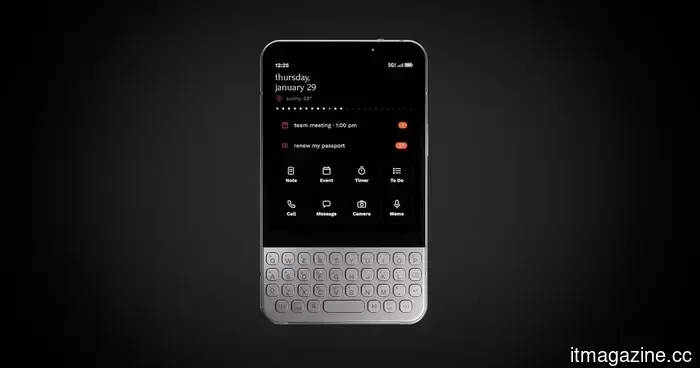 The minimalist phone is gradually reverting to being a smartphone.
The Minimal Phone 2 addresses numerous compromises that rendered the original challenging to use. However, these enhancements bring up an uncomfortable question regarding what constituted its minimalism initially.
The minimalist phone is gradually reverting to being a smartphone.
The Minimal Phone 2 addresses numerous compromises that rendered the original challenging to use. However, these enhancements bring up an uncomfortable question regarding what constituted its minimalism initially.
 The Chinese video platform Bilibili is broadening its global reach.
Bilibili has reintroduced its international app without requiring ID checks and is currently recruiting in London and Istanbul. In Europe, the DSA is taking a wait-and-see approach instead of enforcing a ban.
The Chinese video platform Bilibili is broadening its global reach.
Bilibili has reintroduced its international app without requiring ID checks and is currently recruiting in London and Istanbul. In Europe, the DSA is taking a wait-and-see approach instead of enforcing a ban.
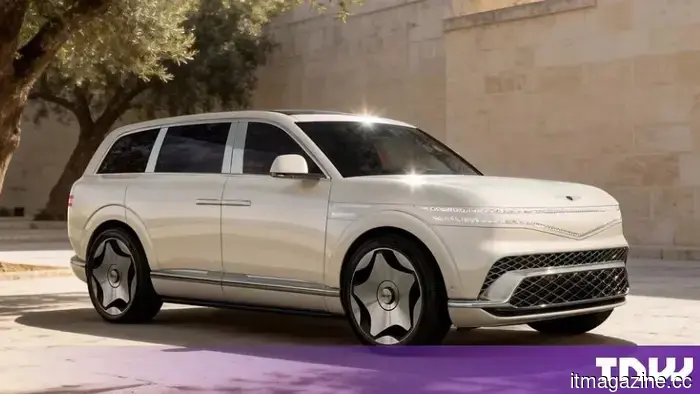 Hyundai's premium brand has introduced a new flagship electric vehicle, but there are no plans for its release in Europe.
The Genesis GV90 is an electric SUV boasting 490 kW of power and a 123.5 kWh battery, featuring coach doors. It will be available for purchase in the US early next year, although no plans for a European launch have been revealed.
Hyundai's premium brand has introduced a new flagship electric vehicle, but there are no plans for its release in Europe.
The Genesis GV90 is an electric SUV boasting 490 kW of power and a 123.5 kWh battery, featuring coach doors. It will be available for purchase in the US early next year, although no plans for a European launch have been revealed.
 Reasons behind Unitree becoming the first humanoid robot company to go public in China.
On Wednesday, Unitree Robotics made its debut on the STAR Market of the Shanghai Stock Exchange with the ticker symbol 688836.SH. Coinciding with this event, the 2026 World Robot
Reasons behind Unitree becoming the first humanoid robot company to go public in China.
On Wednesday, Unitree Robotics made its debut on the STAR Market of the Shanghai Stock Exchange with the ticker symbol 688836.SH. Coinciding with this event, the 2026 World Robot
Taco Bell's expansion of its voice AI indicates that the drive-thru has reached a new level.
Taco Bell has implemented voice AI in over 890 restaurants across the U.S. Independent evaluations indicate that employee intervention rates vary between 3% and 33% among different brands, highlighting the significance of deployment maturity in drive-thru AI systems.