

Pew reports that 10% of the internet currently displays indications of having been created by AI.
Pew reported significant evidence of AI authorship in approximately 10% of a random selection of webpages in July 2026, with the proportion exceeding a third for pages released after ChatGPT's launch. Most of this content comes from commercial domains, with around 10% of .com sites indicating AI authorship, compared to about 1% for .edu and .gov sites.
Currently, about 10% of the web displays strong indicators of machine-generated writing. In its examination of a random sample of 10,000 webpages in July 2026, Pew found that roughly 10% exhibited signals of AI authorship.
The primary statistic often referenced pertains to newer pages; since the debut of ChatGPT in November 2022, over a third of these pages have shown such indicators, which relates to a much narrower segment of the internet.
This difference is important because much of the web's content was produced before AI models were introduced, leading to an underrepresentation of the impact on recent writing when considering page-level averages across the entire internet.
Pew's methodology is worth noting. They analyzed nearly 500,000 English-language pages from the Common Crawl archive from January 2021 to July 2026, utilizing Open Pangram, the detection tool Substack uses to identify AI-written newsletters.
Detectors can misclassify individual documents, and Pew acknowledges this. Their stance is based on statistical findings that demonstrate clear patterns across hundreds of thousands of pages, even if a single assessment might be inaccurate.
The breakdown by domain is a key observation. Approximately 10% of .com pages indicated AI authorship, compared to 4.6% of .org sites and around 1% each for .edu and .gov domains.
This distribution reflects where writing is seen as a cost rather than an objective. Commercial webpages aim to attract attention, and search-optimized content is the least expensive output a language model can generate.
Pew also identified several indicators of AI authorship that may be concerning for those adhering to specific writing styles. The use of em dashes has increased twofold since 2023, Oxford commas have risen by 63%, and terms such as “delve” and “pivotal” frequently appear with the phrase “it’s not just X, it’s Y.”
Platforms are already integrating detection capabilities into their systems. LinkedIn claims its own tool identifies generic content with 94% accuracy, while arXiv has started banning researchers who submit unverified AI-generated text.
It's important to note that volume does not equate to visibility. Other research from Graphite found that AI-generated articles make up almost half of newly published pieces, while human-written articles continue to dominate Google search results and citations.
What has notably changed is the prevailing assumption; a page published this year was likely influenced by a model at some point, and the industry's response has been to offer tools for verification.
Other articles
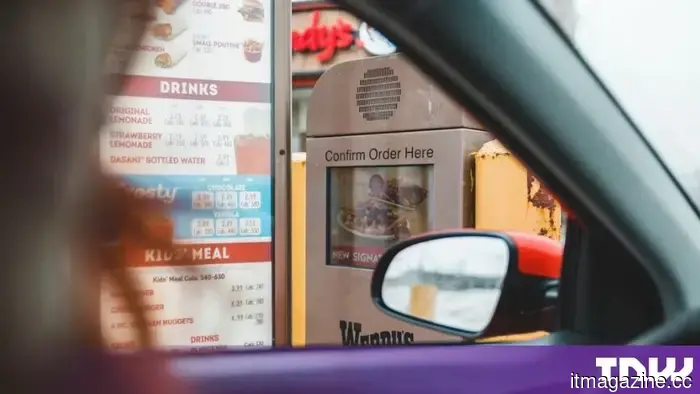 The expansion of Taco Bell's voice AI indicates a new stage for the drive-thru experience.
Taco Bell has implemented voice AI in over 890 locations across the U.S. Testing conducted independently indicates that employee intervention rates vary between 3% and 33% among different brands, highlighting the importance of deployment maturity in drive-thru AI.
The expansion of Taco Bell's voice AI indicates a new stage for the drive-thru experience.
Taco Bell has implemented voice AI in over 890 locations across the U.S. Testing conducted independently indicates that employee intervention rates vary between 3% and 33% among different brands, highlighting the importance of deployment maturity in drive-thru AI.
 Reasons behind Unitree becoming the first humanoid robot company to go public in China.
On Wednesday, Unitree Robotics made its debut on the STAR Market of the Shanghai Stock Exchange with the ticker symbol 688836.SH. Coinciding with this event, the 2026 World Robot
Reasons behind Unitree becoming the first humanoid robot company to go public in China.
On Wednesday, Unitree Robotics made its debut on the STAR Market of the Shanghai Stock Exchange with the ticker symbol 688836.SH. Coinciding with this event, the 2026 World Robot
 Anthropic is aiming for an IPO that would be the largest in history.
Anthropic anticipates either matching or surpassing SpaceX's $75 billion IPO, which is the largest to date. In 2025, it incurred losses of nearly $42 billion, five times greater than the loss from the previous year.
Anthropic is aiming for an IPO that would be the largest in history.
Anthropic anticipates either matching or surpassing SpaceX's $75 billion IPO, which is the largest to date. In 2025, it incurred losses of nearly $42 billion, five times greater than the loss from the previous year.
 Just acquired a Pixel 11? Here are the top accessories I would invest in.
I reviewed numerous accessories compatible with Pixelsnap for the Pixel 11 to determine which ones are truly worth purchasing.
Just acquired a Pixel 11? Here are the top accessories I would invest in.
I reviewed numerous accessories compatible with Pixelsnap for the Pixel 11 to determine which ones are truly worth purchasing.
 Hyundai's premium brand has introduced a new flagship electric vehicle, but there are no plans for its release in Europe.
The Genesis GV90 is an electric SUV boasting 490 kW of power and a 123.5 kWh battery, featuring coach doors. It will be available for purchase in the US early next year, although no plans for a European launch have been revealed.
Hyundai's premium brand has introduced a new flagship electric vehicle, but there are no plans for its release in Europe.
The Genesis GV90 is an electric SUV boasting 490 kW of power and a 123.5 kWh battery, featuring coach doors. It will be available for purchase in the US early next year, although no plans for a European launch have been revealed.
 Mark Zuckerberg purchases a 440-acre estate located in County Waterford, Ireland.
Mark Zuckerberg has purchased Strancally Castle along with 440 acres in County Waterford, marking the third significant Irish estate acquired by a tech billionaire since 2021.
Mark Zuckerberg purchases a 440-acre estate located in County Waterford, Ireland.
Mark Zuckerberg has purchased Strancally Castle along with 440 acres in County Waterford, marking the third significant Irish estate acquired by a tech billionaire since 2021.
Pew reports that 10% of the internet currently displays indications of having been created by AI.
Pew identified significant evidence of AI authorship in approximately 10% of a random selection of webpages, with the figure exceeding one-third for pages published after the launch of ChatGPT.