

The Sony neck fan may appear nerdy, but researchers claim it is actually more effective than desk fans.
I wasn't previously acquainted with the trend of neck fans.
I wrote an article on Sony’s newest wearable cooling device a few months back, and I must confess that wearing a gadget secured around my neck doesn’t quite fit my idea of being fashionable. However, recent findings from scientists have given me a compelling reason to change my perspective.
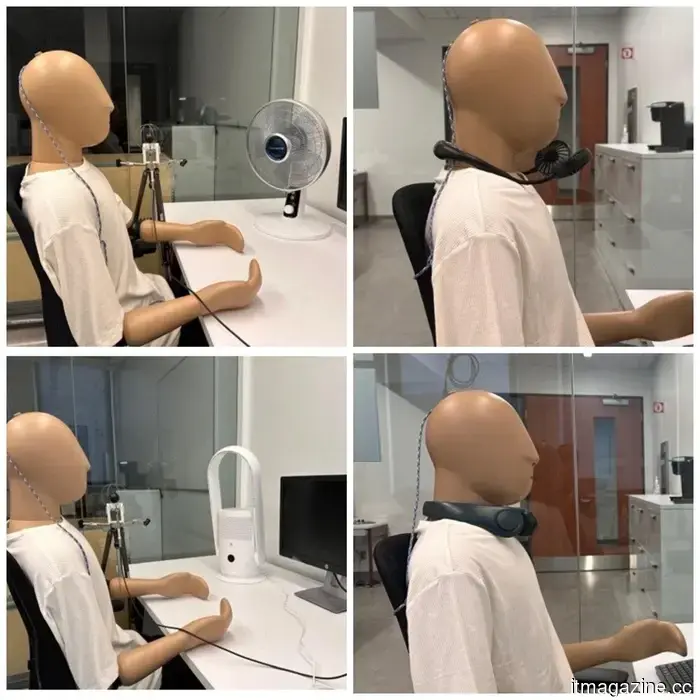
Researchers from Concordia University compared wearable face and neck fans with traditional bladed and bladeless desk fans, discovering that cooling a specific temperature-sensitive area of the body can be remarkably effective. The wearable devices achieved a level of thermal comfort similar to that of larger desk fans, while using less energy and producing fewer unwanted drafts for those nearby.
Your neck is surprisingly adept at regulating your temperature.
The researchers evaluated four personal cooling devices in a controlled office environment set to 25 degrees Celsius, using a 23-segment thermal mannequin that could measure skin temperature, heat loss, and overall thermal comfort. The study revealed that the effectiveness of wearable cooling stems from where the airflow is directed.
Although your face and neck make up only about 5.5% of your body’s surface area, they are exceptionally sensitive to temperature changes. Targeting airflow to these areas enables wearable fans to provide whole-body comfort on par with a bladeless desk fan or a low-speed conventional bladed fan. The face-mounted fan significantly increased heat loss from the face by up to seven watts.
While a standard bladed desk fan still offered the best cooling overall, it's not a reason to discard it just yet, as it created much stronger air currents that could disturb coworkers nearby.
Sony might have made a significant advancement.
Sony has taken this concept further than the wearable fans used in the Concordia study. The £199 Reon Pocket Pro Plus rests on the back of the neck and utilizes two thermoelectric modules rather than relying solely on airflow. The company claims that its latest model provides over 20% stronger cooling compared to its predecessor, achieving a surface temperature about 2 degrees Celsius lower under test conditions.
It also adjusts its cooling based on environmental monitoring and is said to last up to 15 hours on a battery, depending on various conditions and settings. The researchers at Concordia see a larger advantage in this targeted cooling approach. If individuals can remain comfortable with personal devices, offices might not need to operate centralized HVAC systems as aggressively, potentially lowering overall energy consumption. This could be particularly beneficial for hybrid workplaces where cooling a large office for a few employees doesn’t make sense.
So, while wearing a small climate-control device around my neck might continue to appear somewhat nerdy, I would prefer to embrace that look rather than endure another summer of this heat wave.
Vikhyaat Vivek is a tech journalist and reviewer with seven years of experience focusing on consumer hardware.
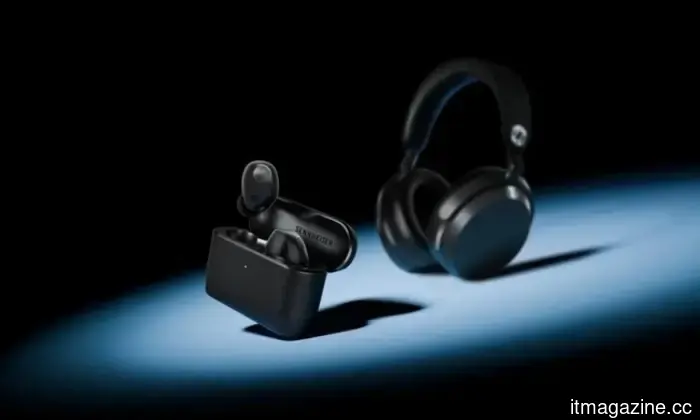
Sennheiser has introduced earbuds that you don’t need to discard when the battery runs out.
Flagship sound, Dolby Atmos, and a battery that can be fixed by the user.
Sennheiser recently launched the Momentum True Wireless 5, which essentially incorporates the best features of its full-size Momentum 5 Wireless headphones into a more compact and comfortable earbud. The earbuds will begin shipping on September 3rd for $299.95. What’s new concerning sound?
You’ll have to wait until 2027 for those leaked AirPods with built-in cameras.
Despite an unintentional video leak in macOS, Apple’s AI-powered earbuds are expected to launch in 2027.
Although Apple may have inadvertently provided an early glimpse of its most unusual AirPods yet, the actual timeline for release remains unchanged. According to Bloomberg's Mark Gurman, Apple’s AI-equipped camera AirPods are still scheduled for 2027, despite a leaked developer version of macOS showing the earbuds in action.
The leak has made the release seem sooner than it actually is.





Other articles
 Comcast is converting millions of routers into motion sensors.
Comcast is activating WiFi Motion, a complimentary feature that transforms millions of Xfinity routers into motion sensors without cameras, which has sparked concerns about privacy.
Comcast is converting millions of routers into motion sensors.
Comcast is activating WiFi Motion, a complimentary feature that transforms millions of Xfinity routers into motion sensors without cameras, which has sparked concerns about privacy.
 Munich Re is acquiring cyber-insurer At-Bay for $575 million, which is 50% of its value from 2021.
Munich Re has reached an agreement to acquire the cyber-insurance startup At-Bay for $575 million, which is less than half of its 2021 valuation of $1.35 billion, marking a turning point for the insurtech sector.
Munich Re is acquiring cyber-insurer At-Bay for $575 million, which is 50% of its value from 2021.
Munich Re has reached an agreement to acquire the cyber-insurance startup At-Bay for $575 million, which is less than half of its 2021 valuation of $1.35 billion, marking a turning point for the insurtech sector.
 Windows 11 is eliminating the Drag Tray feature.
Microsoft is eliminating the Drag Tray feature in Windows 11 following user feedback that the file-sharing overlay was disrupting routine drag-and-drop operations.
Windows 11 is eliminating the Drag Tray feature.
Microsoft is eliminating the Drag Tray feature in Windows 11 following user feedback that the file-sharing overlay was disrupting routine drag-and-drop operations.
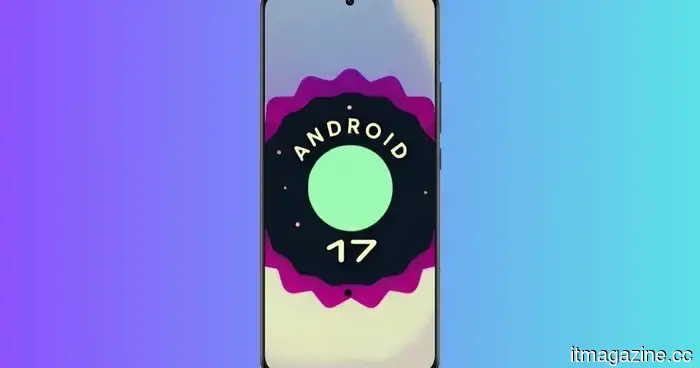 Android 17 prefers to throttle one problematic app instead of affecting the performance of your whole phone.
Android 17 implements stricter memory limits for individual apps, which can slow down or stop apps that consume excessive resources. This gives Google a new method to safeguard the overall performance of the phone, preventing a single memory-intensive app from causing broader issues.
Android 17 prefers to throttle one problematic app instead of affecting the performance of your whole phone.
Android 17 implements stricter memory limits for individual apps, which can slow down or stop apps that consume excessive resources. This gives Google a new method to safeguard the overall performance of the phone, preventing a single memory-intensive app from causing broader issues.
 Baidu's Apollo Go has launched on Uber in Dubai, and operates without a safety driver.
Uber introduced Baidu's Apollo Go in Dubai without a safety driver, just one day following the launch of its first European autonomous vehicle rides in Zagreb, where a safety driver was present.
Baidu's Apollo Go has launched on Uber in Dubai, and operates without a safety driver.
Uber introduced Baidu's Apollo Go in Dubai without a safety driver, just one day following the launch of its first European autonomous vehicle rides in Zagreb, where a safety driver was present.
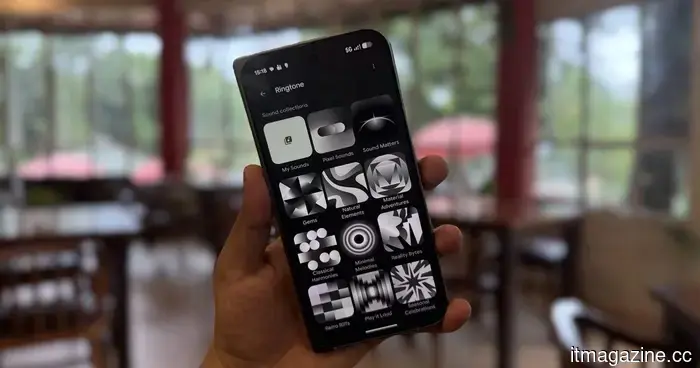 The Google Pixel 11 will allow you to tailor the vibration settings of your phone.
Google's concealed vibration options are finally available. The Pixel 11 series allows you to choose distinct vibrations for ringtones, notifications, and even individual contacts.
The Google Pixel 11 will allow you to tailor the vibration settings of your phone.
Google's concealed vibration options are finally available. The Pixel 11 series allows you to choose distinct vibrations for ringtones, notifications, and even individual contacts.
The Sony neck fan may appear nerdy, but researchers claim it is actually more effective than desk fans.
Researchers discovered that wearable fans for the face and neck can provide almost the same level of comfort as desk fans, while using less energy and producing fewer undesirable drafts.