

Munich Re is acquiring cyber-insurer At-Bay for $575 million, which is 50% of its value from 2021.
Munich Re has announced its agreement to acquire At-Bay, a startup specializing in cyber insurance, for $575 million. This valuation represents less than half of the company’s worth in 2021. The acquisition was revealed by the German insurance group on Wednesday.
The sale price marks a reset for At-Bay, which reached a valuation of $1.35 billion during its last funding round in 2021, as reported by Calcalist’s CTech. The current enterprise value of $575 million is significantly lower, with CTech attributing this decline to the challenging conditions in the technology and insurance sectors since that time.
The deal is expected to be finalized in the first quarter of 2027, pending regulatory approvals and standard conditions, according to Reuters. At-Bay will be integrated into Hartford Steam Boiler, Munich Re’s specialty unit focused on cyber insurance. This acquisition is notable as one of the few large transactions in the insurtech industry, which has cooled down since its peak in 2021.
What At-Bay offers
At-Bay primarily provides cyber insurance for small and medium-sized enterprises, pairing this protection with its own cybersecurity software, a concept it refers to as “InsurSec,” combining insurance and security. The goal is to prevent cyberattacks rather than just compensating for them afterward.
The platform consistently monitors a client's cyber exposure throughout the duration of a policy. It leverages this data to mitigate risks for clients and enhance its underwriting processes, as stated by the company. This data-driven approach aims to result in fewer claims for the insurer and reduced attacks for the clients. This prevention-focused strategy has attracted investors to digital insurers elsewhere.
Founded in 2016 and based in the United States, At-Bay also has Israeli roots, as reported by CTech. Munich Re dates the company’s establishment to 2017 and indicates it employs approximately 280 individuals across the US and Israel. Munich Re identifies itself as a top-10 cyber insurer in the US, reporting gross written premiums of $278 million. At-Bay claims to provide protection to nearly 40,000 US businesses, covering up to $800 billion of their total revenue.
Munich Re's interest
Munich Re characterized the acquisition as a strategic move towards the future of cyber insurance. The industry is transitioning from individual policies to platforms that integrate insurance with security, and Munich Re aims to expand its presence within this evolving landscape.
The focus is on small businesses, which face the same cyber threats as larger enterprises but often lack the necessary resources and tools for defense, Munich Re noted. At-Bay serves around 40,000 businesses in the US and also offers technology and professional liability policies, along with a managed detection and response security solution.
Mike Kerner, a board member of Munich Re, stated that At-Bay is “a perfect addition to our specialty insurance portfolio” and anticipated that it would become a significant contributor to earnings over time. Munich Re already provides standalone cyber insurance and views At-Bay as a means to enhance continuous risk management capabilities.
Hartford Steam Boiler has supported At-Bay since its inception, according to the two companies. Jeffrey O’Shaughnessy, At-Bay’s CEO, communicated that the acquisition would create an integrated system for insurance, security, and claims.
Challenges before the sale
The sale follows a challenging period for At-Bay, as shifts in the insurance market and rising interest rates adversely affected the company. Consequently, it has made workforce reductions, including significant cuts to its development team in Israel.
To date, At-Bay has secured approximately $276 million in funding since its establishment, making the $575 million acquisition price a modest return rather than the substantial gain indicated by the previous $1.35 billion valuation. Co-founder and CEO Rotem Iram described the sale as an opportunity to scale up rather than a retreat, stating that aligning with Munich Re will help bridge the cybersecurity protection gap for 90% of businesses that have been underserved.
The reduced acquisition price reflects a broader trend of declining startup valuations, similar to what was observed this week with the Indian fintech Navi raising funds below its prior target. The previously abundant capital flowing into growth-stage technology ventures has now become much more cautious.
Munich Re's acquisition strategy
This acquisition marks Munich Re’s second significant investment in an Israeli-founded insurtech company. In March 2025, its ERGO division acquired the remaining shares of Next Insurance for around $2.6 billion, according to CTech. These purchases strengthen the group’s connections to Israel's insurtech landscape. Munich Re and ERGO have supported Next Insurance since 2017 prior to fully acquiring it.
As one of the largest insurers globally, Munich Re reported insurance revenue of €60.4 billion in 2025 and has ventured into new risk areas such as rocket launches, renewable energy, and cyber insurance in recent years.
Cyber insurance is a rapidly growing yet unpredictable sector. Insurers have
Otros artículos
 Prosus está invirtiendo $100 millones en Navi, a un precio más bajo del que una vez quería.
Navi, la fintech india de Sachin Bansal, ha recaudado $100 millones de Prosus en su primera ronda institucional. Los informes la valoran en aproximadamente $1.3 mil millones antes de una OPI.
Prosus está invirtiendo $100 millones en Navi, a un precio más bajo del que una vez quería.
Navi, la fintech india de Sachin Bansal, ha recaudado $100 millones de Prosus en su primera ronda institucional. Los informes la valoran en aproximadamente $1.3 mil millones antes de una OPI.
 YouTube está utilizando un enfoque de zanahoria y palo para evitar que los principales creadores se acerquen a Netflix.
YouTube está ofreciendo a los principales creadores millones para que eviten acuerdos con Netflix, según un nuevo informe de Bloomberg, mientras la plataforma intenta mantener a sus mayores estrellas de saltar del barco.
YouTube está utilizando un enfoque de zanahoria y palo para evitar que los principales creadores se acerquen a Netflix.
YouTube está ofreciendo a los principales creadores millones para que eviten acuerdos con Netflix, según un nuevo informe de Bloomberg, mientras la plataforma intenta mantener a sus mayores estrellas de saltar del barco.
 Samsung fija el 27 de agosto para su próximo teléfono Galaxy S, y todas las señales apuntan al S26 FE.
Samsung está organizando un Evento Galaxy el 27 de agosto, y todas las señales apuntan al Galaxy S26 FE. Aquí está lo que la invitación y el teaser de la compañía revelan, junto con todo lo que sabemos hasta ahora sobre el próximo teléfono Fan Edition de Samsung.
Samsung fija el 27 de agosto para su próximo teléfono Galaxy S, y todas las señales apuntan al S26 FE.
Samsung está organizando un Evento Galaxy el 27 de agosto, y todas las señales apuntan al Galaxy S26 FE. Aquí está lo que la invitación y el teaser de la compañía revelan, junto con todo lo que sabemos hasta ahora sobre el próximo teléfono Fan Edition de Samsung.
 OpenAI presenta una vista previa del Procesamiento de Seguridad Privada para mantener cero retención de datos
OpenAI está presentando el Procesamiento de Seguridad Privada, un sistema que, según dice, detecta el uso indebido en las interacciones mientras mantiene intacta la retención de datos en cero.
OpenAI presenta una vista previa del Procesamiento de Seguridad Privada para mantener cero retención de datos
OpenAI está presentando el Procesamiento de Seguridad Privada, un sistema que, según dice, detecta el uso indebido en las interacciones mientras mantiene intacta la retención de datos en cero.
 El CFO de OpenAI dijo al personal que saldrá a bolsa en 2027, o antes.
OpenAI se cotizará en 2027, o antes si el crecimiento se mantiene, dijo la CFO Sarah Friar al personal, ya que Anthropic la supera en ingresos y las pérdidas de OpenAI se amplían.
El CFO de OpenAI dijo al personal que saldrá a bolsa en 2027, o antes.
OpenAI se cotizará en 2027, o antes si el crecimiento se mantiene, dijo la CFO Sarah Friar al personal, ya que Anthropic la supera en ingresos y las pérdidas de OpenAI se amplían.
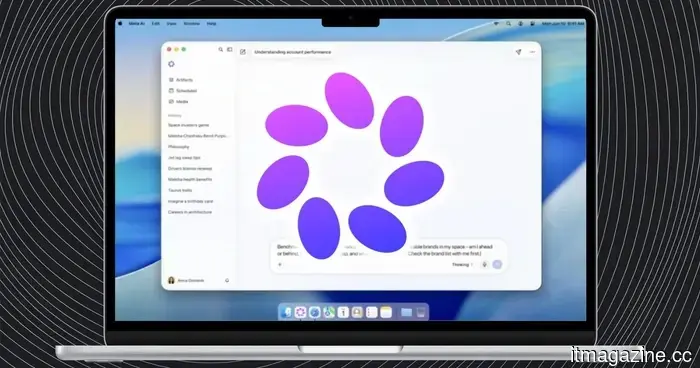 El asistente de IA de Meta finalmente llega a Mac, pero tiene que ponerse al día.
Meta ha lanzado una aplicación de asistente de IA dedicada para Mac que puede analizar ventanas compartidas, tomar dictado en diferentes aplicaciones y ayudar con tareas creativas y de productividad.
El asistente de IA de Meta finalmente llega a Mac, pero tiene que ponerse al día.
Meta ha lanzado una aplicación de asistente de IA dedicada para Mac que puede analizar ventanas compartidas, tomar dictado en diferentes aplicaciones y ayudar con tareas creativas y de productividad.
Munich Re is acquiring cyber-insurer At-Bay for $575 million, which is 50% of its value from 2021.
Munich Re has reached an agreement to acquire the cyber-insurance startup At-Bay for $575 million, which is less than half of its 2021 valuation of $1.35 billion, marking a turning point for the insurtech sector.