

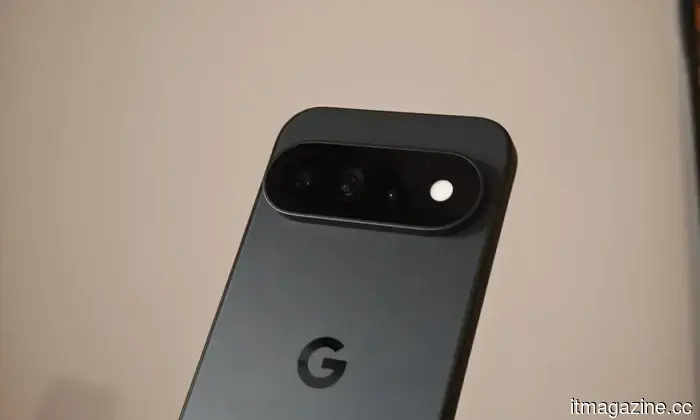
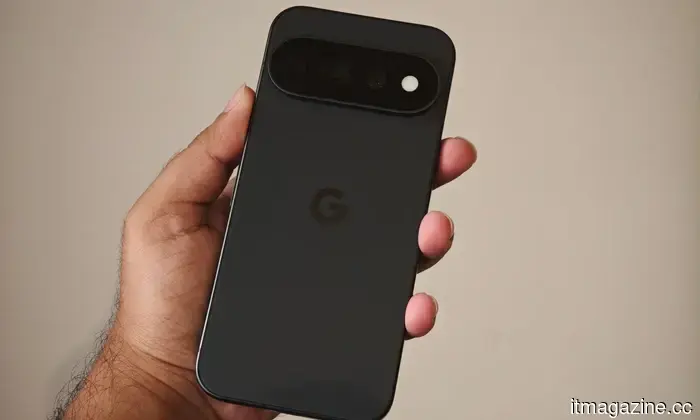
The Pixel 11 Pro rekindled my love for Night Sight.
Night Sight used to be one of those features of the Pixel that I was eager to demonstrate to others. Aiming a Pixel at a scene likely to challenge any smartphone, I could watch the algorithm perform its magic. Google's computational photography had the ability to create images that seemed beyond the capabilities of any phone camera at that time.
Fast forward eight years, and night modes are now commonplace; I've mostly stopped considering them. Nearly every flagship I've recently tested manages to illuminate a dark space by blending multiple exposures to deliver a usable nighttime photo, thanks to longer shutter speeds as well. However, the Pixel 11 Pro has made this unassuming feature more user-friendly than ever.
Google refers to its latest version as Instant Night Sight, asserting that captures can be as much as 4.5 times quicker than previously. After using the Pixel 11 Pro, that figure no longer feels like just another statistic from a keynote presentation. Night Sight has become rapid enough that I often forget I'm relying on a specialized low-light mode.
In my experience, it was quite surprising just how often the Pixel 11 Pro activated Night Sight. Indoor lighting or artificial lighting during the evening frequently triggered its use automatically. Google has become quite liberal in enabling it as light levels drop. This could have been a nuisance if the feature operated like its earlier versions. While the noticeable delay after pressing the shutter could assist in composing a better image, it also risked missing the perfect moment. With the Pixel 11 Pro, many of my low-light shots only take a little longer than standard photos.
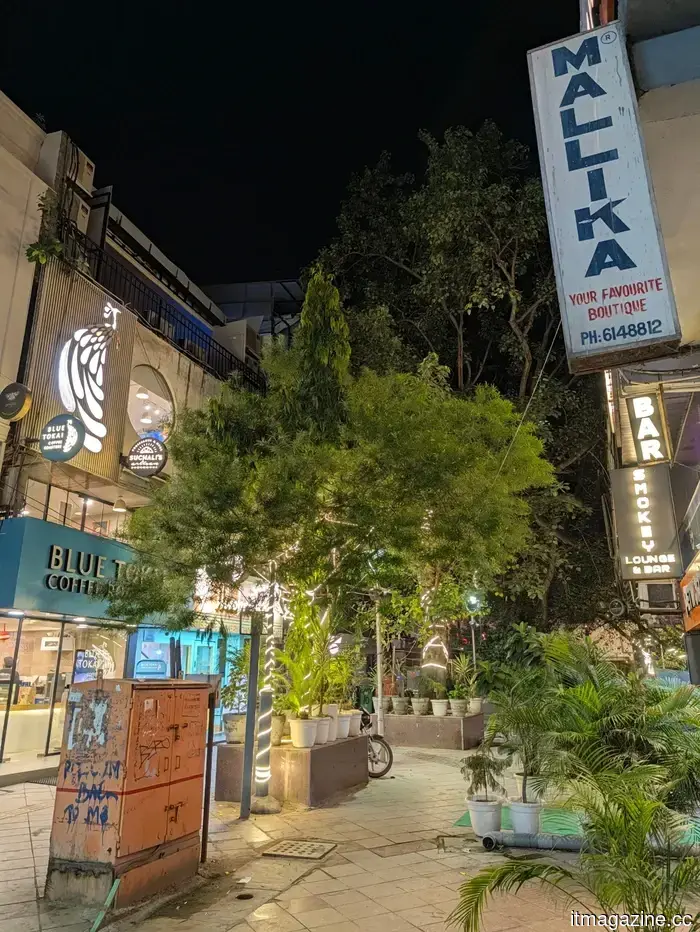
This improvement was particularly evident outside a carefully darkened test environment. I captured a vibrant street at night, surrounded by bright signs, fairy lights, dark foliage, storefronts, and an almost pitch-black sky. The Pixel managed to maintain the darkness of the sky while extracting plenty of detail from the trees and pavement, and the bright signs were kept reasonably controlled rather than transforming into large, glowing blobs, which often occurs in images with extended exposure times.
These images are not flawless by any means, and my unsteady hands may have contributed to that. Nevertheless, I appreciate the photos taken with the modern Night Sight. Google utilizes the additional data to refine shadows and manage challenging highlights to ensure I get a usable image. The entire process was surprisingly effortless. I just needed to point the camera, without worrying about whether I had to manually engage Night Sight.
My most challenging test highlighted the differences clearly
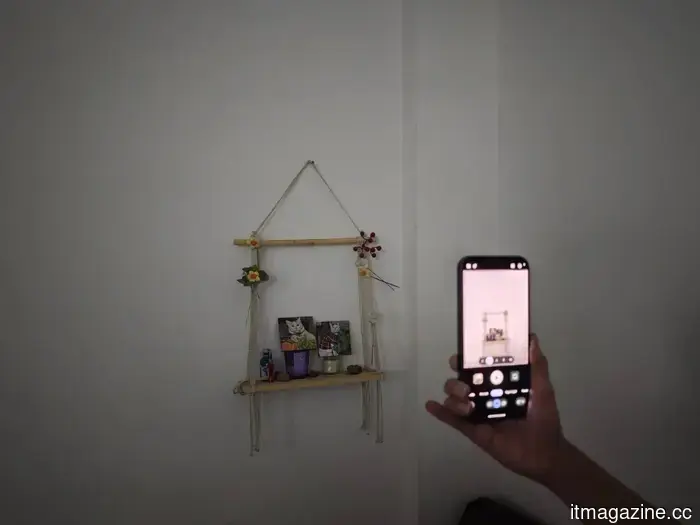
I really pushed the camera indoors. One test scene consisted of a small wall-mounted shelf in a room with minimal ambient light, and the photograph showing the Pixel 11 Pro in my grasp provides a much clearer indication of how dark the room truly was.
I also took a picture of the shelf using the Xiaomi 15, which serves as an intriguing reference since its 1/1.31-inch primary sensor is very close in size to the Pixel 11 Pro’s 1/1.3-inch sensor. This was not a controlled comparison, so I wouldn't declare an overall low-light champion based on these images.
What these photos reveal is how aggressively Google's processing can operate in very low light. The images from the Xiaomi remained much truer to the dim scene I experienced, while the Pixel presented the shelf, ropes, wall decor, paintings, candles, and smaller items in much clearer detail. It retained a good level of detail without overly washing out the colors or artificially enhancing them.
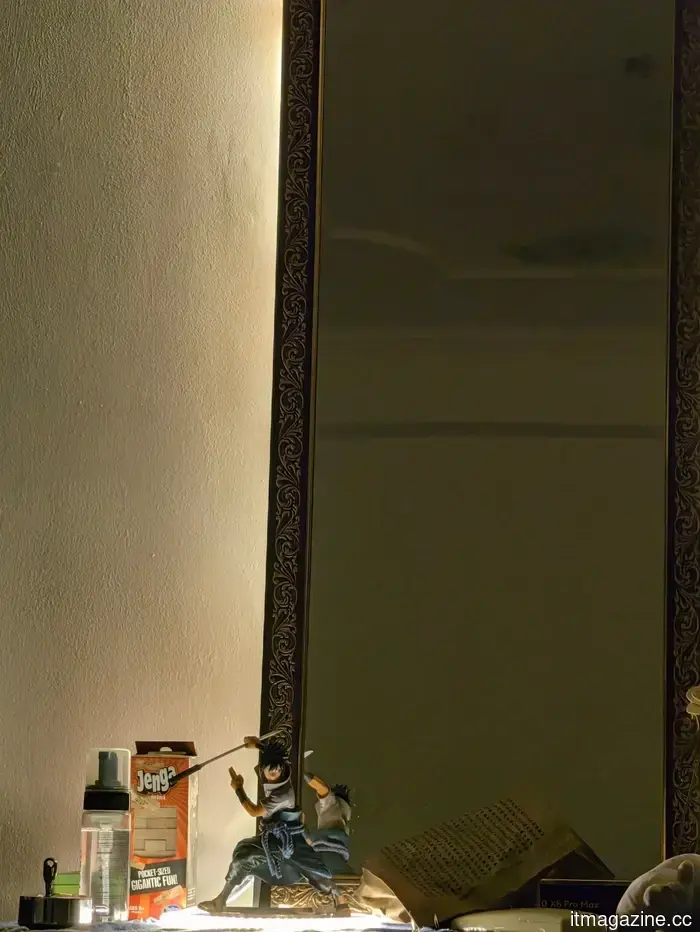
The other indoor photograph, featuring a small figurine beneath a harsh light next to a dark mirror, posed a different challenge. There were deep shadows throughout most of the frame contrasting with an intensely lit subject, yet the Pixel still managed to extract details from the darker areas while preserving the nighttime essence of the scene.
These extreme lighting conditions also highlight where Instant Night Sight transitions from being instant. When the room becomes truly dark, the capture time increases because the camera still needs sufficient information to construct the image. However, the Pixel 11 Pro reaches that threshold less frequently than many other phones I've used recently.
Google transformed the impressive elements of Night Sight
Google introduced Night Sight with the Pixel 3 in 2018, although it wasn’t the first company to delve into handheld computational night photography. Nevertheless, Night Sight became a standout example of Google’s approach to computational photography. When it was first launched, Google touted a system that could deliver detailed low-light images without needing a flash or tripod, and our initial evaluations showed just how impactful the difference could be.
The initial experience came with a clear trade-off. You would press the shutter and wait while the Pixel gathered the necessary data, which made this technology a part of the photographic experience. Instant Night Sight alters that dynamic. Google claims that the average speed improvement is approximately three times compared to last year’s model.
My nighttime shots of brightly lit storefronts, the orange building facade, and the almost pitch-black room required vastly different lighting conditions. Throughout those scenarios, I spent considerably less time contemplating whether Night Sight was engaged





Other articles
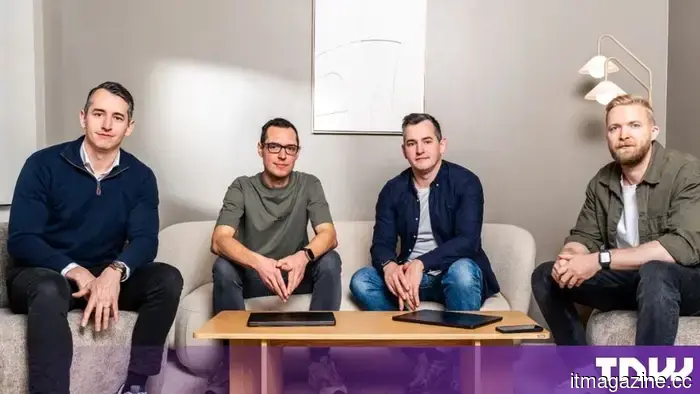 Velatir secures €5 million to grant European companies autonomy over their own AI.
Velatir, located in Odense, has secured €5 million in funding, co-led by Spintop Ventures and Ugly Duckling Ventures, just six months following its pre-seed round.
Velatir secures €5 million to grant European companies autonomy over their own AI.
Velatir, located in Odense, has secured €5 million in funding, co-led by Spintop Ventures and Ugly Duckling Ventures, just six months following its pre-seed round.
 The founder of Unitree states that robots are approaching a 'ChatGPT moment.'
Wang Xingxing mentioned at the World Robot Conference that embodied AI is approaching a “ChatGPT moment,” estimating a timeframe of two to ten years for this development.
The founder of Unitree states that robots are approaching a 'ChatGPT moment.'
Wang Xingxing mentioned at the World Robot Conference that embodied AI is approaching a “ChatGPT moment,” estimating a timeframe of two to ten years for this development.
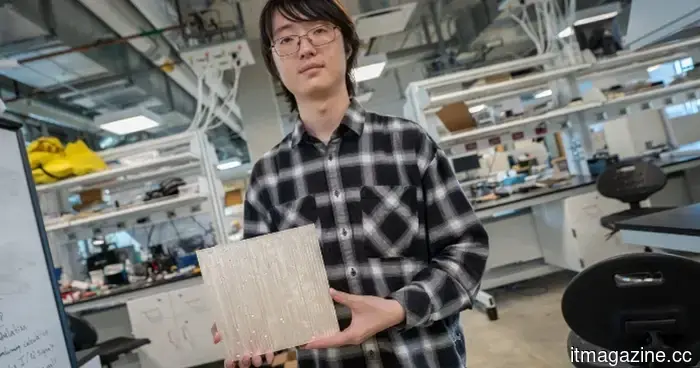 A dull tile aims to resolve the most significant issue with ultra-fast mmWave 5G connections for you.
Researchers at UC San Diego have created low-cost passive reflective tiles that may assist mmWave 5G signals in navigating around walls and other barriers without needing a power source.
A dull tile aims to resolve the most significant issue with ultra-fast mmWave 5G connections for you.
Researchers at UC San Diego have created low-cost passive reflective tiles that may assist mmWave 5G signals in navigating around walls and other barriers without needing a power source.
 Reports indicate that PlayStation is revamping Horizon Hunters Gathering following unsatisfactory playtest results.
According to reports, PlayStation is revamping Horizon Hunters Gathering and removing its live-service model following unfavorable playtests, with employees facing a deadline in December.
Reports indicate that PlayStation is revamping Horizon Hunters Gathering following unsatisfactory playtest results.
According to reports, PlayStation is revamping Horizon Hunters Gathering and removing its live-service model following unfavorable playtests, with employees facing a deadline in December.
 Researchers reveal an alarmingly straightforward method to make AI bots behave unpredictably and bypass safety measures.
This recent research shows how careful, incremental adjustments can deceive AI agents into overlooking their own safety protocols.
Researchers reveal an alarmingly straightforward method to make AI bots behave unpredictably and bypass safety measures.
This recent research shows how careful, incremental adjustments can deceive AI agents into overlooking their own safety protocols.
 A British AI-chip startup is securing funding at a valuation of $6.5 billion following a deal with Anthropic.
British AI-chip startup Fractile is reportedly seeking to raise funds at a valuation of $6.5 billion, according to Bloomberg, which is six times its valuation from May, following a contract to supply Anthropic.
A British AI-chip startup is securing funding at a valuation of $6.5 billion following a deal with Anthropic.
British AI-chip startup Fractile is reportedly seeking to raise funds at a valuation of $6.5 billion, according to Bloomberg, which is six times its valuation from May, following a contract to supply Anthropic.
The Pixel 11 Pro rekindled my love for Night Sight.
Instant Night Sight significantly speeds up low-light photography on the Pixel 11 Pro, and after years of relying on Google’s camera expertise, I find myself impressed once more.