

The CFO of OpenAI informed employees that the company plans to go public in 2027, or possibly even earlier.
OpenAI has announced a timeline for its entry into the stock market. The company is expected to become a public entity in 2027, or potentially earlier if it continues to experience rapid growth, as mentioned by chief financial officer Sarah Friar during an all-hands meeting. CNBC reported on her remarks, citing two individuals familiar with the discussion.
Friar attempted to diminish the significance of the IPO, stating, “The IPO is not a finish line, it is a milestone, another fundraise," according to CNBC. She highlighted that OpenAI secured $122 billion in funding in March, which provides flexibility regarding the timing of the IPO. Essentially, the company does not require the capital an IPO would generate, allowing it to choose its timing.
OpenAI had confidentially submitted its listing request to US regulators in June, but has not publicly disclosed when it intends to go public. Its main competitor, Anthropic, has also filed confidentially and might go public as early as September.
OpenAI previously indicated it might delay its IPO until 2027 to achieve a better valuation, and Friar's recent comment confirms this timeline.
Calming fears
Friar reassured staff that they shouldn't be concerned if Anthropic were to go public first. “We are running our own race," she said according to the sources. This reassurance comes at a critical juncture for the company, as its competitors are gaining ground, leadership has diminished, and costs are escalating.
Anthropic has recently surpassed OpenAI in quarterly sales, reporting higher revenue in the second quarter than OpenAI for the first time, and it also achieved a small operating profit. Meanwhile, OpenAI experienced a significant increase in losses.
The company is also under pressure to defend its valuation. OpenAI is valued at $852 billion, and investors seek a clearer understanding of its financial situation before it goes public, according to CNBC. Concerns have been raised following a series of executive departures.
Investors are also monitoring intensifying competition and the inconsistent trading of the newly public SpaceX, CNBC reported.
The numbers OpenAI is presenting
Friar provided figures intended to illustrate positive momentum. OpenAI's revenue run rate has increased by 35% this quarter, and its enterprise run rate is up by 50%, according to the slides she presented. Its AI coding product has attracted 20 million weekly users, and its annualized revenue run rate recently surpassed $40 billion, as reported by CNBC.
A run rate is different from actual revenue; it projects recent performance over the next year, which may exceed the money the company has officially recorded. Anthropic’s run rate also reached over $65 billion by the end of July, a sevenfold increase from the previous year.
Both companies have utilized run-rate figures to demonstrate their rapid growth to investors.
The picture from the last complete quarter is less favorable. OpenAI communicated to investors that it generated $6.7 billion in the second quarter, an 18% increase from the first quarter. However, its operating loss expanded from $9.3 billion to $12.3 billion during the same timeframe, outpacing revenue growth.
This trend distances the company from profitability just as it prepares for its IPO.
Anthropic, on the other hand, reported approximately $11.6 billion in second-quarter revenue, more than double its previous results, according to The Wall Street Journal. The disparity in performance between the two companies has unsettled some OpenAI shareholders. OpenAI has informed investors that growth has intensified in the current quarter following the launch of new models in July, as per the Journal.
Leadership changes
Discussions about the IPO come amidst a period of instability at the executive level. Last week, OpenAI’s revenue chief, Denise Dresser, left after eight months, following the departure of veteran executive Brad Lightcap to pursue new endeavors.
Fidji Simo, previously considered a potential successor to CEO Sam Altman, stepped back from her product role in July to focus on her health. These departures have caused some investors to express concerns regarding stability within OpenAI’s leadership, as reported by CNBC.
President Greg Brockman downplayed these worries, asserting that the turnover is not “actually that atypical.” He argued that OpenAI is under more scrutiny than other organizations because of its visibility, with every departure being interpreted as a warning sign that wouldn’t occur in a less prominent company.
Facing broader challenges
OpenAI is experiencing pressure from multiple angles simultaneously. Corporate clients are becoming more cautious about expenses related to AI and some are opting for less expensive, open-weight models, including those from competitors in China.
In response, OpenAI has reduced prices on two of its recent models, as noted by the Journal. Additionally, it is subsidizing services for hundreds of millions of users who access ChatGPT for free, which strains its profit margins. At the same time, its significant computing contracts assume it will soon generate hundreds of billions of dollars annually.
Moreover, the company has encountered
Другие статьи
 The CFO of OpenAI informed employees that the company plans to go public in 2027, or possibly earlier.
OpenAI is expected to go public in 2027, or possibly earlier if growth continues, according to CFO Sarah Friar's remarks to employees, as Anthropic surpasses it in revenue and OpenAI's losses increase.
The CFO of OpenAI informed employees that the company plans to go public in 2027, or possibly earlier.
OpenAI is expected to go public in 2027, or possibly earlier if growth continues, according to CFO Sarah Friar's remarks to employees, as Anthropic surpasses it in revenue and OpenAI's losses increase.
 The Sony neck fan may appear nerdy, but researchers claim it is actually more effective than desk fans.
Researchers discovered that wearable fans for the face and neck can provide almost the same level of comfort as desk fans, while using less energy and producing fewer undesirable drafts.
The Sony neck fan may appear nerdy, but researchers claim it is actually more effective than desk fans.
Researchers discovered that wearable fans for the face and neck can provide almost the same level of comfort as desk fans, while using less energy and producing fewer undesirable drafts.
 You'll need to wait until 2027 for the AirPods with integrated cameras that were leaked.
Apple's AirPods with built-in cameras are still expected to launch in 2027, even after a leaked macOS video revealed the AI-driven earbuds utilizing Visual Intelligence.
You'll need to wait until 2027 for the AirPods with integrated cameras that were leaked.
Apple's AirPods with built-in cameras are still expected to launch in 2027, even after a leaked macOS video revealed the AI-driven earbuds utilizing Visual Intelligence.
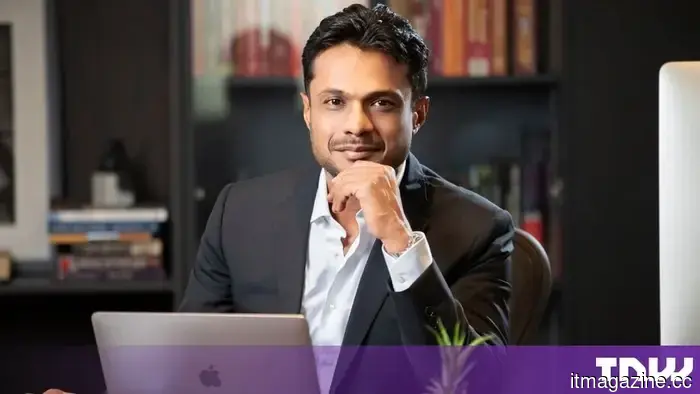 Prosus is investing $100 million in Navi, at a reduced valuation compared to its previous intentions.
Navi, the Indian fintech founded by Sachin Bansal, has secured $100 million from Prosus in its initial institutional funding round. According to reports, this funding values the company at approximately $1.3 billion in anticipation of an IPO.
Prosus is investing $100 million in Navi, at a reduced valuation compared to its previous intentions.
Navi, the Indian fintech founded by Sachin Bansal, has secured $100 million from Prosus in its initial institutional funding round. According to reports, this funding values the company at approximately $1.3 billion in anticipation of an IPO.
 Motorola's sleek new charging puck enters the ranks of Android's compact magnetic accessories.
Leaked photos show Motorola’s Moto Snap magnetic wireless charger, which could provide the Qi2-enabled Edge 70 Max with a charging accessory similar to Pixelsnap.
Motorola's sleek new charging puck enters the ranks of Android's compact magnetic accessories.
Leaked photos show Motorola’s Moto Snap magnetic wireless charger, which could provide the Qi2-enabled Edge 70 Max with a charging accessory similar to Pixelsnap.
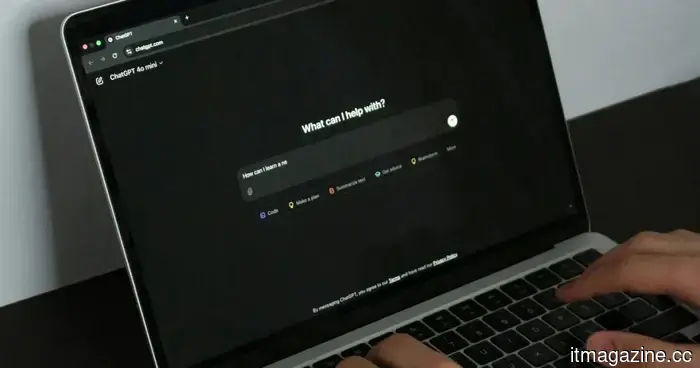 OpenAI aims to track AI misuse without requiring customers to submit their data.
OpenAI's Private Safety Processing aims to identify abuse across various interactions while maintaining Zero Data Retention, directly contrasting with Anthropic's 30-day data retention policy.
OpenAI aims to track AI misuse without requiring customers to submit their data.
OpenAI's Private Safety Processing aims to identify abuse across various interactions while maintaining Zero Data Retention, directly contrasting with Anthropic's 30-day data retention policy.
The CFO of OpenAI informed employees that the company plans to go public in 2027, or possibly even earlier.
CFO Sarah Friar informed employees that OpenAI is set to go public in 2027, or potentially earlier if growth continues, as Anthropic surpasses it in revenue and OpenAI experiences increasing losses.