
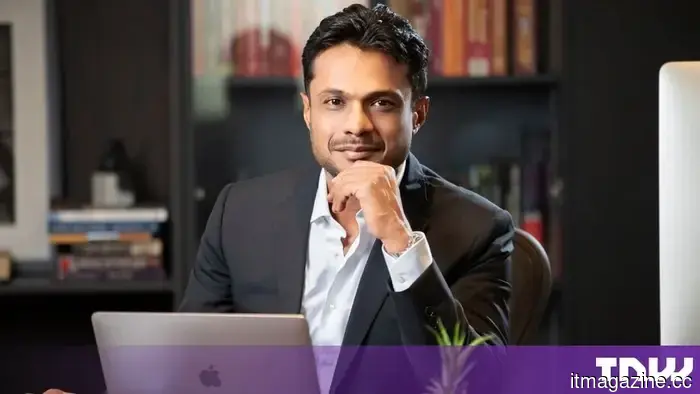
Prosus is investing $100 million in Navi, at a reduced valuation compared to its previous intentions.
Navi, the Indian fintech launched by Flipkart co-founder Sachin Bansal, has secured $100 million from investor Prosus. This marks the company's first institutional funding from an outside source since its inception eight years ago, as reported by TechCrunch. Navi is gearing up for a public offering.
The investment values Navi at approximately $1.3 billion, according to sources cited by TechCrunch. However, Navi did not reveal the valuation, the portion of ownership Prosus is acquiring, or its intended use for the funds, as reported by Inc42. Bansal did not respond to TechCrunch's inquiry regarding the valuation. Bloomberg, which also covered the deal, stated that Navi confirmed the investment but did not disclose the price.
The valuation represents a decrease from the company's earlier goals. In 2024, Navi sought external funding at a valuation of around $2 billion, TechCrunch noted. The new funding round values it lower, at about $1.3 billion. A funding round that is lower than a previous target is often referred to as a down round, which may indicate market cooling rather than poor business performance.
The Economic Times also reported the approximate $1.3 billion figure, although Navi did not comment on it.
What Navi does
Headquartered in Bengaluru, Navi provides various financial services, including digital payments, lending, insurance, and mutual funds. Bansal co-founded it in 2018 alongside Ankit Agarwal after leaving Flipkart.
Bansal transformed Flipkart into India's largest online retailer and sold his stake in 2018, shortly before Walmart acquired control of the company. He subsequently invested hundreds of millions of dollars of his own funds into Navi and has expressed his desire to develop it into a bank. He stepped down as CEO in February 2025 but continues as executive chairman.
Navi has emerged as one of India's prominent payment applications, utilizing the government-backed Unified Payments Interface (UPI) and ranking fourth in the nation by transaction volume. It follows Walmart-owned PhonePe, Google Pay, and Paytm, according to TechCrunch.
In July, Navi processed over 947 million transactions valued at approximately $5 billion, according to official statistics. UPI is India's primary payment method, and strong positioning in this space provides Navi with a considerable platform to market its other products.
The money and the backer
Prosus is a Dutch technology investor with deep connections in the consumer internet sector. It has actively supported fintech ventures, recently leading a significant funding round for European insurer Alan. It has reported strong results, with profits approximately doubling earlier this year.
Prosus characterized the deal as a commitment to Navi's potential. Ashutosh Sharma, leading Prosus’s investments in India, explained the rationale for the investment, highlighting Navi's extensive user base, diverse business lines, and technology-driven approach. He noted that Navi's team had “executed extremely well” the past year despite challenging market conditions.
Bansal expressed enthusiasm for the deal, referring to his long-standing connections with Prosus and its parent company, Naspers, spanning over a decade. He described the investment as a "strong endorsement" of Navi's vision. The transaction still requires regulatory approvals, including from the Competition Commission of India, and is also subject to customary closing conditions, as mentioned by Navi.
A push toward profit
Navi claims its business is becoming more stable, having achieved consolidated profitability in the fourth quarter of its 2026 financial year, although it did not release specific figures. For the entire year, TechCrunch reported revenues of about $323 million. However, reported figures for the group’s profits varied across sources, leaving the complete annual profit situation unclear.
The company’s lending division is expanding. Navi Finserv, the non-bank lender, manages assets over ₹130 billion (approximately $1.4 billion), according to the company. Its standalone net profit increased by 32% over the year, as reported by Inc42, though broader group figures were mixed. Navi has asserted that its lending is expanding while maintaining risk control.
Navi claims to serve hundreds of millions of users throughout India. This scale is central to its appeal to investors as it moves toward listing. It has positioned itself as a technology-focused alternative to the established banks and payment companies in the country. Bansal's long-term goal of acquiring a banking license would directly position it in competition with these entities.
The road to an IPO
This funding arrives as Navi prepares for a public return, reportedly aiming for an initial public offering of around ₹30 billion (approximately $314 million). Navi could refile its draft documents with India’s market regulator by December, according to Inc42.
The company has engaged financial advisors for its planned listing, appointing JM Financial, Kotak Mahindra Capital, Goldman Sachs, and JPMorgan, as Inc42 reported. Partnering with a prominent investor like Prosus can be advantageous for a private company as it starts to attract public-market
Altri articoli
 Google is providing students with a complimentary year of AI Pro and has launched a new Gemini Student Hub.
Google is offering qualified college students a complimentary year of AI Pro and has introduced a new Student Hub filled with study resources.
Google is providing students with a complimentary year of AI Pro and has launched a new Gemini Student Hub.
Google is offering qualified college students a complimentary year of AI Pro and has introduced a new Student Hub filled with study resources.
 Comcast is converting millions of routers into motion sensors.
Comcast is activating WiFi Motion, a complimentary feature that transforms millions of Xfinity routers into motion sensors without cameras, which has sparked concerns about privacy.
Comcast is converting millions of routers into motion sensors.
Comcast is activating WiFi Motion, a complimentary feature that transforms millions of Xfinity routers into motion sensors without cameras, which has sparked concerns about privacy.
 The CFO of OpenAI informed employees that the company plans to go public in 2027, or possibly even earlier.
CFO Sarah Friar informed employees that OpenAI is set to go public in 2027, or potentially earlier if growth continues, as Anthropic surpasses it in revenue and OpenAI experiences increasing losses.
The CFO of OpenAI informed employees that the company plans to go public in 2027, or possibly even earlier.
CFO Sarah Friar informed employees that OpenAI is set to go public in 2027, or potentially earlier if growth continues, as Anthropic surpasses it in revenue and OpenAI experiences increasing losses.
 Motorola's sleek new charging puck becomes a part of Android's compact magnetic accessories.
Leaked images show Motorola's Moto Snap magnetic wireless charger, possibly providing the Qi2-enabled Edge 70 Max with a charging accessory similar to Pixelsnap.
Motorola's sleek new charging puck becomes a part of Android's compact magnetic accessories.
Leaked images show Motorola's Moto Snap magnetic wireless charger, possibly providing the Qi2-enabled Edge 70 Max with a charging accessory similar to Pixelsnap.
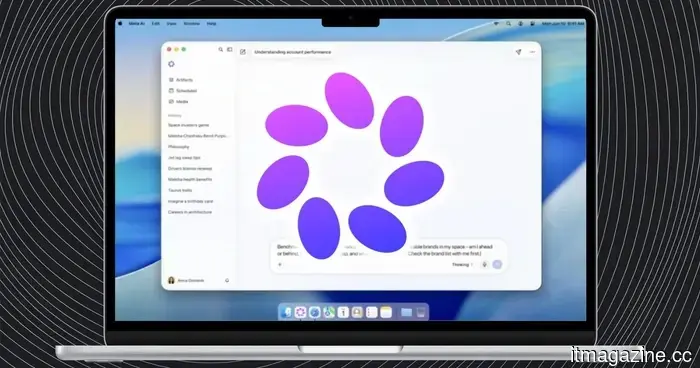 Meta's AI assistant has finally arrived on Mac, but it needs to catch up in several areas.
Meta has introduced a specialized AI assistant application for Mac that is capable of analyzing shared windows, providing dictation across various applications, and assisting with creative and productivity-related tasks.
Meta's AI assistant has finally arrived on Mac, but it needs to catch up in several areas.
Meta has introduced a specialized AI assistant application for Mac that is capable of analyzing shared windows, providing dictation across various applications, and assisting with creative and productivity-related tasks.
 OpenAI aims to track AI misuse without requiring customers to provide their data.
OpenAI’s Private Safety Processing aims to identify abuse over numerous interactions while maintaining Zero Data Retention, showcasing a privacy approach that directly opposes Anthropic’s 30-day data retention policy.
OpenAI aims to track AI misuse without requiring customers to provide their data.
OpenAI’s Private Safety Processing aims to identify abuse over numerous interactions while maintaining Zero Data Retention, showcasing a privacy approach that directly opposes Anthropic’s 30-day data retention policy.
Prosus is investing $100 million in Navi, at a reduced valuation compared to its previous intentions.
Navi, the Indian fintech founded by Sachin Bansal, has secured $100 million from Prosus in its initial institutional funding round. According to reports, this funding values the company at approximately $1.3 billion in anticipation of an IPO.