

Milan's Domyn secures over $1 billion in the largest AI funding round in Europe, primarily through debt.
Domyn has secured over $1 billion, making it one of the largest funding rounds for a European AI firm. However, only around 10% of this amount is in equity. The Milan-based company raised approximately $1.1 billion in total, with a distribution of about 10% equity and 90% debt, as reported by Sifted. This funding structure is significant because it reflects a preference for acquiring hardware rather than employing researchers.
Mistral followed a similar approach, albeit on a smaller scale, acquiring $830 million from seven banks to establish its own data center near Paris. European AI companies have realized that lenders are willing to finance facilities filled with GPUs under terms that no venture capital would provide for a model.
Domyn is developing the Colosseum, a supercomputer located in southern Italy, which comprises Nvidia and Vertiv components. It operates 80 Nvidia GB200 NVL72 systems, utilizing nearly 6,000 Grace Blackwell chips, consuming about 7MW and achieving 115 exaflops, specifically designed for models exceeding a trillion parameters.
The company was established in Milan in 2016 under the name iGenius by Uljan Sharka, who continues to lead the business, and it underwent a rebranding to Domyn last year. It offers its products to banks, insurers, pharmaceutical firms, defense contractors, and governmental entities, promoting the idea that these clients prefer owning the model instead of merely renting access.
“We identified an opportunity not only to help regulated industries adopt AI but to enable them to be AI companies within their sectors,” Sharka explained to Semafor in April.
Clients receive access to the codebase and can conduct pre-training on their own data, with models distributed via Microsoft’s Foundry platform. Domyn has rolled out two models: a smaller one intended for general enterprise applications and a larger, mission-critical system it has benchmarked against GPT-4o and Claude 3.5 Sonnet, though these comparisons have not been independently confirmed.
Domyn's ambitions are quite expansive. The company has expressed a goal of investing $10 billion over the next three years and achieving €1 billion in revenue within that timeframe, starting from a base that trade reports estimate in the tens of millions of annual recurring revenue.
Sharka has been upfront regarding the scale of the vision. “$1 trillion is the new unicorn right now,” he remarked to Semafor. “If you’re not discussing $1 trillion, you’re out of touch.”
This development comes amid a European expansion that has seen more announcements than tangible outcomes. Brussels initiated bidding for seven AI gigafactories as part of a €30 billion initiative, with French consortia bidding $10 billion for one location. However, this scheme has faced delays that have frustrated partners.
Italy has taken its own approach, establishing a €1 billion national AI fund alongside a set of penalties for misuse. Domyn is the most prominent private beneficiary of this initiative and has collaborated with Nvidia and the Abu Dhabi group G42 on the Italian supercomputer.
Skepticism regarding the broader European effort is prevalent and often justified. Renting capacity through a GPU-as-a-service model can create a false sense of sovereignty, which is one reason why Domyn's choice to own the hardware is more intriguing than the headline figures.
Owning the equipment also comes with the responsibility of managing it. A supercomputer depreciates according to schedules determined in Santa Clara, and the lifespan of a Blackwell rack is shorter than that of most infrastructure debt.
Several details about this funding round remain undisclosed, including the list of investors, the valuation, the lenders' identities, and the terms of the debt. Domyn has not made an official announcement regarding this funding.
This last point is particularly noteworthy. Debt-financed computing relies on the assumption that the machines will be sufficiently utilized to cover the loan, and the repayment schedule reflects the company's outlook on demand.
Domyn last raised funds in 2024, securing approximately €650 million in project financing at an estimated €1.7 billion valuation following a €70 million Series A. The current funding round exceeds the total of its previous financing history and has been raised based on a machine rather than market conditions.
Other articles
 Slack introduces Slack Code, a platform for teams and AI agents to collaborate.
Slack Code enables teams and AI agents to write, review, and deploy code within a single channel. Claude, ChatGPT, Devin, and Copilot are the founding partners of this initiative.
Slack introduces Slack Code, a platform for teams and AI agents to collaborate.
Slack Code enables teams and AI agents to write, review, and deploy code within a single channel. Claude, ChatGPT, Devin, and Copilot are the founding partners of this initiative.
 Slack unveils Slack Code, a platform where teams and AI agents collaborate.
Slack Code enables teams and AI agents to collaborate on writing, reviewing, and deploying code within a single channel. Founding partners include Claude, ChatGPT, Devin, and Copilot.
Slack unveils Slack Code, a platform where teams and AI agents collaborate.
Slack Code enables teams and AI agents to collaborate on writing, reviewing, and deploying code within a single channel. Founding partners include Claude, ChatGPT, Devin, and Copilot.
 Octopus Charge consolidates 210,000 US charging stations into a single app, excluding Tesla, Ionna, and Electrify America.
Octopus Energy has introduced Octopus Charge in North America, featuring 210,000 chargers. In Europe, the service boasts 1.5 million chargers, which is attributed to regulatory requirements.
Octopus Charge consolidates 210,000 US charging stations into a single app, excluding Tesla, Ionna, and Electrify America.
Octopus Energy has introduced Octopus Charge in North America, featuring 210,000 chargers. In Europe, the service boasts 1.5 million chargers, which is attributed to regulatory requirements.
 Cinemas, educational institutions, and ICE are all prohibiting Meta smart glasses.
Cinemas, US educational institutions, and ICE are all imposing limitations on Meta smart glasses, each for reasons that are unrelated. The regulation in cinemas goes back to 2014.
Cinemas, educational institutions, and ICE are all prohibiting Meta smart glasses.
Cinemas, US educational institutions, and ICE are all imposing limitations on Meta smart glasses, each for reasons that are unrelated. The regulation in cinemas goes back to 2014.
 A data center rack utilizing living neurons has recently begun operation in Singapore.
In Singapore, NUS, DayOne, and Cortical Labs have developed a 20-unit rack of biological computers. However, the assertion regarding its efficiency is made without any accompanying figures.
A data center rack utilizing living neurons has recently begun operation in Singapore.
In Singapore, NUS, DayOne, and Cortical Labs have developed a 20-unit rack of biological computers. However, the assertion regarding its efficiency is made without any accompanying figures.
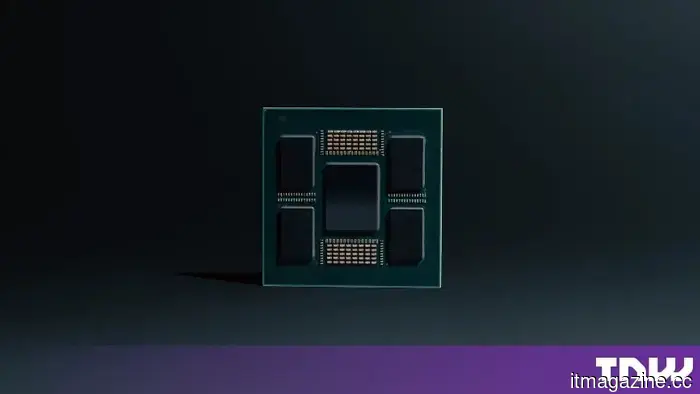 Waymo developed its own chip specifically for robotaxis and made its list of suppliers public.
Waymo has released details about its robotaxi computing architecture, which includes a custom 5nm chip and identifies its seven suppliers. Nvidia and AMD remain included in this list.
Waymo developed its own chip specifically for robotaxis and made its list of suppliers public.
Waymo has released details about its robotaxi computing architecture, which includes a custom 5nm chip and identifies its seven suppliers. Nvidia and AMD remain included in this list.
Milan's Domyn secures over $1 billion in the largest AI funding round in Europe, primarily through debt.
Domyn, based in Milan, has secured approximately $1.1 billion, with around 90% of that amount being debt, to enhance the Colosseum supercomputer it developed in collaboration with Nvidia in southern Italy.