
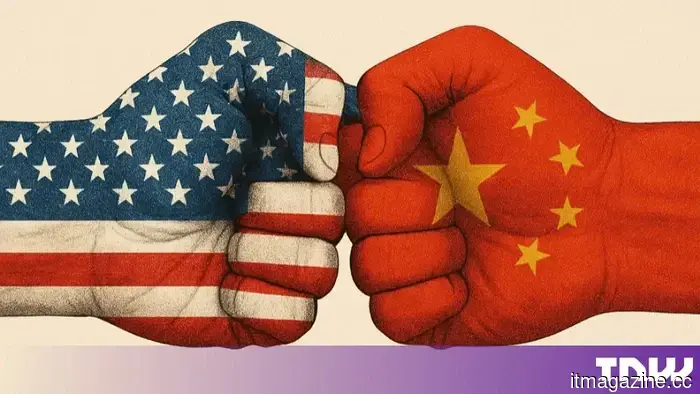
The United States is on the verge of compelling its allies to choose a side in the AI cold war.
Washington is preparing to present its partners with a clear ultimatum, and it's not delicate in nature. A draft letter from the State Department, as reported by Reuters, indicates that the US will inform allied nations that they must decide between aligning with the American or Chinese artificial intelligence ecosystems, as dual membership is no longer feasible.
This letter is directed at the 35 countries that signed the “AI Opportunity Statement” in June, and its tone is notably straightforward for a diplomatic communication. The draft states, “To be part of everything is to be part of nothing.” It emphasizes that signing the Pax Silica Declaration entails a significant commitment, rather than merely a subscription.
The initiative behind this is Pax Silica, launched last year to secure supply chains for AI models, semiconductors, and essential minerals. The incentive for participation is access to shared AI investment opportunities exclusive to members, while the consequence of signing onto China's competing framework is exclusion from these opportunities. This offers leverage disguised as membership.
So far, around two dozen nations, including Japan, Australia, and South Korea, have joined Pax Silica. Currently, only Kazakhstan straddles both the American and Chinese groups, which is less surprising given its status as a major source of critical minerals.
This uncomfortable dual affiliation is exactly the scenario the letter aims to eliminate, putting Kazakhstan’s balancing position in jeopardy. One US official articulated the rationale clearly: “It’s difficult to see how a country can credibly position themselves as trusted partners in one technology ecosystem while simultaneously signing up for an initiative designed by China to advance a competing vision for AI.” Implicitly, neutrality is now perceived in Washington as a form of defection.
The timing appears deliberate. Inexpensive Chinese open-weight models have been gradually encroaching on the market that was once dominated by proprietary American systems, and a cost-effective Chinese model is now approaching parity with Anthropic and OpenAI in terms of both price and capabilities. As the competitive edge narrows, geopolitical dynamics begin to look like a useful substitute.
China, for its part, has shifted to a more aggressive stance. In July, Xi Jinping initiated a competing “World Artificial Intelligence Cooperation Organization,” explicitly focused on open-weight technology and available to all who wish to join.
This organization stands as the counterpart to Pax Silica, with its openness being a key feature. Beijing is also contemplating restrictions on international access to its best models, suggesting a significant shift in the balance of power.
For those who experienced the previous decade, this scenario feels familiar. It recalls the pressure campaign surrounding Huawei and 5G, now reimagined for large language models, where allies are once again being encouraged to commit to one vendor over another.
However, opinions in Silicon Valley are not unanimous. Mark Zuckerberg has suggested that the US should refrain from blocking Chinese AI models, arguing that such bans often backfire.
Europe, predictably, finds itself caught in the middle. The bloc has spent years advocating for “strategic autonomy,” which is a more diplomatic way of saying it prefers not to choose sides between Washington and Beijing. Being presented with a line to sign and instructed to pick a side is precisely what it sought to avoid, and the draft letter provides little room for maneuvering.
The State Department has officially declined to comment on what it termed “purportedly leaked internal documents,” which is diplomatic language indicating limited acknowledgment while refraining from outright denial.
The letter may still be modified before sending, but the overall trend is evident: the AI cold war has quietly introduced a loyalty test, signaling the end of the comfortable phase of indecision for America’s partners.
Other articles
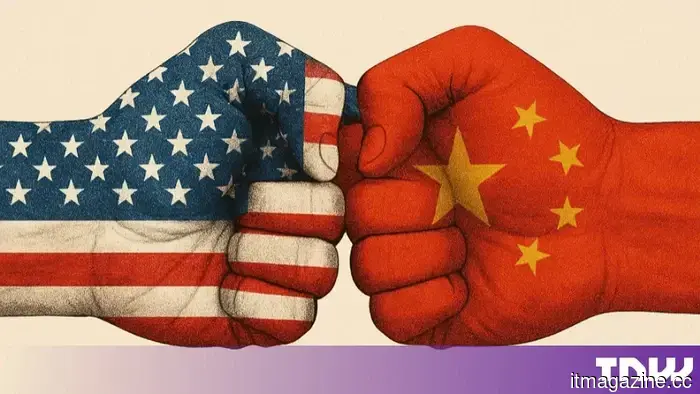 The United States is poised to force its allies to choose a side in the AI cold war.
A leaked letter from the State Department alerts 35 allied nations that they cannot participate in both American and Chinese AI initiatives, transforming the Pax Silica agreement into a measure of loyalty.
The United States is poised to force its allies to choose a side in the AI cold war.
A leaked letter from the State Department alerts 35 allied nations that they cannot participate in both American and Chinese AI initiatives, transforming the Pax Silica agreement into a measure of loyalty.
 Alibaba divests its Lingxi games division to finance a comprehensive investment in AI.
Alibaba is divesting its gaming subsidiary Lingxi Games to the private-equity firm Trustar Capital in a transaction worth between $1.5 billion and over $2 billion, to support its shift towards AI and cloud initiatives.
Alibaba divests its Lingxi games division to finance a comprehensive investment in AI.
Alibaba is divesting its gaming subsidiary Lingxi Games to the private-equity firm Trustar Capital in a transaction worth between $1.5 billion and over $2 billion, to support its shift towards AI and cloud initiatives.
 The SafePal breach has exposed the addresses, but the cryptocurrency remains secure, which could pose a more significant issue.
SafePal, the cryptocurrency wallet manufacturer supported by Binance, has reported a security breach that has revealed the names and physical addresses of almost 40,000 customers, increasing the risks of phishing and physical attacks.
The SafePal breach has exposed the addresses, but the cryptocurrency remains secure, which could pose a more significant issue.
SafePal, the cryptocurrency wallet manufacturer supported by Binance, has reported a security breach that has revealed the names and physical addresses of almost 40,000 customers, increasing the risks of phishing and physical attacks.
 According to reports, Stripe has acquired OpenRouter, the AI model routing platform, for more than $7 billion.
Stripe is said to have finalized a deal to acquire OpenRouter, the AI platform that directs traffic to over 400 models, for more than $7 billion. This move reflects a belief that sustainable revenue in AI lies in metering and billing.
According to reports, Stripe has acquired OpenRouter, the AI model routing platform, for more than $7 billion.
Stripe is said to have finalized a deal to acquire OpenRouter, the AI platform that directs traffic to over 400 models, for more than $7 billion. This move reflects a belief that sustainable revenue in AI lies in metering and billing.
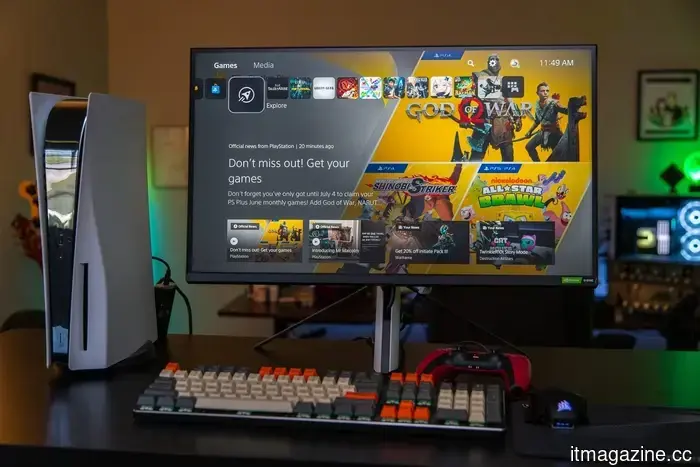 I don't believe that eliminating PlayStation discs will lead to lower game prices.
A former executive from Square Enix claims that discontinuing PlayStation discs could lower the prices of digital games, yet Sony's restricted storefront and pricing trials indicate the opposite.
I don't believe that eliminating PlayStation discs will lead to lower game prices.
A former executive from Square Enix claims that discontinuing PlayStation discs could lower the prices of digital games, yet Sony's restricted storefront and pricing trials indicate the opposite.
 Stripe has allegedly acquired OpenRouter, the AI model routing technology, for more than $7 billion.
Stripe has supposedly completed an agreement to acquire OpenRouter, the AI platform that manages traffic for over 400 models, for more than $7 billion, betting that sustainable profits in AI lie in metering and billing.
Stripe has allegedly acquired OpenRouter, the AI model routing technology, for more than $7 billion.
Stripe has supposedly completed an agreement to acquire OpenRouter, the AI platform that manages traffic for over 400 models, for more than $7 billion, betting that sustainable profits in AI lie in metering and billing.
The United States is on the verge of compelling its allies to choose a side in the AI cold war.
A leaked letter from the State Department cautions 35 allied nations that they cannot participate in both American and Chinese AI initiatives, transforming the Pax Silica agreement into a test of loyalty.