
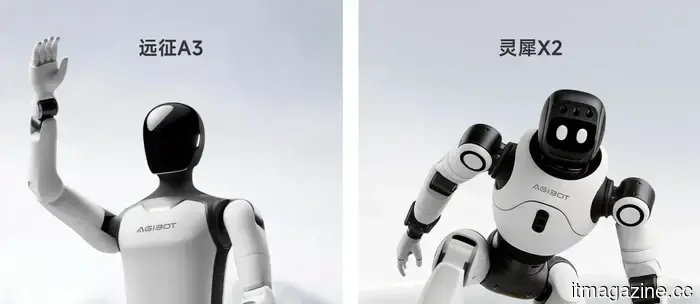
Robotic firms are transitioning into AI companies as AgiBot unveils the emerging dynamics of competition in embodied AI.
A few years ago, competition among humanoid robot companies appeared quite clear-cut: any company that could create a robot had a shot at capturing the market. However, by 2026, this dynamic is evolving.
The actions taken by AgiBot this year illustrate how the definitions of a robotics company are being transformed. Instead of merely being a hardware manufacturer focused on creating robot bodies, AgiBot is transitioning into an AI-centric organization that integrates robots with foundation models, data platforms, and simulation systems.
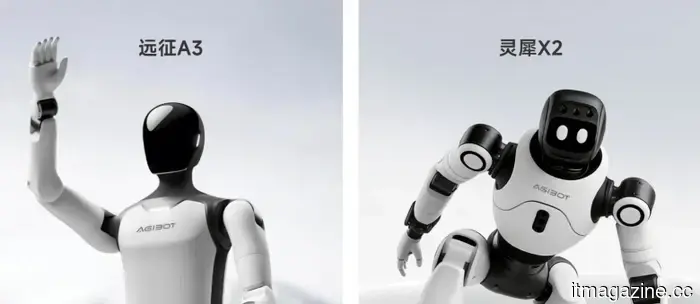
In 2026, AgiBot has further developed products like the Expedition A3 while enhancing its embodied AI models and data infrastructure. In April, the company launched GO-2, its embodied foundation model, which improves the robots’ capability to comprehend, strategize, and execute tasks.
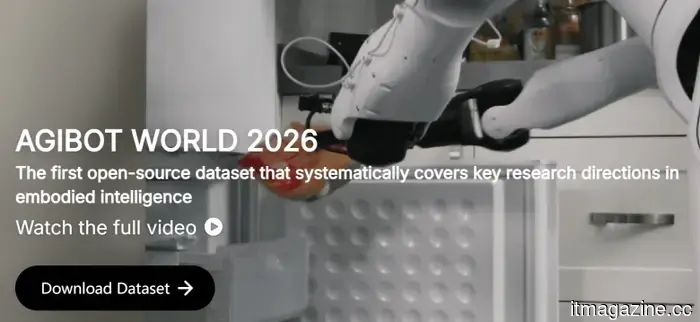
Simultaneously, Genie Sim 3.0 utilizes simulation environments to produce training data. AgiBot has also initiated projects such as AGIBOT WORLD and the GE-2 Action World Model. These initiatives consolidate data, models, and robotic hardware into an increasingly cohesive technology framework.
Collectively, these advancements indicate a distinct trend: the robot is progressively transitioning from being the primary product to becoming a vessel for an intelligent system.
Historically, the essential capabilities in robotics revolved around mechanical design, joint modules, motion control, and supply chain management. Generally, a more agile, reliable, and cost-effective robot would have a competitive advantage.
However, as more firms address the fundamental hurdles of robotic movement, new challenges are surfacing. Can robots navigate complex environments? Can they perform tasks for which they were not specifically programmed? Can they learn from a single execution and apply that knowledge to other robots? At their core, these questions increasingly echo those encountered by AI.
As the sector matures, competition in embodied AI in 2026 is shifting focus from manufacturing capabilities to learning capabilities. A significant change is the rapidly escalating importance of data.
AgiBot’s existing AGIBOT WORLD has amassed millions of real-world robot data samples. In 2026, Genie Sim 3.0 has opened access to over 10,000 hours of simulation data and established an evaluation framework covering more than 100,000 scenarios, as reported by the company.
Additionally, AgiBot introduced its Hive Data Co-Creation Initiative, aiming to achieve data production capabilities at a scale of tens of millions of hours in 2026. From gathering real-world data and conducting simulation training to model iterations, AgiBot is gradually constructing a complete data cycle.
Since obtaining real-world data is expensive, simulation enables robots to repeatedly test and learn within virtual environments before applying those findings in the real world, creating a cycle of real-world data, simulation training, model enhancements, and robotic execution.
Once this cycle is in place, competition among robotics companies will no longer rely solely on hardware specifications. Instead, firms will increasingly compete on the magnitude of their data, the robustness of their models, and the speed of their iterations.
What AgiBot aims to create is not just a collection of individual robot products, but a cohesive system that encompasses robotic hardware, data, models, and development tools. As robots operate in the physical world, data fuels the learning process, models cultivate generalized capabilities, and platforms facilitate training and deployment of robots.
This approach significantly contrasts with that of traditional robotics firms and increasingly aligns with the developmental trajectory of AI companies.
However, this shift does not imply that hardware is becoming less crucial. To the contrary, dependable mechanical structures, cost management, and large-scale manufacturing will remain vital in determining whether robots can effectively penetrate the market. Yet, future competition may transcend a simple hardware showdown. It will likely evolve into a comprehensive contest involving hardware, models, data, and real-world applications.
Thus, what truly warrants attention in 2026 may shift from which company has developed the most advanced humanoid robot to which can establish a system that facilitates robots’ continual enhancement in intelligence.
While the past challenge for the industry was whether robots could move, the current challenge is whether they can learn. Analyzing AgiBot’s strategy this year, it becomes clear that the robotics industry is transitioning as robot companies increasingly embrace an AI identity.

Other articles
 I don't believe that eliminating PlayStation discs will lead to lower game prices.
A former executive from Square Enix claims that discontinuing PlayStation discs could lower the prices of digital games, yet Sony's restricted storefront and pricing trials indicate the opposite.
I don't believe that eliminating PlayStation discs will lead to lower game prices.
A former executive from Square Enix claims that discontinuing PlayStation discs could lower the prices of digital games, yet Sony's restricted storefront and pricing trials indicate the opposite.
 Anthropic's nearly $2 trillion IPO is based on a revenue projection for 2028.
Anthropic's IPO valuation is said to depend on an internal projection of $190 billion to $200 billion in revenue by 2028, a two-year forecast that relies on the continuation of the AI boom.
Anthropic's nearly $2 trillion IPO is based on a revenue projection for 2028.
Anthropic's IPO valuation is said to depend on an internal projection of $190 billion to $200 billion in revenue by 2028, a two-year forecast that relies on the continuation of the AI boom.
 The SafePal breach has exposed the addresses, but the cryptocurrency remains secure, which could pose a more significant issue.
SafePal, the cryptocurrency wallet manufacturer supported by Binance, has reported a security breach that has revealed the names and physical addresses of almost 40,000 customers, increasing the risks of phishing and physical attacks.
The SafePal breach has exposed the addresses, but the cryptocurrency remains secure, which could pose a more significant issue.
SafePal, the cryptocurrency wallet manufacturer supported by Binance, has reported a security breach that has revealed the names and physical addresses of almost 40,000 customers, increasing the risks of phishing and physical attacks.
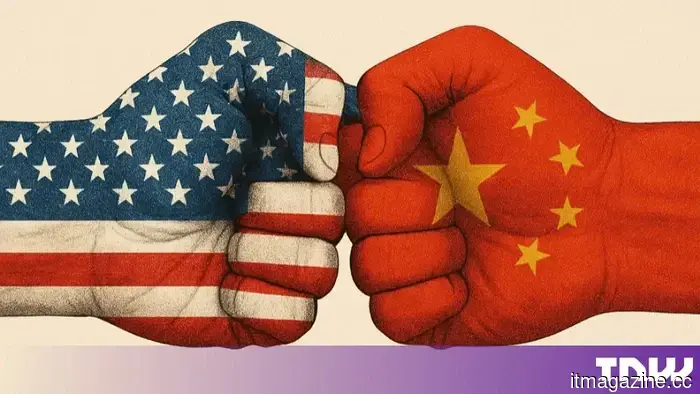 The United States is on the verge of compelling its allies to choose a side in the AI cold war.
A leaked letter from the State Department cautions 35 allied nations that they cannot participate in both American and Chinese AI initiatives, transforming the Pax Silica agreement into a test of loyalty.
The United States is on the verge of compelling its allies to choose a side in the AI cold war.
A leaked letter from the State Department cautions 35 allied nations that they cannot participate in both American and Chinese AI initiatives, transforming the Pax Silica agreement into a test of loyalty.
 The vacation pictures you share may assist scammers in pinpointing your exact location.
Artificial intelligence can detect locations from vacation pictures shared on Instagram and Facebook, which provides scammers with sufficient data to craft believable phishing messages related to travel and credit card activity.
The vacation pictures you share may assist scammers in pinpointing your exact location.
Artificial intelligence can detect locations from vacation pictures shared on Instagram and Facebook, which provides scammers with sufficient data to craft believable phishing messages related to travel and credit card activity.
 Alibaba divests its Lingxi games division to finance a comprehensive investment in AI.
Alibaba is divesting its gaming subsidiary Lingxi Games to the private-equity firm Trustar Capital in a transaction worth between $1.5 billion and over $2 billion, to support its shift towards AI and cloud initiatives.
Alibaba divests its Lingxi games division to finance a comprehensive investment in AI.
Alibaba is divesting its gaming subsidiary Lingxi Games to the private-equity firm Trustar Capital in a transaction worth between $1.5 billion and over $2 billion, to support its shift towards AI and cloud initiatives.
Robotic firms are transitioning into AI companies as AgiBot unveils the emerging dynamics of competition in embodied AI.
Reflecting on a few years ago, the competition among companies producing humanoid robots appeared fairly simple: the one that could create a robot had an opportunity to