

The vacation pictures you share may assist scammers in pinpointing your exact location.
AI can extract surprisingly accurate location details from seemingly innocent Instagram and Facebook posts, making phishing scams significantly more believable.
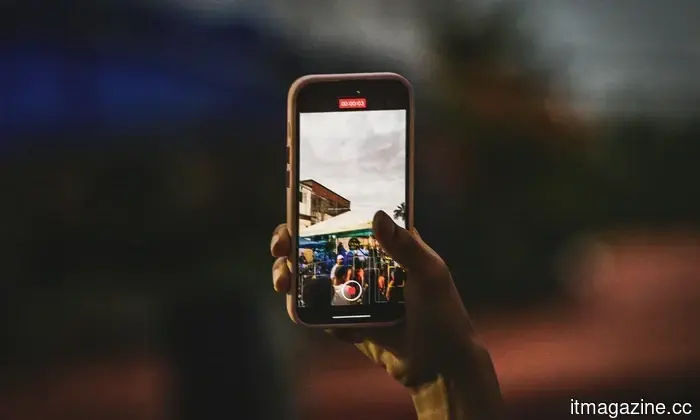
That seemingly harmless holiday photo might be revealing more than just beautiful weather. A new scam reported by The Guardian illustrates how criminals can utilize AI to analyze images shared on Instagram and Facebook, determine their locations, and then leverage this information to craft phishing messages that appear alarmingly authentic.
The method is quite straightforward. For instance, if you share a family picture from Porto without mentioning the city's name, a few days later, you might receive a message claiming that your bank has noticed unusual card activity while you were in Porto, prompting you to verify your information through a provided link. The inclusion of a detail that only someone who knows about the trip would recognize makes the message all the more credible. In reality, the scammer may have had no prior knowledge of the trip; the photo revealed it.
AI can function without your location tag
Research conducted by McAfee analyzed over 21,000 travel images using two publicly available AI models. One model accurately pinpointed the location 91% of the time, while the other achieved 87%. Importantly, the images did not require location tags or embedded metadata for the AI to deduce their origins.
Obvious indicators include well-known landmarks, street signs, storefronts, road markings, and recognizable skylines. However, AI can seemingly extract much more nuanced details. McAfee discovered that even generic images could provide valuable information. A beach or hotel room might only reveal the country, but that level of detail could still enable a scammer to craft a convincing message.
In one experiment, ChatGPT was able to identify an unremarkable river scene as Hastings-on-Hudson in New York. Another image of flowers was traced back to Keukenhof gardens in the Netherlands, based partially on the specific arrangement and types of flowers shown.
Scams can quickly appear plausible
Once scammers ascertain someone's location, they can use that context to create phishing messages that seem far more credible, whether it's a fraudulent bank alert regarding card activity, a suspicious login notification from the visited country, or even a hotel requesting verification. As Vonny Gamot, McAfee’s EMEA head, remarked to The Guardian, AI can provide the additional context that transforms otherwise generic scams into significantly more believable threats.
The simplest, yet most irritating, precaution is to consider delaying the posting of holiday photos until after the trip has concluded or at least sharing them solely with friends and family. Additionally, if you receive a message that indicates your bank account or card has been breached, refrain from clicking any links, no matter how convincing they appear. Instead, reach out to the bank directly using its official app, website, or the phone number located on the back of your card.
What is particularly unsettling is that scammers no longer require photos featuring renowned landmarks or location tags. An otherwise ordinary image can harbor enough visual information for AI to determine its origin, transforming a harmless vacation photo into valuable intelligence. While your pictures may serve as fond memories for you, to a scammer equipped with the right AI tools, they can become a surprisingly detailed map of your movements.





Other articles
 I don't believe that eliminating PlayStation discs will lead to lower game prices.
A former executive from Square Enix claims that discontinuing PlayStation discs could lower the prices of digital games, yet Sony's restricted storefront and pricing trials indicate the opposite.
I don't believe that eliminating PlayStation discs will lead to lower game prices.
A former executive from Square Enix claims that discontinuing PlayStation discs could lower the prices of digital games, yet Sony's restricted storefront and pricing trials indicate the opposite.
 Alibaba is divesting its Lingxi games division to finance a complete investment in AI.
Alibaba is divesting its gaming subsidiary Lingxi Games to private-equity firm Trustar Capital in a transaction worth between $1.5 billion and $2 billion, to fund its transition towards AI and cloud technologies.
Alibaba is divesting its Lingxi games division to finance a complete investment in AI.
Alibaba is divesting its gaming subsidiary Lingxi Games to private-equity firm Trustar Capital in a transaction worth between $1.5 billion and $2 billion, to fund its transition towards AI and cloud technologies.
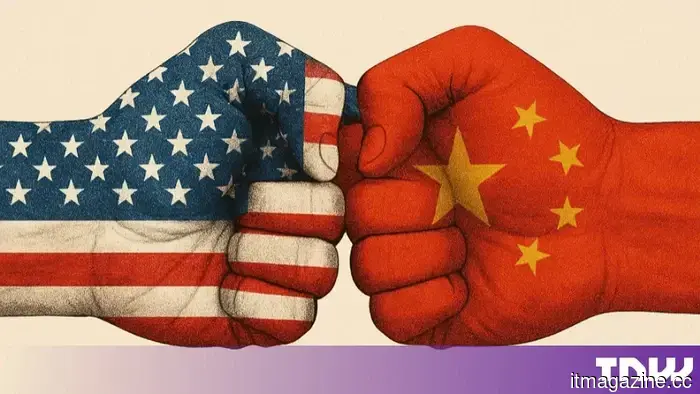 The United States is poised to force its allies to choose a side in the AI cold war.
A leaked letter from the State Department alerts 35 allied nations that they cannot participate in both American and Chinese AI initiatives, transforming the Pax Silica agreement into a measure of loyalty.
The United States is poised to force its allies to choose a side in the AI cold war.
A leaked letter from the State Department alerts 35 allied nations that they cannot participate in both American and Chinese AI initiatives, transforming the Pax Silica agreement into a measure of loyalty.
 Alibaba divests its Lingxi games division to finance a comprehensive investment in AI.
Alibaba is divesting its gaming subsidiary Lingxi Games to the private-equity firm Trustar Capital in a transaction worth between $1.5 billion and over $2 billion, to support its shift towards AI and cloud initiatives.
Alibaba divests its Lingxi games division to finance a comprehensive investment in AI.
Alibaba is divesting its gaming subsidiary Lingxi Games to the private-equity firm Trustar Capital in a transaction worth between $1.5 billion and over $2 billion, to support its shift towards AI and cloud initiatives.
 Stripe has allegedly acquired OpenRouter, the AI model routing technology, for more than $7 billion.
Stripe has supposedly completed an agreement to acquire OpenRouter, the AI platform that manages traffic for over 400 models, for more than $7 billion, betting that sustainable profits in AI lie in metering and billing.
Stripe has allegedly acquired OpenRouter, the AI model routing technology, for more than $7 billion.
Stripe has supposedly completed an agreement to acquire OpenRouter, the AI platform that manages traffic for over 400 models, for more than $7 billion, betting that sustainable profits in AI lie in metering and billing.
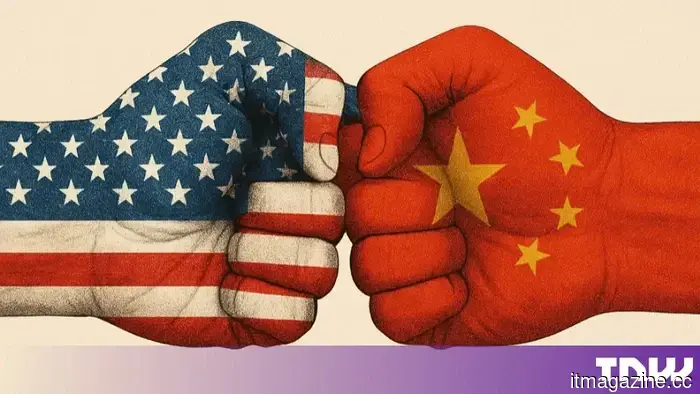 The United States is on the verge of compelling its allies to choose a side in the AI cold war.
A leaked letter from the State Department cautions 35 allied nations that they cannot participate in both American and Chinese AI initiatives, transforming the Pax Silica agreement into a test of loyalty.
The United States is on the verge of compelling its allies to choose a side in the AI cold war.
A leaked letter from the State Department cautions 35 allied nations that they cannot participate in both American and Chinese AI initiatives, transforming the Pax Silica agreement into a test of loyalty.
The vacation pictures you share may assist scammers in pinpointing your exact location.
Artificial intelligence can detect locations from vacation pictures shared on Instagram and Facebook, which provides scammers with sufficient data to craft believable phishing messages related to travel and credit card activity.