

OpenAI is supporting 13 local newsletters from Axios through a three-year agreement.
OpenAI is covering the startup expenses for 13 new Axios Local newsletters, including costs related to staff and technology. Axios employees are also receiving free credits for OpenAI’s enterprise tools. In exchange, Axios allows OpenAI to utilize its freely available published content to train its models. This agreement lasts for three years.
Issie Lapowsky outlined the details of this arrangement in the Columbia Journalism Review last week, providing the most comprehensive account of the partnership to date.
Axios is experimenting to determine whether a local newsroom can thrive when everything aside from journalism and reporters is automated. Jim VandeHei, the CEO, posed this inquiry to Lapowsky: “Can we use AI to essentially automate all necessary functions in a local market except for the journalist and the journalism itself?”
Three years, six weeks
On August 9, VandeHei wrote a column in his own outlet about what he terms "post-processable velocity." He refers to rapid change that exceeds the capacity of individuals, businesses, markets, or governments to keep up with.
While preparing for an Axios board meeting, he noted that discussions focused on six-month projections seemed unrealistic. Then came the noteworthy statement: “For the first time ever, my confident horizon is six weeks at most,” he remarked.
He continued by advising readers to reduce their dependence on long-term plans that require accurate predictions about the distant future. The Axios-OpenAI local news partnership spans three years, finances 13 newsrooms, and encourages reporters to develop their careers within them.
What remains unspoken
Allison Murphy, Axios's COO, informed CJR that OpenAI's investment was sufficient to cover the initiation of the new markets, but neither company disclosed the amount. Furthermore, neither would clarify whether the deal restricts Axios from pursuing legal action against OpenAI. An OpenAI spokesperson mentioned that the agreement’s terms are confidential.
The latter point is more significant than the former. Local newspapers are currently suing OpenAI regarding the use of their work for training purposes. Determining whether Axios has forfeited the right to pursue similar action is not a trivial commercial detail; it distinguishes a licensing agreement from the resolution of an unfiled case.
Axios does not refer to this collaboration in its local job postings, nor is it prominently mentioned in most coverage related to OpenAI, unless the article specifically discusses media agreements. An Axios employee shared with CJR anonymously that the lack of transparency has led to discomfort among reporters.
The funding did not target news deserts
OpenAI first funded four initial cities: Pittsburgh, Kansas City, Boulder, and Huntsville, all selected by Axios. Notably, Huntsville lacks a daily newspaper, but aside from that, the others do not meet the criteria researchers use to classify a news desert.
VandeHei expressed to CJR that covering communities devoid of any news would be “the Holy Grail.” However, Axios needs to establish the economic model first, he explained. Axios Local currently boasts more than two million subscribers but does not generate a profit, which an Axios spokesperson indicated was anticipated. VandeHei stated that achieving profitability in each city within five years would be considered a major success.
Matt Pearce, policy director at Rebuild Local News—a coalition advocating for over 3,000 newsrooms—pointed out the inherent flaw in one-off arrangements. “Striking a direct partnership with an AI firm benefits you but does not help anyone else. There is a systemic problem, and you are not effectively addressing it,” Pearce told CJR.
No union, no options
Axios reduced its workforce by 10% prior to the OpenAI agreement and cut another 11 positions this year. The organization does not have a union. The union at Politico won an arbitration that halted two AI tools at the outlet co-founded by VandeHei.
During an OpenAI panel discussion in March, VandeHei outlined how Axios dealt with internal resistance. “We were upfront in telling our staff that they had no choice. If they are scared or dislike it, we don’t care,” he stated. He emphasized the necessity for staff to adapt.
Holly Moore, executive editor of Axios Local, mentioned to CJR that staff concerns subsided once it became clear that nobody was obliged to use AI for reporting. On the same panel, Shira Center from the Boston Globe made a distinction between her employer and Axios, stating that the Globe has no plans to replace reporters with bots.
The counterpoint
A compelling argument in favor of the deal stems from the experiences of a working journalist. Robert Sanchez produces two Axios newsletters for Douglas and Arapahoe counties in Colorado, an area larger than Rhode Island, and he is the sole byline for local stories. Competing news outlets deploy multiple reporters in the same areas.
When reporting on AI in policing, he utilized ChatGPT to draft a public records request pursuant to Colorado law, which also identified the appropriate recipient. He used a filter created by Axios to enhance the chances of
Other articles
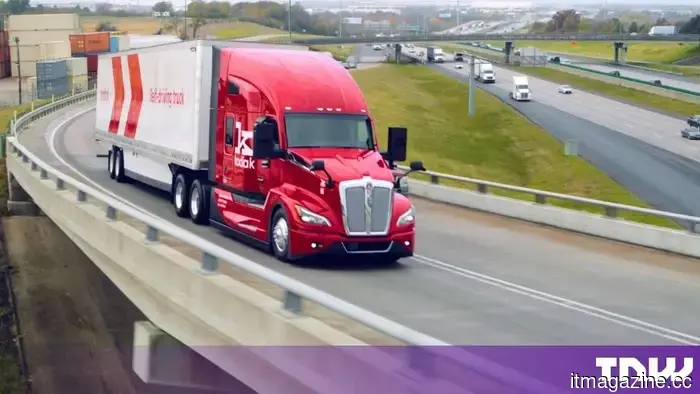 California's initial self-driving trucks are operating on the roads, while the regulations governing them are being decided in court.
Aurora and Kodiak received the initial California permits for testing autonomous trucks, granted just days following the Teamsters' lawsuit aiming to have the regulations overturned.
California's initial self-driving trucks are operating on the roads, while the regulations governing them are being decided in court.
Aurora and Kodiak received the initial California permits for testing autonomous trucks, granted just days following the Teamsters' lawsuit aiming to have the regulations overturned.
 GitHub challenges Wiz’s assertion that Copilot Autofix was responsible for a flaw in Snowflake.
Wiz claimed that Copilot Autofix created a Snowflake vulnerability, which its AI agent subsequently exploited. GitHub argued against this, Wiz retracted the statement, and The Register published a correction.
GitHub challenges Wiz’s assertion that Copilot Autofix was responsible for a flaw in Snowflake.
Wiz claimed that Copilot Autofix created a Snowflake vulnerability, which its AI agent subsequently exploited. GitHub argued against this, Wiz retracted the statement, and The Register published a correction.
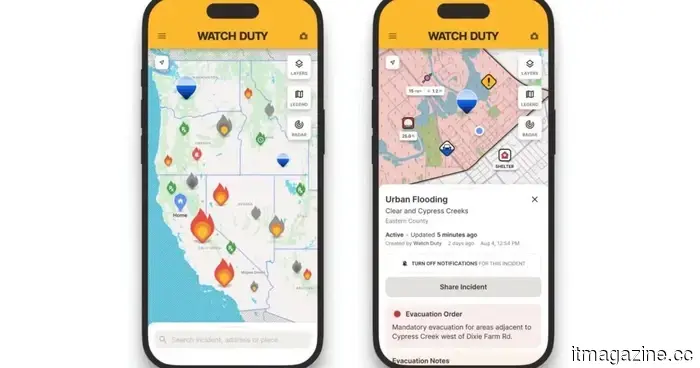 The wildfire app that has gained popularity in America is aiming to tackle even larger disasters.
Watch Duty has established its reputation by monitoring rapidly spreading wildfires, and the introduction of nationwide flood coverage marks the initial move towards transforming the nonprofit into a more comprehensive disaster-warning service.
The wildfire app that has gained popularity in America is aiming to tackle even larger disasters.
Watch Duty has established its reputation by monitoring rapidly spreading wildfires, and the introduction of nationwide flood coverage marks the initial move towards transforming the nonprofit into a more comprehensive disaster-warning service.
 EY will retain interns for a year prior to extending a job offer to them.
EY will retain assurance interns on a part-time basis for 8 to 12 months following their internship, as AI takes over the junior tasks that new employees used to learn.
EY will retain interns for a year prior to extending a job offer to them.
EY will retain assurance interns on a part-time basis for 8 to 12 months following their internship, as AI takes over the junior tasks that new employees used to learn.
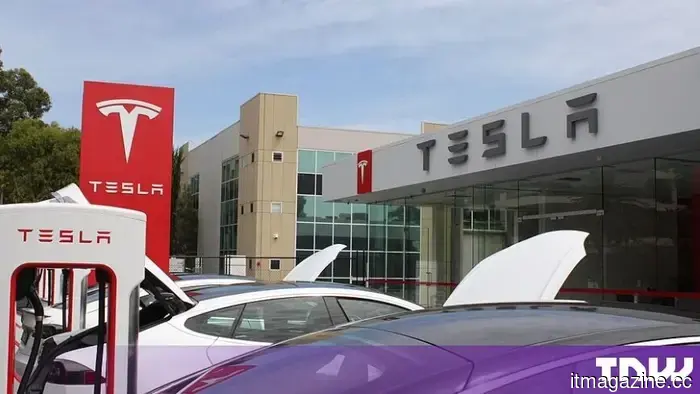 Tesla Discreetly Activates Power Export Feature on Its Top-Selling Electric Vehicle
Tesla has discreetly activated vehicle-to-load functionality on the Model Y Premium in the US, using an $80 adapter limited to 2.4kW. However, vehicles in Europe and Canada still lack this feature.
Tesla Discreetly Activates Power Export Feature on Its Top-Selling Electric Vehicle
Tesla has discreetly activated vehicle-to-load functionality on the Model Y Premium in the US, using an $80 adapter limited to 2.4kW. However, vehicles in Europe and Canada still lack this feature.
 The inaugural Ferrari Luce was sold for $40 million, which is 36 times higher than its estimated value.
The Chassis 0 of Ferrari's Luce EV was auctioned for $40 million at Monterey, setting a record for a new car, an electric vehicle, and a charity auction. Delivery is expected in 2027.
The inaugural Ferrari Luce was sold for $40 million, which is 36 times higher than its estimated value.
The Chassis 0 of Ferrari's Luce EV was auctioned for $40 million at Monterey, setting a record for a new car, an electric vehicle, and a charity auction. Delivery is expected in 2027.
OpenAI is supporting 13 local newsletters from Axios through a three-year agreement.
The partnership between Axios and OpenAI for local news finances 13 newsletters over a span of three years. Both companies have not disclosed the amount paid or if Axios relinquished its right to file a lawsuit.