
U.S. courts will now disclose the government's use of spyware tools.
U.S. courts are preparing to start publicly disclosing the frequency with which federal judges permit the government to utilize spyware and hacking tools for intercepting real-time communications. This will provide the public with its first standardized insight into the prevalence of these surveillance methods.
This new initiative will commence with data gathered for the 2028 Wiretap Report, which is set to be released in 2029. The Administrative Office of the U.S. Courts informed TechCrunch that this report will include a new “spyware/hacking” category that pertains to wiretaps executed through hacking tools and spyware, which federal authorities refer to as network investigative techniques (NITs).
A new perspective on government surveillance
Since at least 1998, the FBI has employed hacking strategies and tools like spyware; however, there has not been any published data indicating how often federal authorities utilize these methods. Current Wiretap Reports already present yearly statistics regarding court-sanctioned surveillance, detailing the kinds of wiretaps employed and the offenses under investigation.
Wiretaps enable law enforcement to access phone calls, messages, and other forms of communication in real-time. Due to the privacy concerns involved, investigators typically must present significant evidence of criminal activity before a judge permits a live tap.
The new reporting category will integrate spyware and hacking-based wiretaps into the existing reporting framework. The Administrative Office noted that updates to reporting forms and procedures must occur to support these new categories before the information can be included in the annual reports.
The significance of this distinction is notable. The statistics will reflect instances of spyware used to intercept communications like calls and messages, but they do not necessarily account for cases where authorities remotely hack into a device to retrieve existing information such as photos, files, or location data. Those actions are classified as searches under a different legal framework.
The statistics could influence the surveillance discourse
Sen. Ron Wyden, who has advocated for increased transparency in government surveillance, expressed support for this development. He has contended that Americans are largely unaware of the various methods authorities employ to monitor communications.
Privacy advocates assert that these new statistics could offer a missing element in the discourse: quantifiable evidence. Eva Galperin from the Electronic Frontier Foundation mentioned that publicly available figures could facilitate an assessment of whether spyware is being deployed selectively or on a broader scale.
The subject has gained more attention as the detection and warning systems for spyware have improved. In a separate TechCrunch article, it was reported that Apple recently issued threat notifications to users across 110 countries whose devices it believed were targeted by mercenary spyware, adding to over 150 countries where such warnings have been issued.
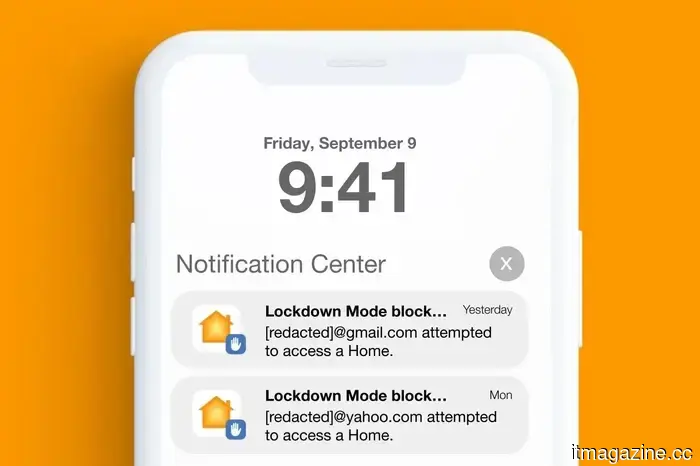
Apple's alerts encourage recipients to take protective measures for their devices and suggest enabling Lockdown Mode, which is intended to complicate spyware attacks. Citizen Lab researcher John Scott-Railton noted that these alerts can also prompt investigations that uncover additional cases, highlighting the importance of improved data on spyware usage beyond the victims involved.
The U.S. will not be the first nation to present such statistics; for instance, Italy reported that spyware was directed at 4,321 targets in 2023. However, comparable data for Americans will not be available until 2029.
Until that time, measuring the extent of government spyware usage will continue to be challenging. The upcoming reports should ultimately provide lawmakers, privacy activists, and the public with a clearer understanding of how often these powerful surveillance tools are being authorized.
Other articles
 Keychron produced 96 blank keys, leaving the issue to someone else.
The Keychron C100 8K is a wired macro pad priced at $65, featuring 96 customizable keys, hot-swappable switches, individual RGB lighting for each key, and ample blank areas to transform it into nearly any type of desktop control panel you envision.
Keychron produced 96 blank keys, leaving the issue to someone else.
The Keychron C100 8K is a wired macro pad priced at $65, featuring 96 customizable keys, hot-swappable switches, individual RGB lighting for each key, and ample blank areas to transform it into nearly any type of desktop control panel you envision.
 Samsung may finally introduce a fundamental privacy feature that was overlooked in Galaxy phones.
A leaked build of One UI 9.5 shows that Galaxy phones will feature a dedicated App Lock, which secures specific apps using biometrics and conceals their notifications, widgets, and shortcuts.
Samsung may finally introduce a fundamental privacy feature that was overlooked in Galaxy phones.
A leaked build of One UI 9.5 shows that Galaxy phones will feature a dedicated App Lock, which secures specific apps using biometrics and conceals their notifications, widgets, and shortcuts.
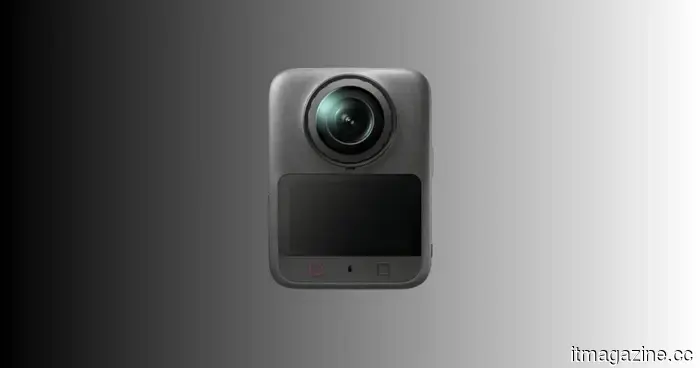 DJI's latest 360 camera addresses one of the major challenges of owning such a device.
DJI's second-generation 360 camera offers significant improvements in key areas, but there is a downside: it isn't available for purchase worldwide just yet.
DJI's latest 360 camera addresses one of the major challenges of owning such a device.
DJI's second-generation 360 camera offers significant improvements in key areas, but there is a downside: it isn't available for purchase worldwide just yet.
 The top QLED TVs for 2026, following tests of over 20 models.
We evaluated more than 20 leading QLED TVs for 2026 to identify the finest models in terms of brightness, color accuracy, and gaming performance. Check out our expert selections for all budgets and room dimensions.
The top QLED TVs for 2026, following tests of over 20 models.
We evaluated more than 20 leading QLED TVs for 2026 to identify the finest models in terms of brightness, color accuracy, and gaming performance. Check out our expert selections for all budgets and room dimensions.
 AI's new partner in cancer screening has four legs and an excellent sense of smell.
Indian startup Dognosis integrates trained detection dogs with sensors and artificial intelligence to identify cancer-related signals from breath, and is currently conducting a Phase 3 trial involving 10,000 participants.
AI's new partner in cancer screening has four legs and an excellent sense of smell.
Indian startup Dognosis integrates trained detection dogs with sensors and artificial intelligence to identify cancer-related signals from breath, and is currently conducting a Phase 3 trial involving 10,000 participants.
 The CFO of OpenAI informs shareholders that revenue from enterprise has surpassed that of ChatGPT.
OpenAI's enterprise revenue has surpassed that of consumer revenue ahead of expectations, according to its finance chief, with the run rate hitting $40 billion.
The CFO of OpenAI informs shareholders that revenue from enterprise has surpassed that of ChatGPT.
OpenAI's enterprise revenue has surpassed that of consumer revenue ahead of expectations, according to its finance chief, with the run rate hitting $40 billion.
U.S. courts will now disclose the government's use of spyware tools.
U.S. courts are set to publicly disclose the frequency with which judges approve spyware and hacking tools for intercepting communications, providing Americans with a clearer understanding of government surveillance.