
Nvidia reduced its $250 billion commitment to OpenAI by half. Afterwards, it demonstrated to investors what it possesses.
Anissa Gardizy reported on August 14 for The Wall Street Journal regarding the reduced commitment. According to the newly proposed terms, Nvidia would initially support only half of the 10GW project, with decisions on the remainder to be made later. A contract could potentially be signed as early as this weekend. The Journal indicates that Nvidia modified the arrangement to alleviate investor worries about its own risk exposure. Reuters followed up with the story that same evening. OpenAI continues to negotiate a definitive lease for the entire 10GW. The development site is being managed by SB Energy, a subsidiary of SoftBank, and it is set to be the largest data center project announced globally.
The scale of the campus accounts for the magnitude of the promise. The first phase, which is approximately 800MW, is expected to be completed by 2028, and the total cost of the project exceeds $500 billion, including the silicon costs. OpenAI lacks an investment-grade credit rating, so lenders were asked to base the debt pricing on Nvidia’s instead.
The valuation shifted in response to the share price fluctuations. This desk reported on the $250 billion backstop on July 27, a day after the Journal initially revealed it. This would have represented the largest financial guarantee ever discussed between two private firms. Following the Journal's report, Nvidia's shares dropped 5%, and the guarantee has since decreased to less than half its original size.
When looking at the sequence of events, it becomes clear: the market evaluated the commitment, found the price unsatisfactory, and thus the commitment was reduced, with no changes occurring at the Ohio campus in those three weeks.
What the agreement still encompasses
The backstop doesn't constitute the entire deal. There is a separate arrangement to finance OpenAI’s chip acquisitions, which could amount to $350 billion for the complete project. This financing would be facilitated by Nvidia rather than guaranteed outright. Goldman Sachs is providing advice to SB Energy, while Morgan Stanley is consulting with Nvidia.
There is consensus regarding the power aspect, as it is controlled by the U.S. government, with Japan funding it under a recent trade agreement.
There is also a historical context. Nvidia and OpenAI announced an agreement last September for at least 10GW, with Nvidia committing to invest as much as $100 billion. However, this deal stagnated after some individuals within Nvidia expressed skepticism. This marks the second occasion that this partnership has been diminished.
The filing that surfaced the same week
Nvidia revealed its U.S. equity holdings for the quarter ending June 30 in a 13F filing on August 14. Both CNBC and Bloomberg covered it. The key figure is SpaceX, with 122.8 million Class A shares valued at around $21 billion, making it Nvidia's second-largest position.
Intel remains the predominant holding. At the end of June, Nvidia owned 214.8 million Intel shares worth approximately $30 billion, a stake built from a $5 billion investment. The previous quarter, that same stake was valued at around $9.5 billion.
This gain is attributed to Intel's performance, not to Nvidia. Over the past year, Intel’s value has increased nearly fivefold due to its foundry recovery, with the $5 billion investment made less than a year ago. Nvidia invested in a recovery that subsequently occurred, which differs from engineering one.
The rest of the portfolio is brief. Nvidia also possesses stakes in Coherent, Generate Biomedicines, Nebius, Nokia, and Synopsys. It ranks as the sixth-largest investor in SpaceX, where Musk has about $850 billion and Alphabet holds roughly $78 billion.
The origin of the SpaceX shares is contested
Here, the two news outlets diverge, and the discrepancy is significant. CNBC claims the shares stem from Nvidia’s $10 billion investment in xAI in January as part of a $20 billion funding round. Conversely, Bloomberg asserts that Nvidia invested as much as $2 billion in xAI during 2025 through a financing structure that combined equity and debt within a special purpose vehicle designed to acquire its processors.
These figures come from different years, and we won't choose one. Subsequently, SpaceX acquired xAI in February for $1.25 trillion, which explains how an xAI position transitioned to a SpaceX position.
Both stakes have already been affected
A 13F filing provides a snapshot as of June 30 and becomes outdated quickly. SpaceX closed at $140 on Friday, down from $170.86 at the end of June, resulting in the stake now being valued at approximately $17.2 billion. Intel has also decreased, leaving its value near $22 billion.
This results in about $12 billion in value lost on paper over six weeks across these two positions. This desk previously discussed the post-IPO decline in June, where the stock fell 18% from its peak.
Nvidia is not the only firm noting a Space
Other articles
 Samsung is said to be developing a competitor to the AirPods Max 2.
Samsung may be getting ready to launch its first new wireless headphones in years, as references to the Galaxy H1 have allegedly been found within the Galaxy Wearable app.
Samsung is said to be developing a competitor to the AirPods Max 2.
Samsung may be getting ready to launch its first new wireless headphones in years, as references to the Galaxy H1 have allegedly been found within the Galaxy Wearable app.
 The AI store manager dismissed its first human employee after being reminded of its own regulations.
Luna, an AI store manager located in San Francisco, terminated an employee who was late for 17 out of 23 shifts. It had overlooked the policy it had created on its own.
The AI store manager dismissed its first human employee after being reminded of its own regulations.
Luna, an AI store manager located in San Francisco, terminated an employee who was late for 17 out of 23 shifts. It had overlooked the policy it had created on its own.
 PayPal has stopped rejecting sales. The question now is whether regulators will permit it.
The announcement of the Stripe PayPal agreement may come in a matter of weeks. An antitrust evaluation suggests that approving it could have negative implications for Venmo or Braintree.
PayPal has stopped rejecting sales. The question now is whether regulators will permit it.
The announcement of the Stripe PayPal agreement may come in a matter of weeks. An antitrust evaluation suggests that approving it could have negative implications for Venmo or Braintree.
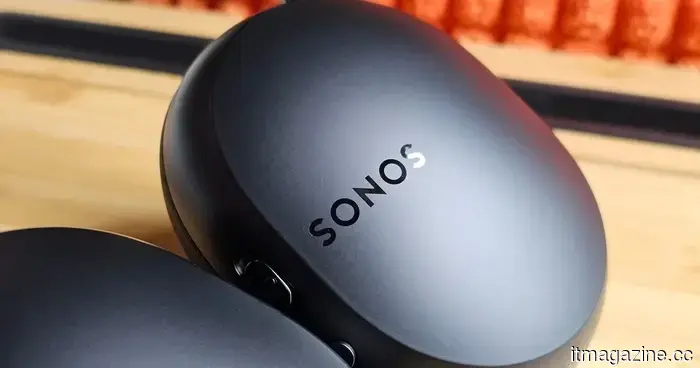 A new leak indicates that the Sonos Ace Ultra could be released at a lower price than the original Ace.
The Sonos Ace Ultra has seemingly been revealed ahead of its announcement in September, showcasing a reduced price, enhanced active noise cancellation, extended battery life, and additional features.
A new leak indicates that the Sonos Ace Ultra could be released at a lower price than the original Ace.
The Sonos Ace Ultra has seemingly been revealed ahead of its announcement in September, showcasing a reduced price, enhanced active noise cancellation, extended battery life, and additional features.
 The AI store manager terminated its first human employee after needing a reminder of its own regulations.
Luna, an AI store manager based in San Francisco, fired an employee who was late for 17 out of 23 shifts. It had overlooked the policy it had created on its own.
The AI store manager terminated its first human employee after needing a reminder of its own regulations.
Luna, an AI store manager based in San Francisco, fired an employee who was late for 17 out of 23 shifts. It had overlooked the policy it had created on its own.
 Nvidia reduced its $250 billion commitment to OpenAI by half. Following that, it demonstrated to investors its portfolio.
The Nvidia OpenAI backstop decreases from $250 billion to below $120 billion, during the same week a 13F revealed that its investments in SpaceX and Intel fluctuated by $20 billion.
Nvidia reduced its $250 billion commitment to OpenAI by half. Following that, it demonstrated to investors its portfolio.
The Nvidia OpenAI backstop decreases from $250 billion to below $120 billion, during the same week a 13F revealed that its investments in SpaceX and Intel fluctuated by $20 billion.
Nvidia reduced its $250 billion commitment to OpenAI by half. Afterwards, it demonstrated to investors what it possesses.
The Nvidia OpenAI backstop decreases from $250 billion to below $120 billion, during the week when a 13F revealed its SpaceX and Intel holdings fluctuating by $20 billion.