
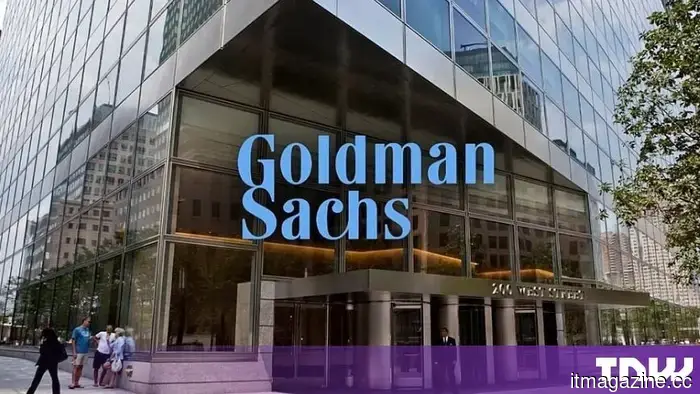
Goldman Sachs is reaching out to investors regarding Nvidia's $500 billion financing arrangement for AI computing.
Goldman Sachs has achieved the position that every firm on Wall Street coveted, and it is currently reaching out to investors. The bank is in discussions regarding Nvidia’s $500 billion AI-compute financing deal, having secured a coveted mandate that positions it as the lead, and primarily sole, lender for one of the largest infrastructure funding initiatives in the industry.
This mandate is not without foundation. Goldman has a longstanding relationship with Nvidia, having managed the chipmaker’s $25 billion bond sale in June 2025, and this history helped it gain the lead role in a project that is central to the current collective effort by six firms to finance AI expansion.
Goldman’s involvement spans across its various business areas. The bank is offering junior capital and private credit through its asset-management division, while its investment bankers focus on placing the debt into private-credit funds and, ultimately, public debt markets. Goldman is engaging with US insurers, money managers, other banks, asset managers, and private-credit firms, while also planning to retain a significant portion of the securities.
The strategic aspect, which may raise concerns among skeptics, lies in the deal's structure. The arrangement aims to establish an asset-backed market for AI compute, allowing the debt to be traded like a conventional security, which could lead to reduced funding costs. This marks a significant shift from previous AI-infrastructure deals that relied heavily on vendor guarantees instead of developing a true tradable market.
Essentially, Goldman is attempting to create a new asset class from Nvidia’s chips. Similar to how mortgages were once bundled into marketable securities, the goal is to convert the machines operating in data centers into instruments resembling bonds, complete with a secondary market, and, as promoted, lower borrowing costs for all parties involved.
This analogy is not flattering to those who remember the last time a bank claimed that an untested asset would be as secure as a government bond.
The broader initiative was introduced on August 10. The $500 billion platform is a collaboration among Apollo, BlackRock, Blackstone, Brookfield, Goldman Sachs, and KKR, aimed at mobilizing external capital rather than utilizing the founders' balance sheets.
Nvidia, with a market capitalization around $5.2 trillion, is not just a recipient; CEO Jensen Huang has indicated that the company has the option to backstop up to $125 billion, or 25%, of the potential deals.
Goldman’s CEO David Solomon was refreshingly straightforward about the initiative's inception. “Jensen came, approached us with the idea, and we said we’d love to talk to you about it,” he told CNBC, which is a typical response from any banker when a lucrative mandate comes their way.
The fees are a key factor. By positioning itself at the heart of the AI-debt boom, Goldman benefits from the origination, structuring, placement, and whatever it retains on its balance sheet, creating an enviable range of income streams that provides a level of insulation regardless of how the underlying venture in compute performs.
This inevitably raises concerns of financial engineering that could be unsettling for European observers. The AI economy is increasingly interconnected by cycles in which a small number of companies finance, supply, and underwrite each other, a trend evident when Nvidia entered negotiations to guarantee $250 billion of OpenAI data-center debt and as its equity investments exceeded $40 billion this year.
The market has already shown signs of apprehension. Nvidia’s $750 billion in announced AI deals recently pushed its credit-default swaps to an all-time high, a subtle indication that even the chipmaker’s supporters are factoring in the risk that this interconnected system may not remain stable.
Goldman’s challenge, essentially, is to render that risk appear tradable. Whether it will be perceived as secure is a question that potential buyers will need to resolve for themselves.
Other articles
 Goldman Sachs is seeking investors for Nvidia’s $500 billion AI-compute financing arrangement.
Goldman Sachs is seeking to attract investors for Nvidia's $500 billion AI-compute financing arrangement after securing a leading position, and it aims to transform chips into a tradable asset class similar to bonds.
Goldman Sachs is seeking investors for Nvidia’s $500 billion AI-compute financing arrangement.
Goldman Sachs is seeking to attract investors for Nvidia's $500 billion AI-compute financing arrangement after securing a leading position, and it aims to transform chips into a tradable asset class similar to bonds.
 Microsoft is consolidating its Copilot applications ahead of the anticipated launch of its 'super app.'
Microsoft is merging its Copilot apps into a unified experience, resulting in the retirement of Podcasts, Deep Research, and Group Chat.
Microsoft is consolidating its Copilot applications ahead of the anticipated launch of its 'super app.'
Microsoft is merging its Copilot apps into a unified experience, resulting in the retirement of Podcasts, Deep Research, and Group Chat.
 Goldman Sachs is seeking investors for Nvidia's $500 billion financing agreement related to AI computing.
Goldman Sachs is seeking investors for Nvidia's $500 billion AI-compute financing arrangement after securing a leadership position, with the aim of transforming chips into a tradable asset class similar to bonds.
Goldman Sachs is seeking investors for Nvidia's $500 billion financing agreement related to AI computing.
Goldman Sachs is seeking investors for Nvidia's $500 billion AI-compute financing arrangement after securing a leadership position, with the aim of transforming chips into a tradable asset class similar to bonds.
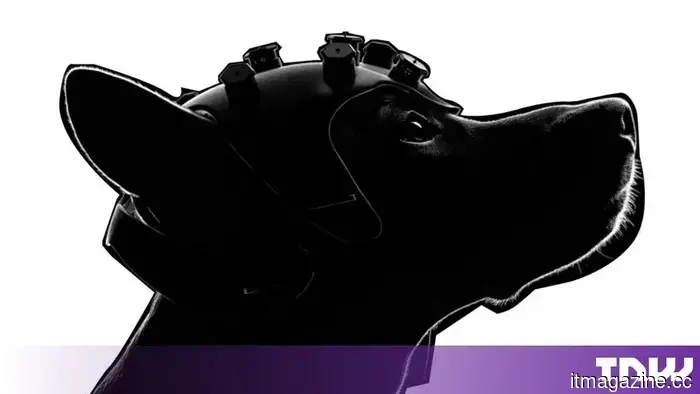 This Bengaluru-based startup is educating dogs and artificial intelligence to detect cancer at an early stage.
Dognosis, a startup based in Bengaluru, combines trained sniffer dogs with AI technology to detect early signs of cancer from breath samples. Currently, it is a prescreening tool undergoing trials and has not yet been established as a definitive diagnostic method.
This Bengaluru-based startup is educating dogs and artificial intelligence to detect cancer at an early stage.
Dognosis, a startup based in Bengaluru, combines trained sniffer dogs with AI technology to detect early signs of cancer from breath samples. Currently, it is a prescreening tool undergoing trials and has not yet been established as a definitive diagnostic method.
 Silver Lake is said to be negotiating to acquire Workday for $43 billion in a deal to take the company private.
Silver Lake is said to be negotiating to acquire Workday and take it private for about $43 billion, which would mark one of the largest software buyouts in history and the first major take-private deal involving a prominent SaaS company.
Silver Lake is said to be negotiating to acquire Workday for $43 billion in a deal to take the company private.
Silver Lake is said to be negotiating to acquire Workday and take it private for about $43 billion, which would mark one of the largest software buyouts in history and the first major take-private deal involving a prominent SaaS company.
 Microsoft is consolidating its Copilot applications ahead of the anticipated launch of its 'super app.'
Microsoft is merging its Copilot apps into a unified experience, with Podcasts, Deep Research, and Group Chat being phased out in the process.
Microsoft is consolidating its Copilot applications ahead of the anticipated launch of its 'super app.'
Microsoft is merging its Copilot apps into a unified experience, with Podcasts, Deep Research, and Group Chat being phased out in the process.
Goldman Sachs is reaching out to investors regarding Nvidia's $500 billion financing arrangement for AI computing.
Goldman Sachs is seeking investors for Nvidia's $500 billion AI-compute financing arrangement after securing a leading position, and it aims to develop chips into a tradable asset class akin to bonds.