
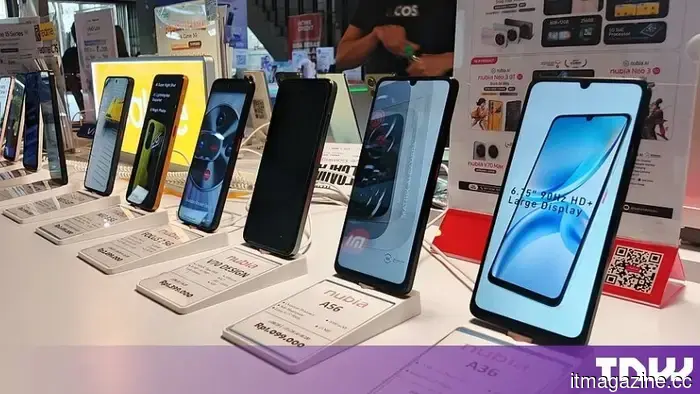
Omdia reports that smartphone prices will remain elevated even after the supply shortage concludes.
Begin with the numbers, as they are the type that resolves disputes. In the first quarter of 2026, panel manufacturers delivered 298 million displays to the refurbished phone market. Meanwhile, they sent 289 million to the makers of new phones. The refurbished figure represented a year-on-year increase of 20%, as reported by Omdia. The two lines intersected, with the second-hand segment continuing to rise.
What the statistics truly reflect
Here, refurbishment encompasses more than just a store offering a used device. Omdia includes panels used for consumer repairs, professional refurbishment of recycled phones, and aftermarket replacement parts. Thus, the figure accounts for broken screens as well as resold devices. It represents the entire business of prolonging the life of an existing phone instead of purchasing a new one.
The technology distribution is significant. In the quarter, OLED comprised 7% of refurbished market shipments, a rise from 2% the previous year, indicating that most of the remaining shipments were still LCD. This suggests that the high-end phones from three or four years ago are now re-entering the market.
Panel manufacturers didn't opt for this direction; they were compelled by circumstances
The underlying issue traces back to memory costs. Elevated memory prices increased component expenses, prompting phone manufacturers to reduce their production plans, leading to fewer orders than panel factories anticipated. Omdia predicts a 12% decline in display demand from new phones throughout 2026, yet capacity does not remain idle during this period. Joy Guo, a senior principal analyst at Omdia’s displays division, described the refurbishment market as “a reservoir that helps absorb fluctuations in demand from smartphone manufacturers.” A reservoir is not a market aimed at, but rather where excess supply is redirected.
The source of this overflow in the phone market
The new-phone side elucidates the rest of the scenario. Global smartphone shipments dropped 6% in the second quarter, totaling 272 million units, a decrease from 288.9 million the previous year. The decline was unevenly distributed: Xiaomi saw a 26% drop to 31.2 million, marking a second consecutive quarterly decrease, with over half of its shipments priced under $200. This is the segment where an increase in component costs cannot be mitigated. OPPO, which includes OnePlus and realme, experienced a 17% decline to 28.4 million while scaling back on entry-level models to safeguard margins. Vivo's shipments fell by 18%.
Not all of the drop is due to components. Shipments to the Middle East plummeted 18% due to geopolitical disruptions impacting supply chains and retail, which Omdia views as temporary and expects stabilization in the latter half of the year. The desk has monitored each phase of the decline. Rising memory costs have already led to a fifth consecutive quarterly decrease in Chinese shipments, and a similar pressure has been observed in the PC market.
Two companies experienced growth for contrasting reasons
Samsung shipped 60.5 million units, reflecting a 5% increase and taking a 22% market share. Its ability to produce its own memory has allowed it to better weather shortages compared to competitors, according to Omdia. Furthermore, it gained ground in the entry-level market as Chinese rivals narrowed their offerings and raised prices. Owning the essential component proved more beneficial than having the lowest-cost phone. Apple had its most successful second quarter ever, shipping 55.1 million units, an increase of 23%, contributing to a 20% market share in what is usually its weakest quarter.
However, this figure comes with a caveat. Channel partners stocked up on the base model iPhone 17, anticipating price hikes and a pricier iPhone 18, suggesting that a portion of the growth resulted from inventory rather than actual demand. Apple has already raised prices for the iPhone 17 in Japan.
The aspect that remains unchanged
This brings us to a noteworthy argument from Omdia. Prices didn’t just rise; expectations rose alongside them. Consumers have taken a year to acclimate to higher phone prices, which provides manufacturers the flexibility to adjust their pricing from this elevated level once memory costs eventually decrease. Omdia describes this as “a structural repricing of the smartphone market, where profitability increasingly takes precedence over volume expansion.” “Price is once again becoming a competitive differentiator,” stated Le Xuan Chiew, a research manager at Omdia.
Amber Liu, a practice leader at the firm, anticipates no swift recovery. Shipments will continue to drop even with flagship releases, holiday promotions, and shopping festivals, she stated. This caution is significant; it is a prediction concerning future pricing behavior, not an observed reality, and operates under the assumption that consumers will remain adjusted rather than simply purchase less.
The same pressure is already affecting watch prices
On Thursday, Omdia released another set of figures, and one detail is particularly relevant. Increasing memory
Other articles
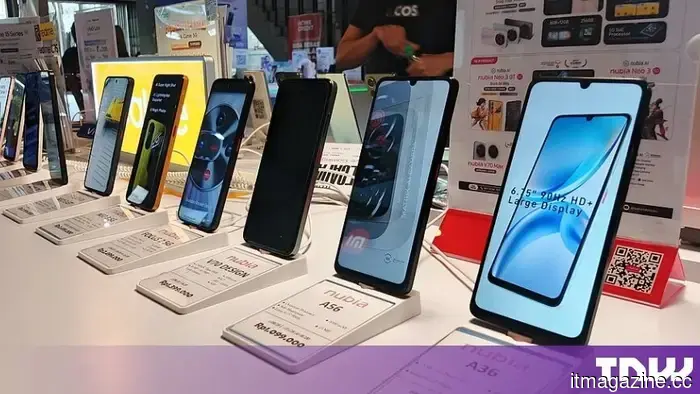 According to Omdia, smartphone prices are expected to remain elevated even after the shortage concludes.
In the first quarter of 2026, refurbished phones accounted for 298 million display panels, surpassing the 289 million delivered to manufacturers of new phones. Omdia describes this as a structural repricing.
According to Omdia, smartphone prices are expected to remain elevated even after the shortage concludes.
In the first quarter of 2026, refurbished phones accounted for 298 million display panels, surpassing the 289 million delivered to manufacturers of new phones. Omdia describes this as a structural repricing.
 An article generated by AI does not require a label, while your proofread email does.
The Claude watermark indicates text that the model has merely proofread, which is exempt under the EU AI Act. In contrast, a completely AI-generated article can be published without any labeling.
An article generated by AI does not require a label, while your proofread email does.
The Claude watermark indicates text that the model has merely proofread, which is exempt under the EU AI Act. In contrast, a completely AI-generated article can be published without any labeling.
 Volkswagen is capable of producing a car for $17,175, but not in Europe.
China's electric vehicle price competition: Volkswagen has begun taking orders for a plug-in hybrid priced at $17,175, while BYD has responded with a model available for $16,100. In contrast, the most affordable electric car in the United States costs $28,995.
Volkswagen is capable of producing a car for $17,175, but not in Europe.
China's electric vehicle price competition: Volkswagen has begun taking orders for a plug-in hybrid priced at $17,175, while BYD has responded with a model available for $16,100. In contrast, the most affordable electric car in the United States costs $28,995.
 Bloom Security's research on Extension Resurrection reveals a gap in developer security.
Bloom Security discovered that 677 extension packs from the VS Code Marketplace and 94 packs from Open VSX included references to non-existent extensions, thereby establishing a supply-chain attack vector through trusted developer tools, putting over 500,000 downloads at risk.
Bloom Security's research on Extension Resurrection reveals a gap in developer security.
Bloom Security discovered that 677 extension packs from the VS Code Marketplace and 94 packs from Open VSX included references to non-existent extensions, thereby establishing a supply-chain attack vector through trusted developer tools, putting over 500,000 downloads at risk.
 An article generated by AI doesn't require a label. However, your reviewed email does.
The Claude watermark indicates text that the model has only proofread, which is exempt under the EU AI Act. In contrast, a completely AI-generated article can be published without any labeling.
An article generated by AI doesn't require a label. However, your reviewed email does.
The Claude watermark indicates text that the model has only proofread, which is exempt under the EU AI Act. In contrast, a completely AI-generated article can be published without any labeling.
 Bloom Security's research on Extension Resurrection reveals a gap in developer security.
Bloom Security discovered that 677 extension packs in the VS Code Marketplace and 94 packs in Open VSX included references to non-existent extensions, establishing a potential supply-chain attack vector via trusted developer tools, putting over 500,000 downloads at risk.
Bloom Security's research on Extension Resurrection reveals a gap in developer security.
Bloom Security discovered that 677 extension packs in the VS Code Marketplace and 94 packs in Open VSX included references to non-existent extensions, establishing a potential supply-chain attack vector via trusted developer tools, putting over 500,000 downloads at risk.
Omdia reports that smartphone prices will remain elevated even after the supply shortage concludes.
In the first quarter of 2026, refurbished phones accounted for 298 million display panels, surpassing the 289 million shipped to manufacturers of new phones. Omdia refers to this shift as a structural repricing.